
SMART Nutrient Cymru
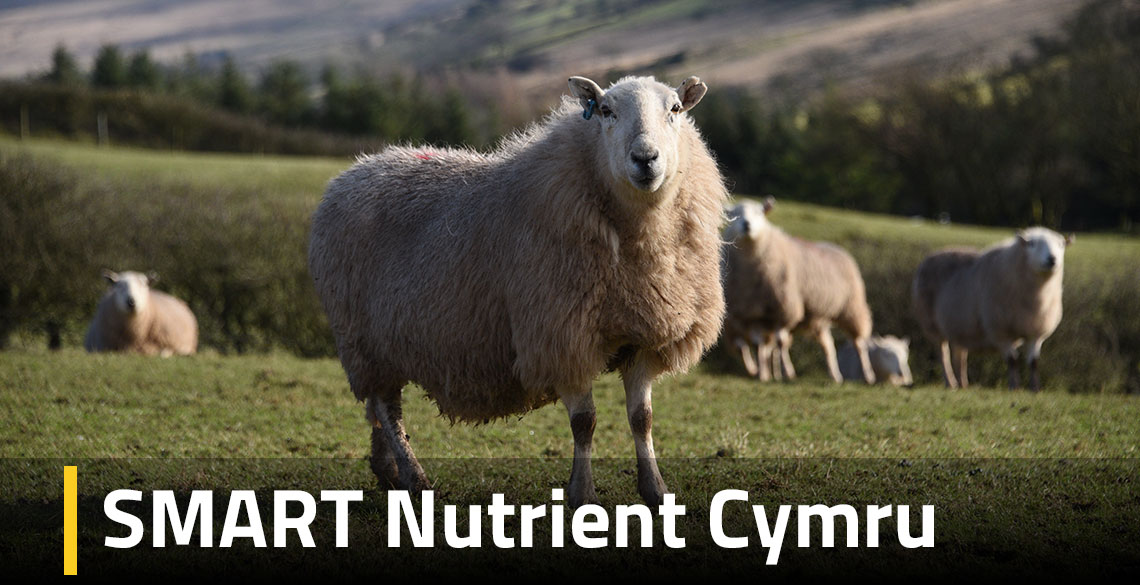
Capturing nutrients and adding value to grassland farming systems
A unique research collaboration is helping to tackle some of the problems facing grassland-based agriculture in Wales.
The aim of the project is to optimise the nutrient cycle in grazed agriculture, through focussing on protecting water and capturing nutrients in wool and ‘forgotten meat”, such as lamb’s liver.
The SMART Nutrient Cymru project brings scientists together with three stakeholders who bridge key linkages in the process of transferring important nutrients from field to fork.
With support from Welsh Government’s SMART Flexible Innovation Support (FIS) , researchers at Aberystwyth University’s Institute of Biological, Environmental and Rural Sciences (IBERS) are working in partnership with British Wool, Dŵr Cymru-Welsh Water and Hybu Cig Cymru-Meat Promotion Wales.
The project’s main focus is on optimising nutrient capture from Welsh grasslands as a result of climate change and as a response to growing demands for net zero food production systems.
As extreme weather events become more common, Wales and other parts of the UK are seeing spells of heavier rainfall and floods, often followed by drought – conditions which are causing problems for those who use the land.
Dr Christina Marley, a Reader of Sustainable Grasslands and Agri-Foods in IBERS and President of the British Grassland Society, explains:
“The initial idea for this project was sparked during discussions with key stakeholders across the industry and a recognition that we needed to pool ideas and make better use of current resources to help tackle the climate change challenges facing farmers and improve nutrient capture and utilisation.”
An application to fund early stages of research was submitted to Welsh Government and the project was awarded SMART FIS Level 1 funding in 2023. The following year, in autumn 2024, SMART Nutrient Cymru became the first project to be awarded Level 2 funding.
There are three main strands to the collaborative project:
1. Adding value to wool products
1. Adding value to wool products
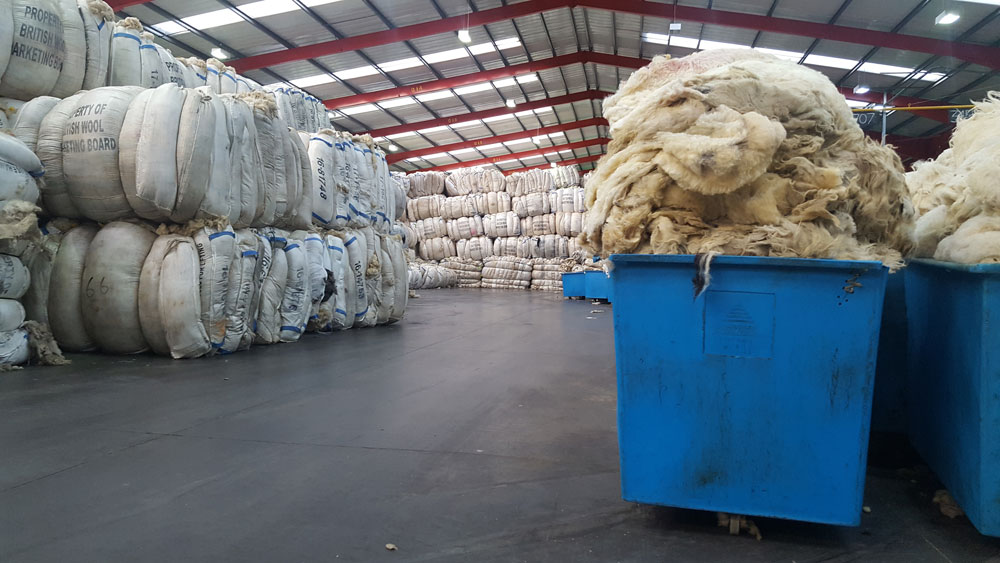
Building on an earlier pilot study funded by Welsh Government’s ‘GrOw Wales Green’ project and undertaken by Dr Siân Mackintosh from IBERS, the SMART Nutrient Cymru project is exploring novel uses of wool to develop valorised products for use on-farm.
Dr Mackintosh said:
“Coarse wool, typical of hill and mountain sheep breeds, is of limited value to the textile industry, making it challenging to recover the cost of shearing the sheep. Developing novel uses for wool will provide economic resilience to sheep farmers through increasing the value of sheep wool. The project will also utilise the valuable properties of the wool to improve nutrient capture and mitigate extreme weather events on-farm.”
Andrew Hogley, Chief Executive Officer at British Wool said:
“Wool is a unique natural fibre with an ability to hold up to 30% of its weight in water. This project is investigating the potential of Welsh wool to hold back run off and capture nutrients at landscape level. The ultimate aim is to develop an added value Welsh wool product to help address and overcome the challenges posed by the extremes in water supply.
The increased frequency of heavy rainfall events followed by extreme drought due to climate change has a negative impact on both our farmers and landscape. In doing so we also seek to increase the demand for, and value of, Welsh Wool to improve returns for our members across Wales.”
2. Protecting water flow and quality
2. Protecting water flow and quality
Dŵr Cymru-Welsh Water is the sixth largest of the ten regulated water and sewerage companies in England and Wales. It is responsible for providing three million people with drinking water in 1.4 million homes and businesses.
Fluctuating rainfall and extreme weather events are increasing the likelihood of increased soil erosion and therefore sediment and nutrient loading of our water supplies, highlighting a need for innovative approaches to reduce water flow from Welsh grasslands.
Nigel Elgar, Project Manager for Dŵr Cymru-Welsh Water, said:
“Providing our customers with high quality drinking water is essential to us. The cleaner the water is before it reaches our treatment works, the fewer chemicals and less energy we need to make it safe and perfect for our customers. That is why we are always looking for new ways to protect and improve our water sources.
We are proud to be part of the SMART Nutrient Cymru project, which builds on earlier research where farmers planted alternative forages to act as natural buffers. These buffers help reduce surface water runoff and soil erosion from agricultural grasslands which can impact our rivers and reservoirs.
Collaborating with academia and land managers is essential in helping us achieve our goal of safeguarding the quality of this vital natural resource and ensuring resilient water supplies for future generations.”

3. Optimising lamb nutrient density and the use of undervalued meat products
3. Optimising lamb nutrient density and the use of undervalued meat products
Sometimes called “forgotten meat”, offal was once an important part of people’s diet in Wales and other parts of the UK. But lamb’s liver, kidneys, tongue and heart have fallen out of favour in recent years, despite being a rich source of essential nutrients such as vitamin A, vitamin B12, iron, copper and zinc.
Working with Hybu Cig Cymru-Meat Promotion Wales (HCC), IBERS researchers are exploring the reasons for the decline in demand for offal as well as raising awareness of its high nutritional value.
Dr Siân Mackintosh from IBERS said:
“Where they are not being utilised, these nutrient-dense “forgotten meats” represent a significant loss of nutrients from our food chain, and could instead be used to support human dietary health when incorporated as part of balanced diet”.
Dr Eleri Thomas, Future Policy and Project Development Executive at HCC said:
“We believe there is a significant potential for these forgotten meats to be incorporated back into our diets. During tasting sessions carried out as part of this project, consumers liked the flavour and were keen to find out more about recipes and cooking methods, as well as the value that it can offer.
By exploring ways of optimising the use of nutrient-rich undervalued lamb products, the aim is to increase the sustainability of the supply chain and guide new marketing opportunities.”
Dr Christina Marley, who is also President of the British Grassland Society, added:
“This SMART Nutrient Cymru project is unique in that it brings together the expertise and strengths of three different partners who are all working towards a common solution namely the capturing of nutrients within forage-based agri-food systems.
We hope the scientific data and evidence we gather will provide a springboard for a more in-depth investigation into these challenges. We could not have got here without the support provided by SMART FIS. As well as providing the initial funding, the programme has also given us access to advice and the flexibility to adapt and innovate when required.”
Project Funding
SMART Nutrient Cymru is led by IBERS, Aberystwyth University in partnership with British Wool, Hybu Cig Cymru and Welsh Water. This project is funded through the SMART Flexible Innovation Support (FIS) scheme, which is funded by the Welsh Government. IBERS receives strategic funding from UKRI’s Biotechnology and Biological Sciences Research Council (BBSRC).
About SMART FIS
Welsh Government’s SMART FIS helps businesses, the third sector, public sector bodies and research organisations to innovate and create new products and services.
Supporting your application
If you’re an Aberystwyth University member of staff looking for advice and support on submitting a SMART FIS application, please send an email to the Department of Research, Business and Innovation.