
Seabirds’ nocturnal lives revealed in new artwork and exhibition
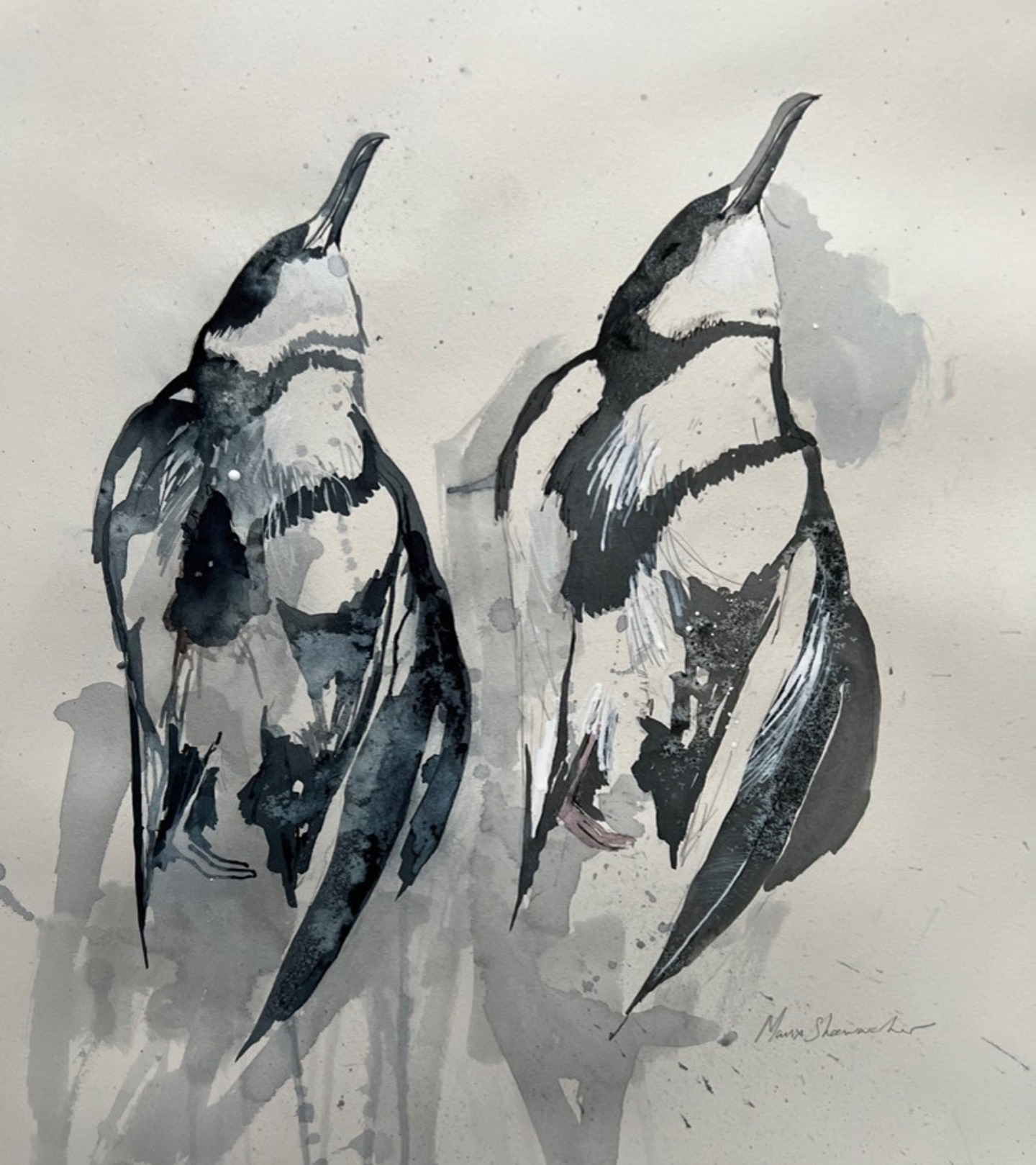
Painting of Manx shearwaters
15 September 2026
The nocturnal island lives of Manx shearwaters breeding off the west coast of Britain will be on show at a new exhibition thanks to work led by an Aberystwyth academic.
These remarkable seabirds breed on offshore islands around the UK, with Skomer Island in Pembrokeshire National Park being the single largest colony of shearwaters in the world.
Shearwaters migrate thousands of miles to South America every year, returning to their island burrows each spring to raise their chicks.
Dr Julian Ruddock from the School of Art at Aberystwyth University has recently travelled to various islands on the western fringe of the UK including Skomer, Skokholm and Ynys Enlli in Wales, as well as The Great Blasket in Ireland to research the shearwaters and the islands they inhabit.
The project is an Art and Science collaboration with The Oxford University Navigation Group (OxNav), whose research explores the birds’ navigation and migration behaviour.
The team use tiny geolocators attached to the birds’ feet to record the time of sunrise and day length to provide positions, which in turn reveal the birds’ migration routes.
Dr Ruddock’s research draws on this scientific data as well as using sound recordings, interviews with scientists and direct observation from fieldwork to help tell the stories of these birds and the ecologies of the islands through the alternative framework of art.
As well as their migration and navigation skills, Manx shearwaters are known for their eerie nighttime calls used to identify their mates and the location of their burrows in the dark. Dr Ruddock is working with the OxNav group to capture sound recordings of the birds on Skomer Island with the aim of enhancing appreciation and awareness of these incredible birds which few people experience because of their nocturnal behaviour. While day visitors to the island see the familiar sight of puffins, few experience the island’s life after dark when an estimated 350,000 pairs of shearwaters return to their burrows under the cover of darkness.
As part of the project, Dr Ruddock is also researching the work of the important nature writer, R.M. Lockley (1903-2000) who conducted pioneering work on Manx shearwaters on another Pembrokeshire island, Skokholm, in the 1930s. Lockley wrote significant books about Welsh wildlife including ‘Letters from Skokholm’ (1947), which records daily life on the remote Welsh island.
Dr Ruddock’s research will be developed into artworks combining film, sound, installation, drawings and paintings, with plans for exhibitions including Oriel Y Parc in St Davids in May 2027.
Dr Ruddock said:
“While much is still not understood about shearwater migration, science is revealing remarkable insights into this and other species we share the planet with, and art can help us connect with that knowledge in a different way. The OxNav team have been fantastic to work with, generously sharing their knowledge and passion for these birds. What fascinates me about Manx shearwaters is the mystery of how these birds navigate vast oceans using the sun, the stars and Earth’s magnetism to return to the same place each year. Welsh islands support a significant proportion of the global breeding population of shearwaters, yet the species remains little known to the wider public. I’m trying to communicate not just the information, but the sound, the atmosphere and the sense of awe and wonder that comes from experiencing a night on an island seabird colony such as Skomer.”
Dr Katrina Siddqi-Davies from the Oxford Navigation Group at the University of Oxford added:
“It has been great having Julian as part of the team, and I’m really excited to explore how we can tell the stories of Manx shearwaters in creative new ways. They undertake extraordinary journeys across hemispheres and live remarkable lives in some of the most remote parts of the world, so they are certainly deserving of great art.
“Even though Manx shearwaters are a well-studied species, every year we continue to learn more about their behaviour at sea, how they cope with environmental change, and the incredible coordination and teamwork involved in successfully raising a single chick. I hope this project helps bring people closer to the shearwaters and inspires more curiosity and appreciation for the hidden lives of seabirds.”
Share


