
Rules of attraction for plants to be explored in new research project
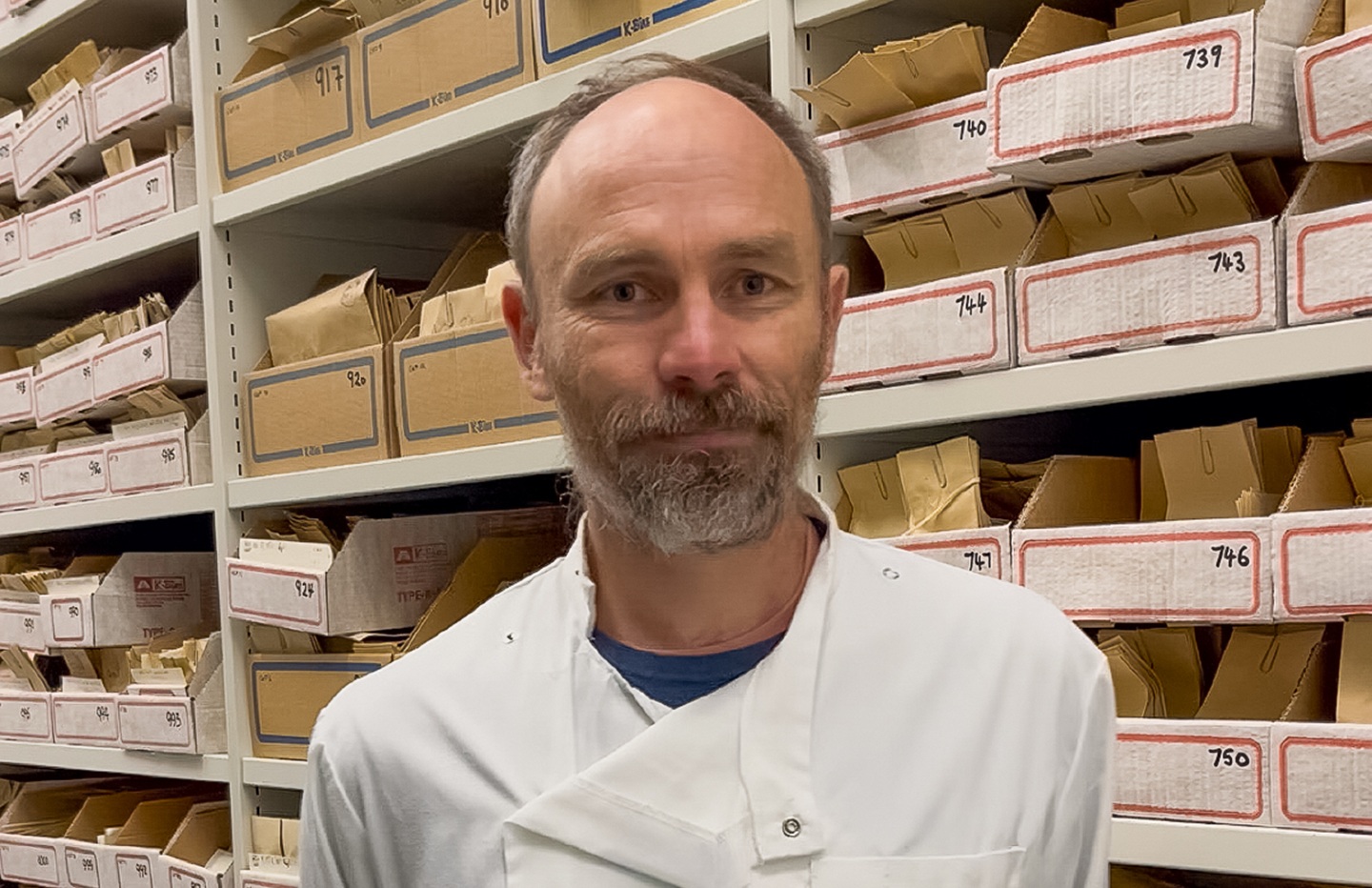
Dr Andrew Lloyd
27 October 2026
Researchers at Aberystwyth University are exploring why distantly related plants struggle to reproduce with one another, in an attempt to breed more resilient crops.
In a major three-year research project, academics will investigate the biological barriers that stop related plants from reproducing and sharing their best characteristics.
During reproduction, pairs of chromosomes need to find one another before exchanging chunks of DNA. This creates new combinations of traits in the next generation, which is one reason why siblings are different from one another.
However, biological mechanisms prevent chromosomes of more distantly related species from interacting successfully, making it challenging for breeders to move useful traits from wild plants into crops. The same mechanisms make mules sterile: the horse and donkey chromosomes they inherit cannot pair correctly.
The research will take advantage of Aberystwyth University’s heritage in plant breeding research and its collection of seeds from across the globe. The Institute of Biological, Environmental and Rural Sciences (IBERS) has a bank of more than 43,000 seed samples. By understanding what lies behind chromosome recognition, the team hopes that useful traits from one plant can one day be transferred to another through conventional breeding approaches, even if they are distantly related.
Dr Andrew Lloyd from IBERS, who is leading the research, said:
“What attracts one thing to another is one of the great mysteries of life, whether in plants, animals or even humans. This research will not solve all of those mysteries but we hope it will help make crops more resilient to future challenges.
“I'm excited about the potential this project holds for unlocking the incredible diversity of useful traits currently held in our seed banks. These collections are a vast and valuable resource. If we can use them to understand the rules governing chromosome recognition, we open the door to harnessing those traits to help crops withstand the pressures of a changing climate.
“By working closely with University colleagues in the Department of Computer Science, we can use rapidly developing AI tools to understand and predict outcomes in ways that simply were not possible before. My hope is that this will reveal the most efficient routes for transferring valuable traits between distantly related plants, accelerating the development of the resilient crops we'll need in the years ahead.”
The project has been funded by the Biotechnology and Biological Sciences Research Council (UK Research and Innovation).
Dr Lloyd added: “Until recently we have not had the tools needed to answer these questions. This project will take advantage of cutting-edge DNA sequencing and chromosome painting tools recently developed by ourselves and others to look at the problem in completely new ways.”
Dr Faisal Rezwan, Senior Lecturer in Bioinformatics at Aberystwyth University’s Department of Computer Science, said: "Only now do we have the computational and experimental tools required to decode the complex interplay between how chromosomes differ from one another and how they interact.
“By integrating innovations in both computing and biological sciences, this project will address fundamental questions that have previously remained beyond our reach.”
AU13526
Share


