
Pioneering study aims to improve food provision for pupils in special schools
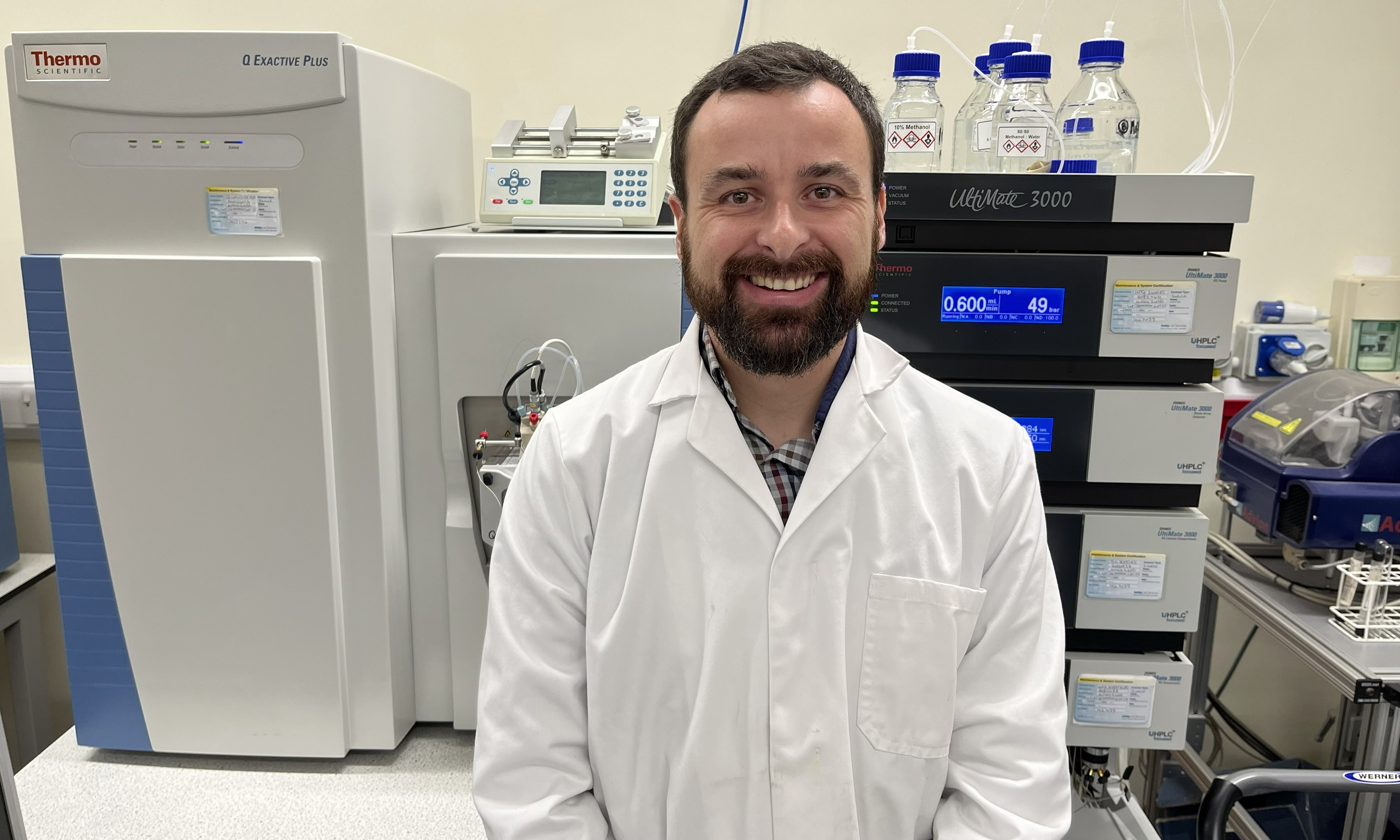
Dr Thomas Wilson, Department of Life Sciences, Aberystwyth University
27 November 2026
Researchers from Aberystwyth University are part of a pioneering study which aims to improve the health and wellbeing of children and young people with special educational needs and disabilities (SEND).
Sensory sensitivities, restricted diets, communication difficulties and individual health needs can make eating at school challenging for children and young people with SEND.
The collaborative project, led by the University of Hertfordshire, will look at how food provision in special schools could be improved.
Aberystwyth University's role will focus on evaluating whether the programme leads to measurable improvements in children's diets.
Using methodologies developed at the University, Aberystwyth researchers will analyse urinary biomarkers of food intake to identify changes in dietary patterns and assess whether the intervention is improving nutrition among participating pupils.
The approach uses urine samples to provide an objective measure of recent food consumption and is particularly valuable in SEND settings, where traditional dietary surveys can be difficult to conduct accurately.
Dr Thomas Wilson, a Researcher in the Department of Life Sciences at Aberystwyth University, said:
“One of the challenges in nutrition research is understanding whether interventions genuinely change what people eat. Traditional approaches often rely on food diaries or questionnaires, but these can be difficult to use consistently and accurately, particularly when working with pupils in a SEND setting.
“By analysing biomarkers in urine samples, we can obtain an objective picture of recent dietary intake and detect changes in the consumption of particular foods. This gives us a way to measure whether the approach is translating into real dietary improvements for children and young people. We are excited to be contributing cutting-edge nutritional assessment techniques to a project with the potential to improve health outcomes for SEND pupils.”
The study centres on Adapt-Ed Nourish, a tailored whole-school approach to food developed by the charity School Food Matters in partnership with the University of Hertfordshire and the University of Essex. The programme explores how schools can improve food and nutrition across the entire school day, including food education, school food policies and the wider school environment.
Rebecca O’Connell, project lead and Professor of Food, Families and Society at the Centre for Research in Public Health and Community Care (CRIPACC), University of Hertfordshire, said:
“A whole school approach means not just focusing on lunchtime but on food across the school day and across the different domains of the school. So, it means thinking about school food policies and food education as well as food provision and trying to create more consistency between them. It also means involving the whole community – pupils, parents and staff – in the school’s approach to food.”
The project is led by the University of Hertfordshire, working alongside Aberystwyth University, the University of Essex, the University of East Anglia, City St George’s University of London and charities School Food Matters and Future Care Capital. It is funded by the National Institute for Health and Care Research (NIHR) and supported by the NIHR Applied Research Collaboration (ARC): East of England.
AU25256
Share


