
Postgraduate profiles
Ebenezer Baidoo Smith - MSc in Behavioural Science

Can you describe your experience on your course and at the University?
My experience at university so far has been both challenging and rewarding. Starting my course was initially overwhelming, but over time I became more confident and independent.
University has helped me improve my time management, resilience, and communication skills, especially when balancing coursework and personal responsibilities.
Academically, my course has encouraged me to think more critically and develop knowledge in areas I genuinely enjoy. Outside of studying, meeting people from different
backgrounds has broadened my perspective and helped me grow personally. Overall, university has been an important experience that has strengthened my confidence, independence, and future ambitions.
Are you doing any voluntary work/work experience during your time at university?
No
Can you suggest a few hints and tips to future students?
Stay organised, manage your time well, and don’t be afraid to ask for help when needed. Try to maintain a healthy balance between studying and personal life, and get involved in
university activities to meet new people and build confidence. Most importantly, be patient with yourself and remember that challenges are a normal part of the university experience.
Stephanie Jones - PhD
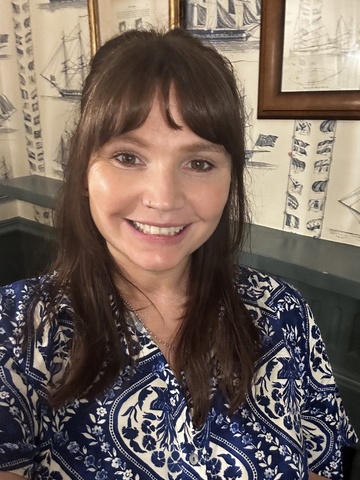
Can you describe your experience on your course and at the University?
My time at Aberystwyth University has been one of the most important and rewarding experiences of my life, both personally and professionally. In 2021, I successfully interviewed for a PhD opportunity exploring experiences of loneliness within rural and diverse communities in Wales and the role of community in addressing social inequality. As a registered nurse and public health professional, this topic immediately felt meaningful to me, and I remember feeling incredibly proud and grateful to have been given the opportunity to undertake the research.
Over the course of the PhD, I have developed so much confidence in myself and in my own abilities as a researcher. Working alongside my supervisors, Dr Rachel Rahman and Dr Jesse Heley, has been such a positive experience. Their support and guidance throughout the last few years has helped me grow academically, professionally and personally, and I am very grateful for everything they have done to support me throughout the process.
The wider support from the University has also been excellent. During the first part of my PhD, I completed a number of research modules which really helped to strengthen my research skills and gave me confidence as I progressed into the different stages of the study. I always found lecturers approachable and supportive, and there was a genuine sense that staff cared about students and wanted them to do well.
Completing a PhD alongside work and family life has not always been easy, and there have definitely been challenging moments along the way. However, my experience at Aberystwyth University has always felt supportive, and I have never felt like I was managing things alone. Looking back now, the experience has prepared me strongly for a future within academia and research. It has helped me to develop confidence as an independent researcher, strengthened my academic writing and critical thinking skills, and provided me with opportunities to undertake meaningful research which I hope will contribute positively to both policy and practice. The PhD has also reinforced my passion for research, teaching and public health, and has given me experiences and professional relationships that I know will continue to shape my future career.
Are you doing any voluntary work/work experience during your time at university?
I have a full time job as a Senior Lecturer in Public Health at the University of Chester.
Can you suggest a few hints and tips to future students?
I would encourage future students to make the most of everything that Aberystwyth University has to offer. There is a huge amount of support available to students, whether that is academic guidance, wellbeing support or practical and financial advice, and throughout my time at the University I have always felt supported and encouraged. My overall experience has been incredibly positive, and I would genuinely recommend the University to anyone considering studying here.
Laura Kemmer-Amoda - PhD

Can you describe your experience on your course and at the University?
I began my course in 2022 under the supervision of Dr Valerie Todd and Prof Charles Musslewhite. From the very beginning, my experience at the university was shaped not just by the academic work, but by how I gradually found my place within it. I attended many in-person courses to gain the credits needed in preparation for the PhD, and those sessions became an important part of how I settled into university life.
At first, I felt out of place and believed that everyone around me was far more educated and confident than I was. However, the support I received especially from Dr Todd made a real difference. She encouraged me in a way that made me feel capable and, more importantly, like I truly belonged at the university. Through the courses I attended, I also connected with other students, and those shared experiences helped me grow in confidence.
Now, four years on, my experience at university has changed me significantly. My confidence has grown through consistent hard work and perseverance, which is essential in the nature of a PhD. There have been ups and downs along the way, but I have been encouraged to think more deeply, to question ideas with confidence, and to believe in my own academic voice. As I reach the final stages, I can finally see the end in sight and I can clearly see how much I have grown because of my time here.
Are you doing any voluntary work/work experience during your time at university?
N/A
Can you suggest a few hints and tips to future students?
Speak openly to your supervisors and tutor. They are there to support you. Stay consistent and preserver. These are all skills that are needed for the real world of working life.
Daniel Nadzo - PhD
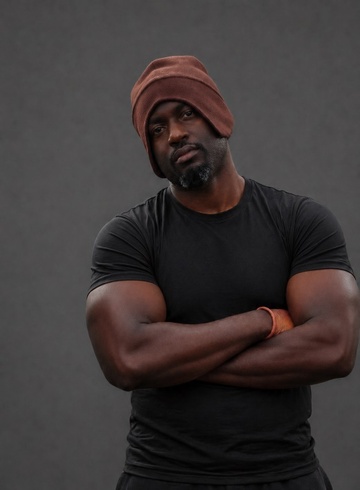
Can you describe your experience on your course and at the University?
Academically and personally, my experience at Aberystwyth University has been extremely formative. As a PhD student in the Psychology Department, I was primarily interested in health behaviour change, diabetes self-management and how culture, family, faith, and lived experience impact on people’s management of long-term conditions. Right from the outset, I have felt that my work was taken seriously as a scientific project and also a human project. That balance has been important to me, my research is not only about measuring outcomes; it is about listening carefully to people whose voices are often absent from intervention design, particularly people living with type 2 diabetes in low-resource settings.
Through my PhD I am developing the SAFARI-D protocol, a culturally tailored Diabetes Self-Management Education and Support (DSMES) intervention tailored specifically for Zimbabwe. My research is positioned at the intersection of psychological theory, public health, co-design methodology and people in low-resource healthcare settings living with type 2 diabetes. Thus, the project has not been a theoretical exercise in intervention design alone but an ongoing investigation of how diabetes self-management is determined. I explore culture, family structures, economic limitations, health literacy, clinical practice, institutional legacies and the everyday adjustments to systemic pressures and the on-the-ground pragmatics of daily realities faced by people living with diabetes, in the pursuit of optimal self-management.
Receiving the prestigious AberDoc scholarship has also been a huge part of my journey. This has allowed me to work on a project that I believe can meaningfully aid diabetes care not just in Zimbabwe, but potentially in other low- and middle-income settings. The encouragement I have received within the university, especially from Dr Rahman and Dr Thatcher, has developed my confidence in academic writing, research design, systematic review methods, meta-analysis, co-design methodology and in communicating intricate ideas across different audiences. This has been rather challenging at times, particularly in the scale of work but this challenge has forged my resilience and purpose.
One highlight of my experience has been the high quality of supervision I have received. My primary supervisor, Dr Rahman, has been excellent at ensuring that I think critically about the theoretical underpinnings of the research, guiding me through my methodological choices and pushing me to consider what impact the work will have more broadly. Her extensive, systematic questioning of my research ideas transcends literature reviews to probing the key assumptions, methodologies and contribution and utility of my study. This thorough process allowed me to identify gaps, confirm the feasibility and impact of my choices, and enabled me to be critical and self-reflective in my academic decisions. Research under her tutelage has sharpened my ideas, bolstered my confidence as a doctoral researcher, and kept me centred on writing research that is both academically rigorous and socially impactful. My secondary supervisor, Dr Thatcher, has also been excellent, a rigorous interrogator of my research, very supportive and provided a different perspective and challenge both constructively. They have together modelled what effective PhD supervision is: supportive, intellectually demanding, respectful and sincerely interested in the growth of the student as a scholar
In conclusion, my experience at Aberystwyth has shown me that it is not just about writing a PhD thesis. It is also about being the kind of scholar who asks better questions, works with humility, and generates research that matters beyond the university. One of the gifts of this time has been a recognition that psychology can do more than explain behaviour, it can help also design ways to offer more compassionate, culturally relevant and actionable support for people with chronic illness.
Are you doing any voluntary work/work experience during your time at university?
Alongside my academic work, I do charity and community development in Sub-Saharan Africa, addressing issues such as reproductive health, rural enterprise and poverty reduction strategies. It has strengthened my understanding of the interconnections between health, education, livelihoods, gender and economic opportunity, specifically in rural settings or limited-resource contexts.
My charity work has helped me to consider much more carefully the impact of research outside of the university. It has taught me that sustainable change is rarely just about funding, and often relies on listening to communities, understanding local realities, and building practical solutions that people can take ownership of and implement in a sustainable manner. These experiences resonate strongly with my research interest in culturally relevant health behaviour change, because they demonstrate that how we behave is driven not just by knowledge, but also by poverty, local environments, economic constraints, cultural beliefs, family commitments and the social environment.
(Charity Name: River Africa)
I also produced creative Work for He Is Risen Productions, focusing on storytelling through film, music, and engaging with the public on themes of resilience, hope, recovery and social transformation. While not explicitly part of my PhD training, however, this has improved my ability to write for non-academic audiences and changed how I think about public engagement with science, social responsibility in an academic context, and the people who drive academic research.
(Company: He is Risen Productions)
Can you suggest a few hints and tips to future students?
My first bit of advice is to keep in mind that university is about you growing both academically and personally, not succeeding at some test of perfection. There will be times when the work feels hard or heavy, but that does not mean you don't belong. Ask questions at the beginning, reach out for support and always speak with supervisors about any issues.
Second, aim to develop strong habits from the start. Read broadly, take clear notes from your meetings with your supervisors, organise your references, and allow yourself sufficient time to think before starting to write.
Third, refocus on your inspiration for taking your course. Your purpose keeps you going when the workload becomes heavy. Remind yourself that your research may one day contribute to providing viable solutions that can benefit society at large.
Lastly, leverage the university community. You do not have to walk the journey alone. Emulate, share and connect with people, attend events, grow intellectually and personally. Your perception of self and the contribution that you are able to give to this world can change upon entering university.