
Our Research Interests
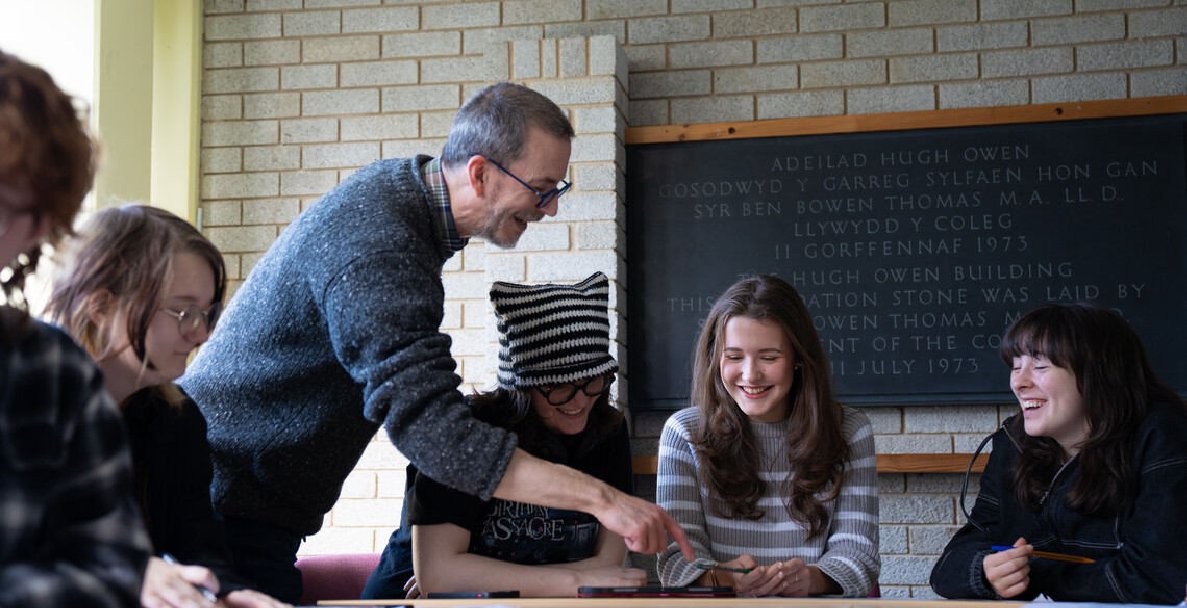
This page offers an overview of the research interests and areas of expertise of staff in the Department of English and Creative Writing.
For even more detailed information about individual staff members, including publications, projects, and current supervision interests, please visit our Staff Profiles page.
Dr Tasha Alden
Natasha Alden lectures in twentieth- and twenty-first-century literature. Her monograph, Reading Behind the Lines: Postmemory, History, Story (MUP, 2014) explored the uses of the past in a selection of recent historical novels , focussing on postmemory as a lens through which to understand innovation in historical fiction representing the World Wars. She has also written on Sarah Waters, Pat Barker, David Jones, Adam Thorpe, Ian McEwan and Emma Donoghue. Her research interests include memory, the historical novel, contemporary realism and queer writing.
Dr Neal Alexander
I am a scholar of twentieth- and twenty-first-century literature with research interests in three main areas. Literature and climate crisis: with Jamie Harris, I am writing a book on Welsh writing, energy, and the climate crisis for University of Wales Press. I have also published articles on the Canadian Tar Sands and the Chernobyl disaster. Literary geographies: with David Cooper, I edited The Routledge Handbook of Literary Geographies (2024) and was a founding editor of the e-journal, Literary Geographies. Modernism: In 2022, I published Late Modernism and the Poetics of Place (Edinburgh UP), a major re-reading of modernist poetry in the three decades after the Second World War from a critical perspective combining literary history and literary geography.
Dr Ahmad Naji Bakhti
Dr Katy Birch
I work on literature from the long nineteenth century, up to the end of the First World War. My main research interests are women’s writing, Victorian periodical culture (particularly Punch magazine), humorous writing, poetry, literature and science, and literature of the women’s suffrage campaign. I would be interested in supervising projects in these areas.
Dr Gavin Goodwin
Teaches twentieth- and twenty-first-century literature, and creative writing. Author of the poetry pamphlet Estate Fragments (Knives, Forks, and Spoons, 2014), and co-editor, with Liam Murray Bell, of a book of essays, Writing Urban Space (Zero, 2012). He has also published creative non-fiction. He has research interests in working-class writing (and representations of class and inequality more generally), nature writing, docu-poetry, the Objectivists, Buddhist poetics, and theories of creativity.
Dr Jamie Harris
I work on twentieth- and twenty-first century literature, with several areas of focus. I have published on Anglophone Welsh writing, particularly post-devolution writing and politics, as well as Welsh psychogeography (particularly Iain Sinclair). I have a particular interest in climate change and literature, have published several articles and chapters on the culture of Welsh energy infrastructure (nuclear power and Chernobyl, tidal lagoons), and am currently working on a collaborative monograph with Dr Neal Alexander, Wales After Coal (which also involves literary fieldwork and video essays). I have an interest in utopian literature and politics, especially in the post-war twentieth century.
Mr Jowhor Ile
Prof Matthew Jarvis
I have published significant discipline-leading research on the histories of Welsh writing in English. My particular areas of focus are Welsh poetry in English in the twentieth and twenty-first centuries, and literary engagements with Welsh space and place. I have worked more generally on environmental readings of literature and ecocritical theory. As a published and exhibited poet, I work particularly on intersections between environment and creative practice, and I have a particular interest in experimental (non-book-based) poetic practice. I am open to supervising doctoral research in any of these areas
Prof Richard Marggraf-Turley
I have published extensively on the literature and wider culture of the Romantic period, developing interdisciplinary approaches that connect literary study with fields including ecology, food studies, surveillance studies and the history of science. My monographs on Romantic topics include Keats’s Boyish Imagination (Routledge, 2004), Bright Stars: John Keats, Barry Cornwall and Romantic Literary Culture (Liverpool University Press, 2009) and most recently Fantastic Shapes: Topology and Textuality in Romantic Poetry (Liverpool University Press, 2026), a study of space and textual form in Romantic poetry. Beyond academic publication, I engage wider audiences through media appearances, public lectures, schools outreach and international conferences, reflecting a commitment to demonstrating the continuing relevance of literary scholarship to the ethical, cultural and political challenges of contemporary life. I also serve as Trustee and Chair of the Keats Foundation. I welcome research proposals in the above areas.
Prof Louise Marshall
Teaches eighteenth-century literature and literary theory. Her main research interests are in early eighteenth-century drama, representations of Britishness, women’s writing, and literary adaptation. She is the author of National Myth and Imperial Fantasy: Representations of British Identity on the Early Eighteenth-Century Stage (Palgrave, 2008), which examines a group of history plays that contribute to eighteenth-century debates regarding Britishness, colonial identity, and Britain’s place in a world of commercial and imperial possibilities. She is currently working on a project examining the authorised and illegitimate spaces allocated to women in eighteenth-century writing.
Dr Ann Matthews
I write creatively and critically on relationships with place across experimental poetry and short stories (nature writing and psychogeography). In the longer form, approaches to place are extended to autobiographic work that looks closely at ways of writing Welsh counter culture and community. My main research interest looks at ways of using fieldwork, memory and archival materials to respond to the landscapes and lifescapes which we inhabit as individuals and communities. My research is shaped by poststructural concepts of multiplicity and everyday living.
Dr Beth Rodgers
My main research interests are Victorian literature, periodicals and print culture (especially nineteenth-century girls’ magazines), children’s literature, women’s writing, Irish literature and the history of education. My current research project, on the Irish writer L.T. Meade, brings all these things together to consider the development of literary professionalisation in the late nineteenth century. I would be interested in supervising projects in any of these areas, particularly those that focus on non-canonical writers.
Dr Lucy Thompson
I work on literature of the long nineteenth century, especially Romantic-period writing. My main research interests are surveillance, gender, and disability. I am particularly interested in forms of observation that operate not only through institutions but also through everyday social relations: gossip, scrutiny, speculation, self-monitoring, medical observation, and the pressures of communal judgement. My work is informed by Critical Disability Studies and the medical humanities, and I have published on writers including William Godwin, Percy Shelley, Byron, Jane Austen, Charlotte Smith, and Maria Edgeworth. I would be interested in supervising projects on Romantic and nineteenth-century literature, Gothic writing, fin-de-siècle literature, surveillance studies, disability studies, gender and embodiment, self-regulation, medical humanities, and related areas of cultural history.
Dr Luke Thurston
Main research interests are Victorian and modernist literature, ghost stories and psychoanalysis. His publications include Understanding Sublimation in Freudian Theory and Modernist Literature (Routledge, 2024), Literary Ghosts from the Victorians to Modernism: the Haunting Interval (Routledge, 2012) and James Joyce and the Problem of Psychoanalysis (Cambridge University Press 2004), He is co-editor of the Routledge Handbook to the Ghost Story (2018), editor of Re-inventing the Symptom: Essays on the Final Lacan (Other Press 2002) and translator of Jean Laplanche’s The Unfinished Copernican Revolution (UiT,2020). He is the Director of the David Jones Centre and welcomes research proposals on literature and psychoanalysis, modernism or the ghost story.
Dr Malte Urban
My primary research focus is late medieval secular literature, especially the works by Geoffrey Chaucer and John Gower. My monograph Fragments: Past and Present in Chaucer and Gower(Peter Lang, 2009) focusses mainly on their use and appropriation of their cultural past(s), which also informs a section in my edited collection on the works of John Gower (Brepols, 2009). More recently, I have developed two further research interests that complement this main strand: medievalism and digital humanities. The former concentrates on Chaucer’s cultural afterlives, especially in cyberspace and on screen [in Chaucer’s Poetry: Words, authority and ethics (Four Courts, 2012), while the latter explores the potentials of electronic editing and text mining for our engagement with late medieval texts, using Gower’s Confessio amantis as its central object. My teaching cuts across these three areas, concentrating on English literature of the late medieval period while looking beyond this into the Early Modern period as well as digital approaches to manuscript studies and the wider area of medievalism, especially historical novels and modern adaptations of medieval texts.
Dr Alice Vernon
I write fiction and non-fiction, with a particular interest in the horror genre, ghosts and Spiritualism, sleep and dreams, as well as the work of Shirley Jackson and Golden Age crime fiction. I have written two non-fiction books, Night Terrors (Icon Books, 2022) and Ghosted (Bloomsbury, 2025), and I am currently working on a horror fiction project.
Prof Tim Woods
My principal research interests centre on C20th/21st British and American fiction and poetry; modernism and postmodernism; literary theory, especially Marxism and poststructuralism; and African literatures in English. A range of publications include Beginning Postmodernism (1999; 2nd ed, 2009), Who's Who of Twentieth-Century Novelists (2000), The Poetics of the Limit (2002), co-author of Literatures of Memory (2001), and African Pasts: History and Memory in African Literature (2007). I co-edited 'I'm telling you Stories': Jeanette Winterson and the Politics of Reading (1998), Critical Ethics (1999) and The Ethics of Literature (1999). In addition to work on Paul Auster, Kurt Vonnegut, Nuruddin Farah, American small press magazines, and African modernism, recent articles have appeared in the Journal of American Studies (George Oppen; Frank Samperi), Textual Practice (Literature & Human Rights), Paideuma (Cid Corman) and the International Journal of Welsh Writing in English (Vernon Watkins). I would be keen to supervise any projects in these areas.
Dr Jacqueline Yallop
I am a novelist and writer of creative non-fiction. Within those disciplines, I have wide-ranging research interests including literary and historical fiction, crime fiction, nature writing and memoir. With a background as a museum curator, I also work on multidisciplinary projects, and enjoy crossovers with fine and decorative arts, film or cultural history. My recent work includes Fiction in the Field (Bloomsbury, 2026) which investigated key creative writing techniques in the ‘real world’, and Into the Dark (Icon, 2024) which explored darkness in art and literature, philosophy, science and nature. I also lead the Centre for Creativity and Wellbeing, and welcome research proposals which resonate with the Centre’s commitment to changing lives through creative practice.