
Enhancing Soil Carbon Storage Through Miscanthus Breeding: New Insights from IBERS
Research at the Institute of Biological, Environmental and Rural Sciences (IBERS), Aberystwyth University, is helping to clarify how plant breeding decisions in Miscanthus could be used to enhance long-term soil carbon storage. With the aim of supporting climate mitigation while maintaining productive biomass systems.
A recent study by IBERS researchers Dr Amanda Holder, Karen Askew and Dr Paul Robson explores how differences in plant tissue composition influence the amount and depth of carbon stored in soils under Miscanthus cultivation. The work forms part of the BBSRC-funded Perennial Biomass Crops for Greenhouse Gas Removal programme and contributes evidence to support more climate-smart biomass crop development.
Why this matters for biomass systems
Miscanthus is widely recognised as a high-yielding perennial biomass crop with multiple environmental co-benefits. Its long-lived root and rhizome system allows carbon to accumulate in soils over time, offering advantages over annual crops such as maize.
However, not all Miscanthus varieties contribute to soil carbon storage in the same way. Understanding which plant traits promote stable carbon sequestration is critical if breeding programmes are to maximise both productivity and ecosystem services.
The Study: Linking plant traits to soil carbon outcomes
The Study: Linking plant traits to soil carbon outcomes
The study examined 11 diverse Miscanthus genotypes grown under controlled conditions. By analysing the chemical composition of leaves, roots and rhizomes (thick underground stems that store energy and help the plant survive winter and regrow each year), and linking these traits to existing soil carbon data for each genotype, the researchers identified characteristics strongly associated with soil carbon accumulation.
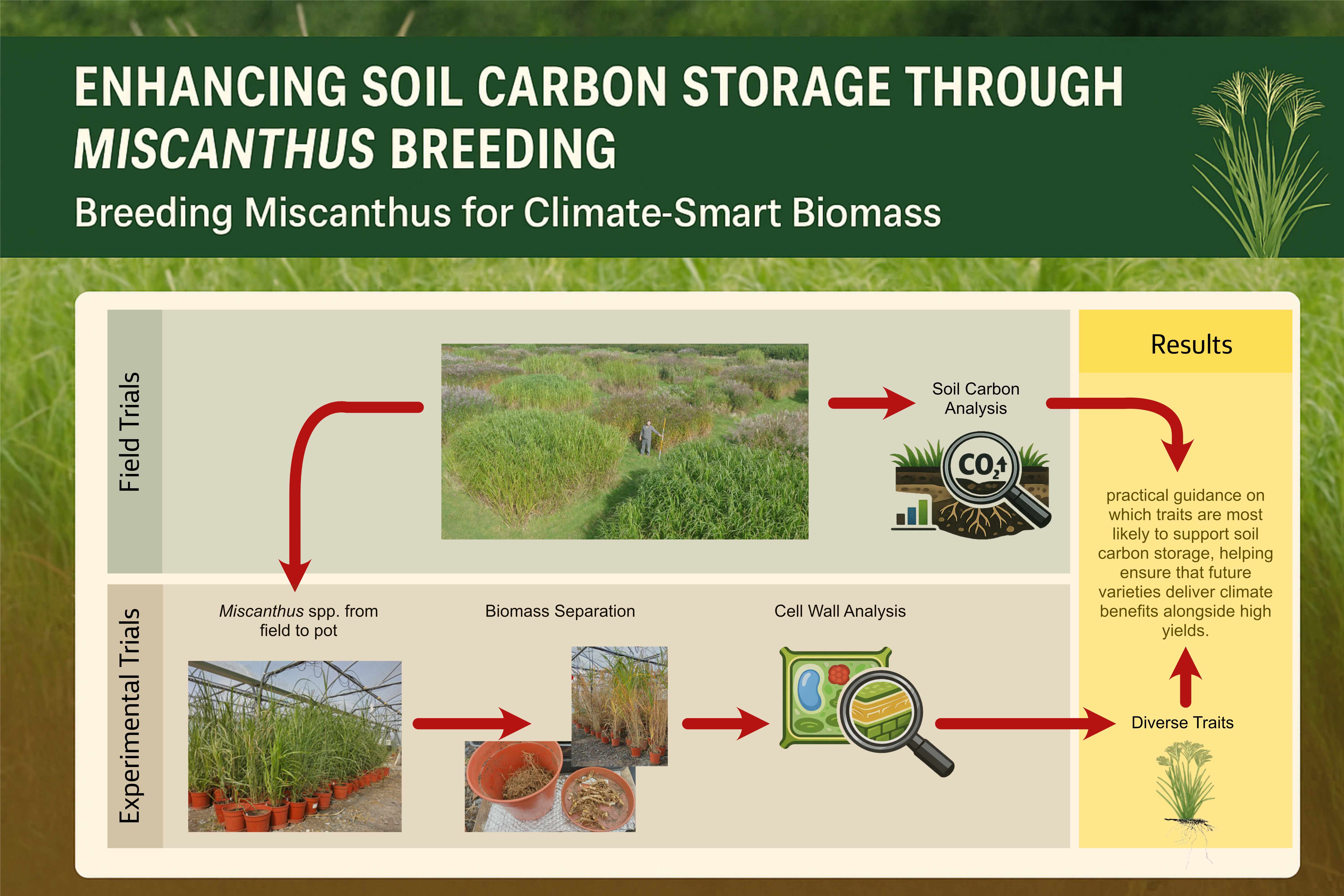
The analysis focused on key components of plant cell walls, including lignin, cellulose and nitrogen content. These are traits known to influence how plant material decomposes and stabilises in soil.
Each tissue contributes differently to carbon cycling. Harvested above-ground biomass which contains carbon, can be stored long-term if used in durable products or combined with carbon capture technologies. Below-ground biomass, such as roots and rhizomes, can contribute to more stable forms of soil carbon that are protected from rapid breakdown by microbes.
Key insights for breeding and management
Implications for Breeding
Implications for Breeding
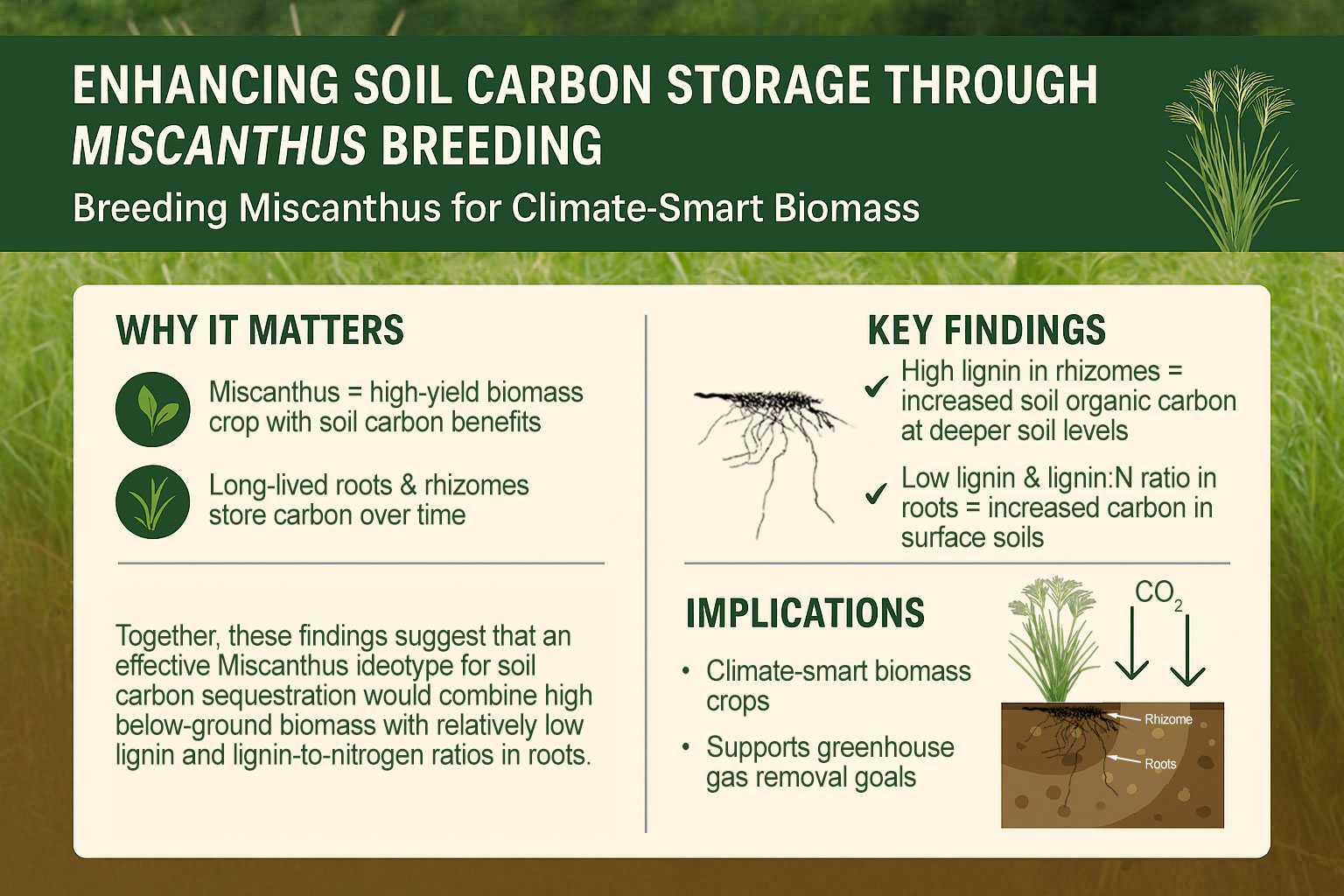
“Breeding programmes for Miscanthus are still at an early stage,” said lead author Amanda Holder. “These results provide practical guidance on which traits are most likely to support soil carbon storage, helping ensure that future varieties deliver climate benefits alongside high yields.”
For breeders, growers and policy stakeholders, the research offers a clearer evidence base for integrating soil carbon outcomes into biomass crop development. Importantly, the study also shows that enhancing soil carbon storage does not need to come at the expense of productivity, supporting the case for Miscanthus as a multifunctional crop within low-carbon land-use systems.
Supporting climate-smart biomass crops
The study underscores the potential for targeted breeding to enhance ecosystem services without compromising productivity, paving the way for more climate-smart biomass crops. This work contributes to ongoing IBERS research around how plant breeding, soil management and bioenergy systems can work together to deliver greenhouse gas removal and wider ecosystem services.
The research was supported by the BBSRC strategic programme for Resilient Crops and the Perennial Biomass Crops for Greenhouse Gas Removal project. The full paper is available here: https://doi.org/10.3389/fpls.2025.1729614
Accessible Science
'Accessible Science' is an IBERS Knowledge Exchange initiative helping to highlight the significant impact that IBERS research has on addressing the global challenges of food security, dietary health and climate change. These articles are intended to ensure that research reaches beyond our laboratories and experimental field trials to deliver real benefits to society by engaging with policy makers, supply chains, agriculture, other industry partners and the wider public.