
Sub-Saharan Africa has lost up to half of its primates – new study
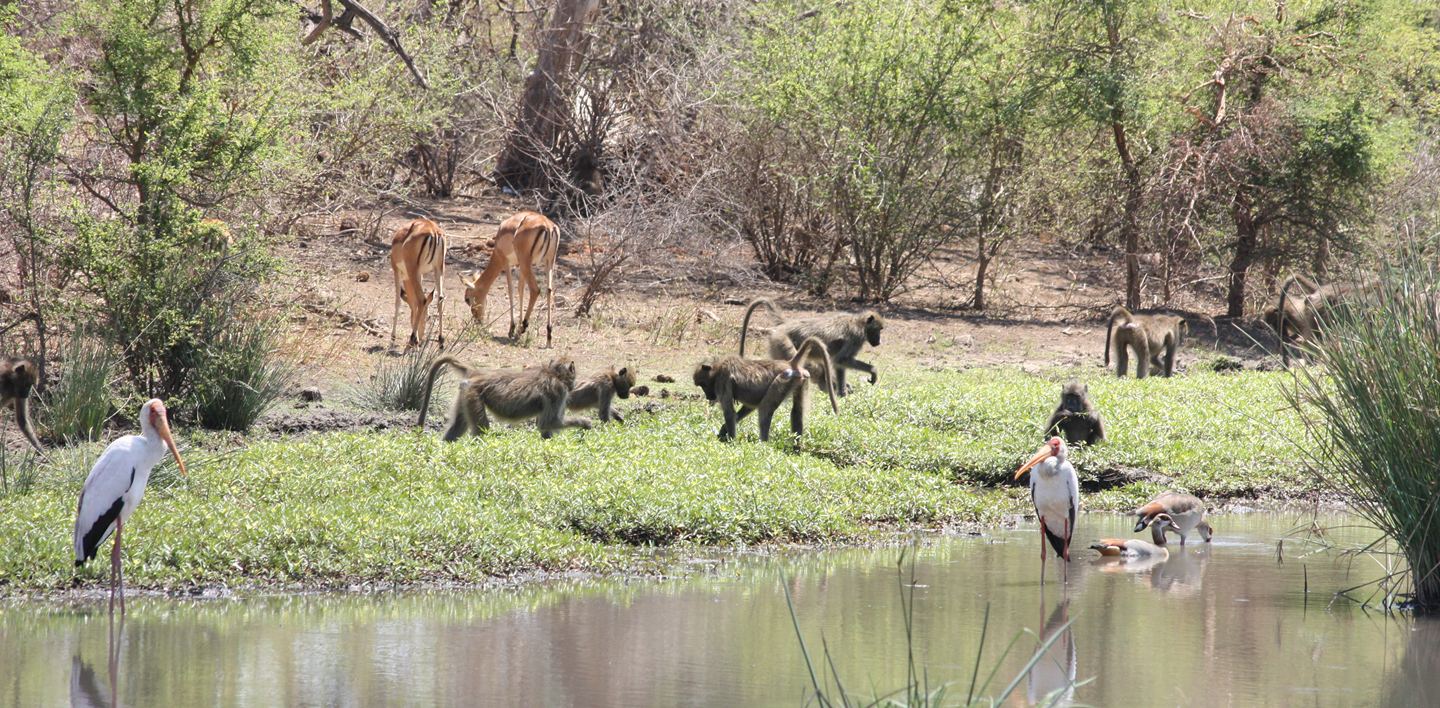
Mapungubwe National Park, South Africa
05 December 2025
Sub-Saharan Africa has already lost up to half of its primate numbers - a type of animals that includes apes and monkeys - since pre-industrial times, according to a major international study.
Published this week in Nature, the five-year research project delivers the most comprehensive assessment yet of biodiversity intactness across the region, revealing that 24% of overall biodiversity has been lost.
The findings show that numbers of native plants and animals have declined by nearly a quarter on average, with some species – particularly large mammals – experiencing far more severe losses.
The study brought together 200 African biodiversity and ecological experts, to examine how human activities across different landscapes are impacting native species.
Dr Birthe (Bibi) Linden, Lecturer in Applied Conservation Biology at Aberystwyth University and leader of the study’s primate expert team said:
“By harnessing the place-based knowledge of 200 experts in African flora and fauna, this ambitious project has filled a critical gap for African countries, which have been traditionally underrepresented in global biodiversity datasets and assessments.
“My contribution focused on primates, which are among the most endangered order of large mammals globally. In Sub-Saharan Africa, primates have experienced the third-largest decline after large herbivores and carnivores. Rainforest species – which include apes, monkeys, galagos and lorises – are the most affected, having lost over half of their historical abundances on average, and woodland savanna species have lost at least one third on average.”
Lead author Dr Hayley Clements, from Stellenbosch University’s Centre for Sustainability Transitions, said:
“Many global biodiversity assessments do not represent African conditions well because they rely on sparse local measurements and draw insights from more data-rich regions of the world, where contexts are very different. By working directly with the people who study and manage African ecosystems, we were able to capture a much more realistic picture of where biodiversity is declining, where it is being sustained, and why.”
The research uses the Biodiversity Intactness Index (BII) for Africa, a dataset built from regional ecological expertise which is designed to help national and regional decision-makers plan for biodiversity conservation in ways tailored to African contexts.
The study found large variations across ecosystems, countries and species groups. While plants that can withstand environmental disturbances have experienced declines as small as 10%, large mammals such as elephants, lions and some antelope species have lost more than 75% of their historical abundance.
The study highlights cropland expansion as a major driver of biodiversity loss, with intensive farming reducing habitat diversity and increasing chemical use. With cropland projected to double and cereal demand to triple by 2050, biodiversity-positive farming practices will be essential to balance food security and ecosystem health.
Crucially, more than 80% of the region’s remaining wild plants and animals live outside of formally protected lands – in landscapes where people and nature coexist. These areas support over 500 million people and provide vital ecosystem services such as clean water, pollination, building materials, grazing resources, wild foods and carbon storage.
Dr Linden added:
“The picture of biodiversity provided by this unprecedented study equips policymakers and conservationists with the data needed to safeguard ecosystems beyond protected areas. By bridging knowledge gaps with regional expertise, it lays the foundation for informed decisions that balance development and biodiversity, ensuring a more sustainable future for the continent.”
The project was funded by a Jennifer Ward Oppenheimer Research Grant, which supports African early-career researchers in developing solutions to the continent’s challenges.
AU28725
Share


