
Defossilising steel production with the help of crops
Steel underpins modern life. From buildings and transport to renewable energy infrastructure, it is one of the most widely used materials worldwide. Yet producing steel is also highly carbon-intensive, accounting for a significant proportion of global industrial greenhouse gas emissions. Reducing emissions from steelmaking is therefore one of the major challenges in the transition to a low‑carbon economy.
At Aberystwyth University’s Institute of Biological, Environmental and Rural Sciences (IBERS), researchers are exploring how plant‑based alternatives can help decarbonise even the most fossil‑fuel‑dependent industries. One of these focuses on the use of Miscanthus, a perennial biomass crop, and other feedstock to help reduce reliance on coal in steel production, demonstrating how innovations in plant science can play a key role in climate action.
The challenge: fossil fuels in steelmaking
Around 79% of the world’s steel is produced using coking coal, both as a fuel and as a chemical reducing agent. This dependence on fossil carbon makes steelmaking one of the so‑called “hard‑to‑abate” industrial sectors, where switching to low‑carbon alternatives is especially complex.
While electrification and hydrogen-based steelmaking pathways offer long-term decarbonisation potential, they are not yet universally applicable and require significant infrastructure transformation and capital investment. In the near term, the sector is actively seeking lower-carbon alternatives that can be integrated into existing blast furnace routes, enabling partial displacement of coke while delivering meaningful, immediate emissions reductions.
Biomass has long been discussed as a potential substitute for fossil carbon. However, not all biomass is suitable for industrial use. To be viable for steel production, it must be consistently produced, sustainable at scale, and processed to meet strict performance requirements. This is where IBERS’s innovative work with Miscanthus comes in.
Miscanthus: a purpose‑grown solution
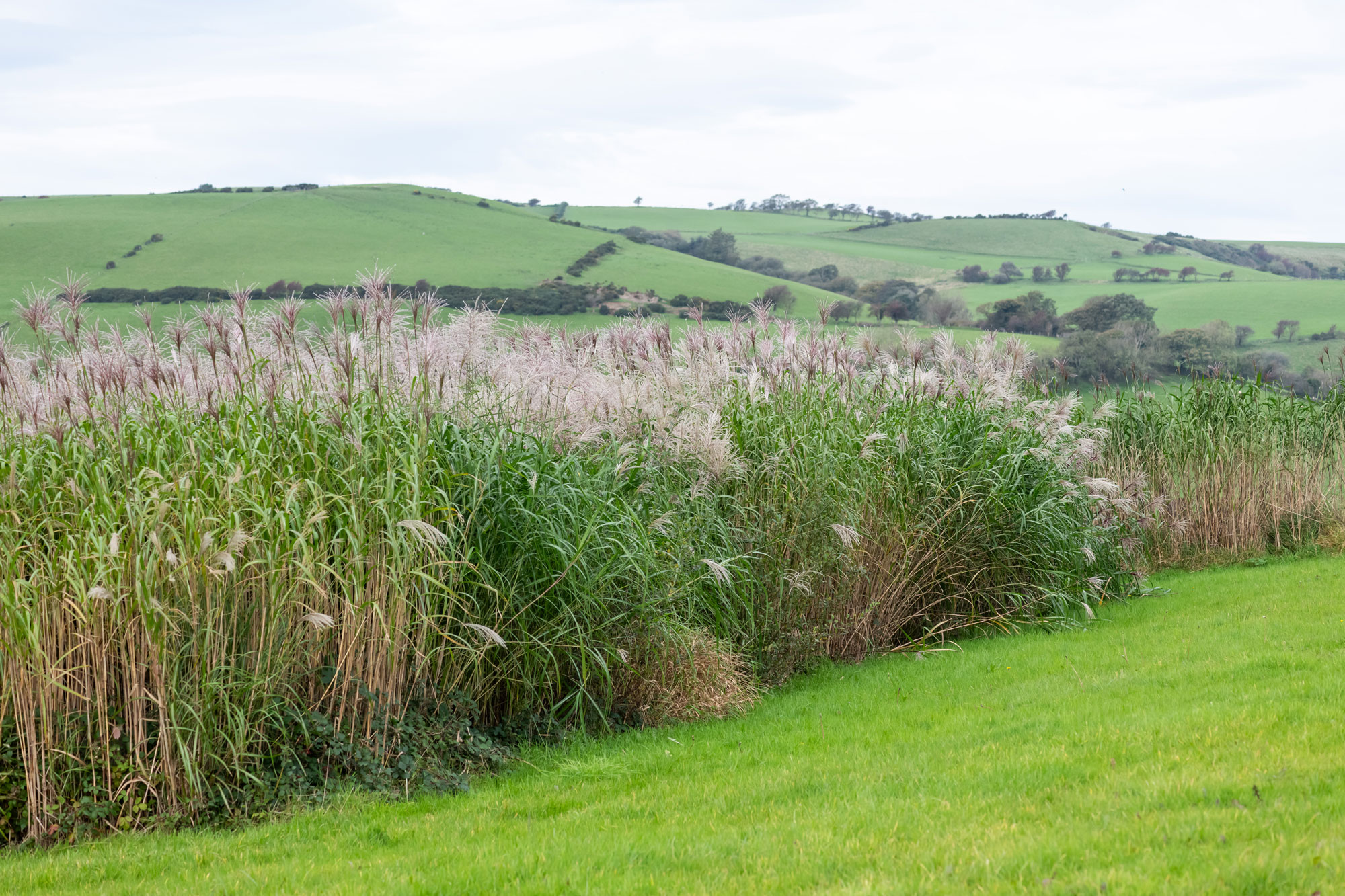
The high-yielding energy crop has become a cornerstone of IBERS’s bioenergy research. Professor Joe Gallagher, Lead in Biorefining at IBERS, said: “It is high‑yielding, requires relatively low agricultural inputs, and can be grown on land less suited to food production. Crucially, it captures atmospheric carbon as it grows, making it an attractive candidate for sectors seeking to lower their carbon emissions.”
IBERS has a long‑standing international reputation in Miscanthus breeding, agronomy, and supply‑chain research, which provides the foundation for exploring new industrial uses. Rather than treating Miscanthus simply as a raw material, researchers are focusing on how it can be processed into something suitable for demanding industrial environments.
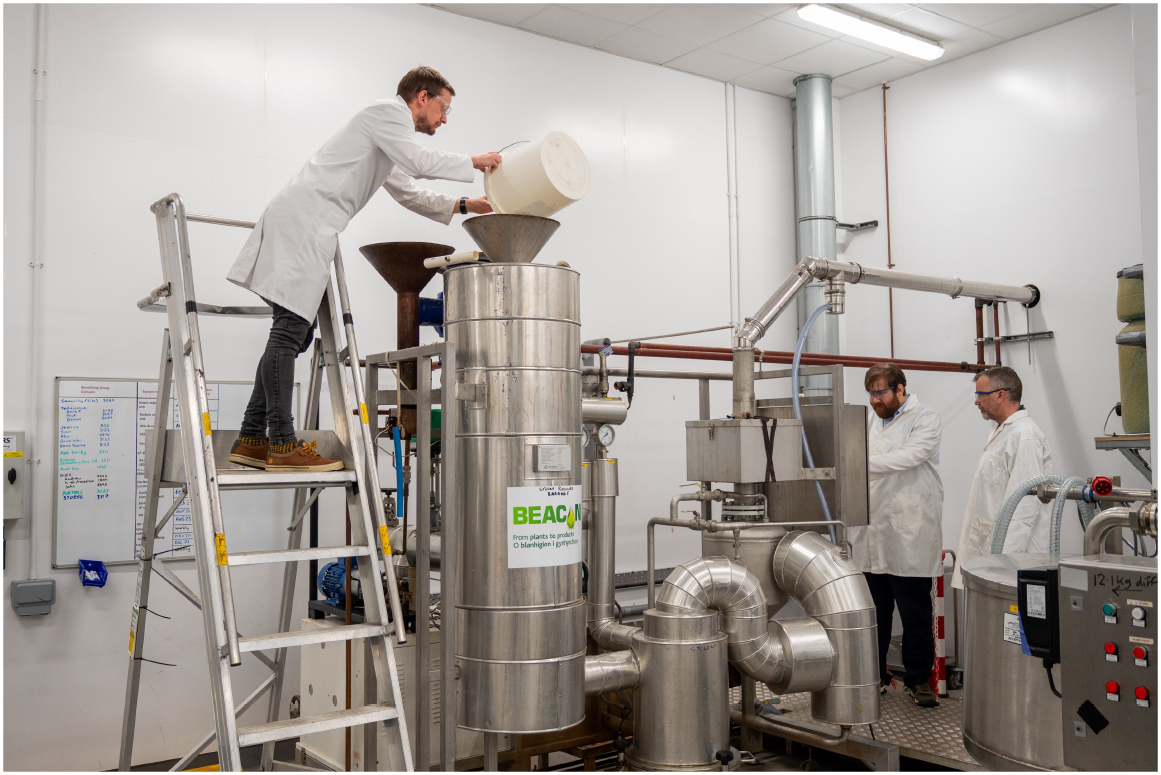
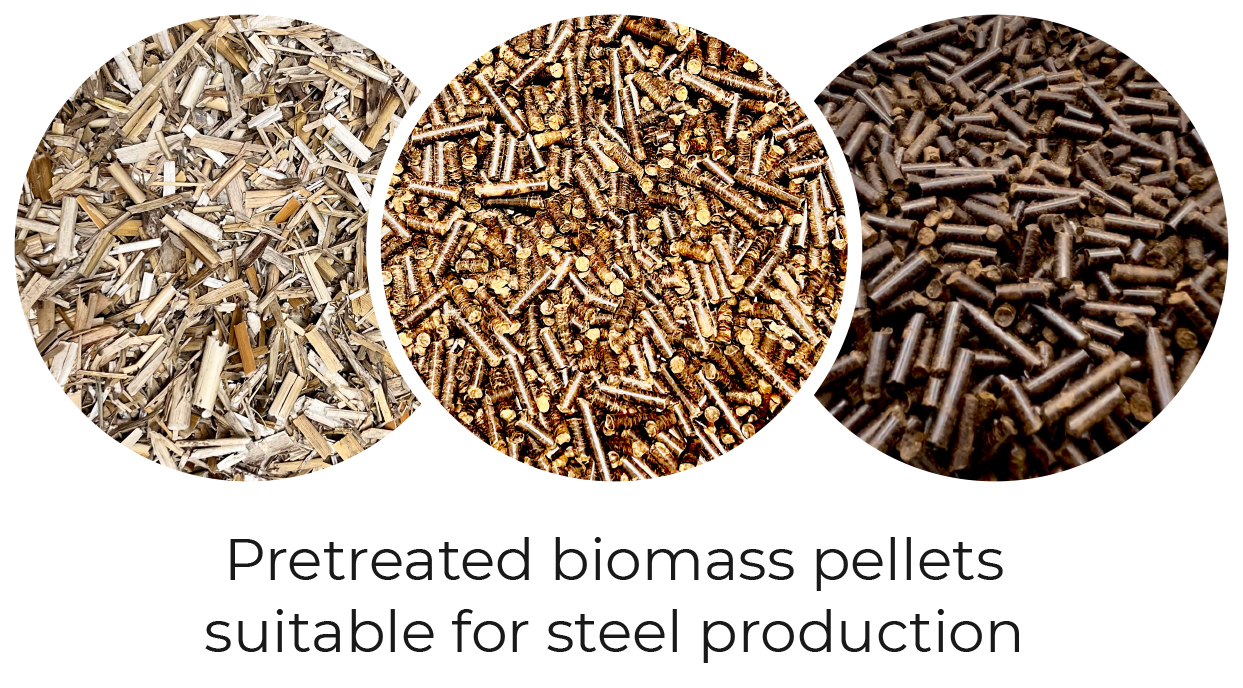
Using a novel combination of industrially scalable hydrothermal pre‑treatment (sometimes referred to as steam explosion) and (heating biomass in the absence of air), has been successfully upgraded into high‑performance biochar suitable for use in steel furnaces. Unlike raw or lightly treated biomass, the resulting material is compatible with established steel production processes, including those used for high‑quality virgin steel.
Dr David Bryant, Senior Research Fellow at IBERS, explained: “This work represents a genuine step change in efforts to decarbonise steel production. Untreated biomass has repeatedly proven unsuitable for the specific demands of modern steelmaking.
“For the first time, we’ve successfully upgraded biomass through a tailored combination of heat treatment processes to produce a biochar that meets the steel industry’s exacting technical requirements. While further scale‑up is needed, the enhanced properties we’ve achieved point to real potential for replacing injection coal in steel furnaces worldwide.”
The aim is not a drop‑in replacement for every use of coal, but a carefully designed alternative that can help displace fossil carbon where possible, reducing overall emissions from the process.
Unlocking added value through co‑products
An important feature of this research is its focus on maximising value from the whole Miscanthus plant. During the pre‑treatment process, a sugar‑rich liquid stream is produced alongside the solid for subsequent biochar production.
This additional product opens the door to further sustainable applications. The sugars can be converted into xylitol, a high‑value sugar alcohol widely used in food and pharmaceutical products, or into xylo‑oligosaccharides (XOS), compounds increasingly used in animal nutrition to support gut health.
By developing routes for both fuel and co‑products, the research contributes to a circular bioeconomy, improving overall efficiency and economic viability while reducing waste.
Professor Gallagher said: “Development of these streams has been achieved using our state‑of‑the‑art biorefining facilities hosted at AberInnovation here on the Gogerddan campus. This work is being further developed in a BBSRC Follow-on Funded project ‘Maxifeed’ with both academic and industrial partners in the steel, biotechnology, agri-tech and feed sectors, demonstrating how plant‑based innovation can deliver benefits across multiple industries. These collaborations ensure that the research is grounded in genuine industrial requirements and aligned with real‑world constraints.”
Industry involvement helps guide the development of materials that are not only sustainable but also practical to implement at scale. At the same time, research organisations like IBERS provide the independent expertise and long‑term perspective needed to explore innovative solutions that may not emerge from commercial R&D alone. Such partnerships are essential in tackling complex challenges like industrial decarbonisation, where no single organisation or discipline holds all the answers.
Delivering impact: environment, economy, and society
The potential impacts of this research extend well beyond the laboratory:
Environmental benefits include reducing reliance on fossil fuels in steelmaking and lowering associated carbon emissions. Growing perennial biomass crops like Miscanthus can also support sustainable land use and soil protection.
Economic benefits include creating new markets for biomass, supporting clean growth, and strengthening UK and international bio‑based supply chains. Developing alternative industrial materials can also improve resilience against volatile fossil fuel markets.
Societal benefits come through job creation in emerging green industries and progress towards national and global climate targets. By linking agriculture, industry, and environmental goals, the research demonstrates how sustainable innovation can deliver shared value.
Looking ahead
As industries seek credible pathways to net zero, plant‑based solutions are increasingly important. While no single innovation will solve the challenge of industrial decarbonisation, projects like this demonstrate how strategically designed biomass systems can contribute to meaningful change.
Further research will focus on optimisation, scalability, and integration with industrial processes to ensure that innovations developed at IBERS continue to move from research to real‑world impact.
Get in touch
As a University, we’re always keen to share our knowledge and expertise more widely for the benefit of society. If you’d like to find out more or explore how you can collaborate with our researchers, get in touch with our dedicated team of staff in the Department of Research, Business and Innovation. We’d love to hear from you. Just drop an e-mail to: