
Improving everyday journeys for women and girls
Research shows that women and girls across the UK face disproportionate barriers to mobility stemming from heightened risks of harassment and transport systems that have historically been designed without their specific safety needs or travel patterns in mind.
Dr Lucy Baker, a researcher in the Department of Geography and Earth Sciences, is establishing herself as one of Wales’ leading academic voices on gender-inclusive mobility.
This article explores how her research and insights are influencing how councils, transport operators and communities in Wales understand and address these challenges.
A national resource for change
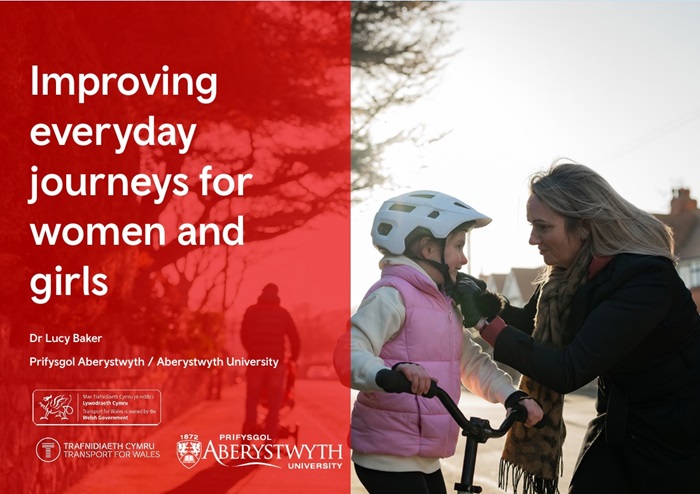
In March 2026, Dr Baker authored ‘Improving Everyday Journeys for Women and Girls’, published by Transport for Wales. As the latest guide in their active travel series, the resource aims to encourage walking, wheeling, and cycling by addressing the specific barriers women and girls face.
Developed for Welsh local authorities, the guide brings together research evidence, successful campaign strategies and practical design measures that can be embedded into planning, budgeting and delivery.
Dr Baker explains:
“Decades of research show that women experience everyday journeys differently to men. They are more likely to encounter harassment and safety concerns, often adapting their routes or routines to mitigate risk. Many also make more care‑related trips, yet transport systems don’t always support these patterns.
“By addressing these inequalities through safer infrastructure, inclusive design and meaningful engagement, this guide helps authorities create environments where women and girls not only feel safe, but confident and welcome to travel actively.
“It also recognises that women’s mobility needs to evolve over their lives and intersect with race, disability, age and caring responsibilities. The approaches presented — such as gender‑responsive budgeting, participatory design and better wayfinding — offer practical tools to ensure planning and investment truly work for all women and girls.”
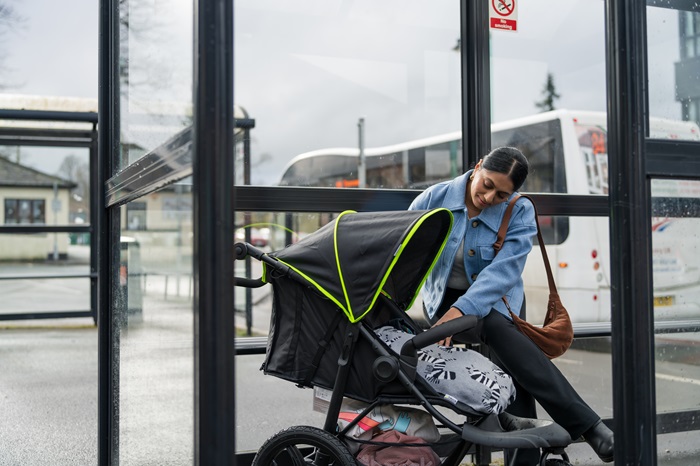
Photo: Transport for Wales
Advancing gender‑inclusive transport through research
Dr Baker leads the Transport and Health Integrated Research Network (THINK) project Gender+ Bus Wales. This work examines harassment, sexual harassment and violence experienced by women on public transport and explores how to create a gender‑inclusive bus network across Wales and the UK.
Working with Transport for Wales, she led research workshops that gathered the lived experiences of women bus users. The insights directly informed operators’ approaches to safety interventions, staff training and reporting mechanisms—ensuring women’s voices shape practical service improvements.
In 2024, she published the THINK policy brief Safer Journeys for Women and Girls. The report highlighted the scale of gender‑based violence on public transport, noting that almost half of surveyed passengers reported feeling threatened while travelling, and that public transport had been identified as the fourth most common location of sexual harassment in the UK. The report highlighted how gender‑based violence intersects with other forms of discrimination, increasing risk for disabled women, LGBTQ+ passengers, young women and those from minority ethnic backgrounds. It set out seven evidence‑based policy recommendations to make bus and coach travel safer and more inclusive.
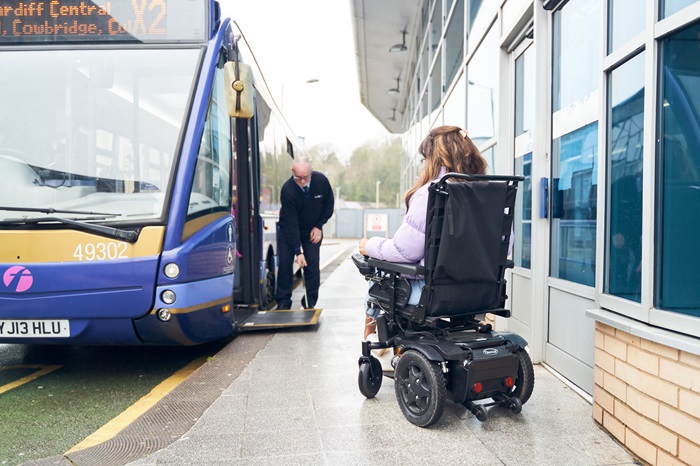
Photo: Transport for Wales
Developing staff training and industry tools
Dr Baker’s findings have translated directly into improved training for public transport staff to equip them with practical skills to enhance passenger safety. Working with Welsh Women’s Aid and Stagecoach South Wales, she helped develop frontline training for bus drivers to recognise harassment, identify signs of gender‑based violence and respond appropriately.
Additionally, her publication ‘Bystander Intervention Against Gendered Harassment and Gender Based Violence in Public Transport’ provides a comprehensive guide for campaigners and trainers. The guide outlines intervention techniques, reporting mechanisms, and the specific barriers that prevent bystanders from intervening on public transport. This resource further supports the development of coordinated safety strategies across institutions and communities.
Dr Baker’s expertise in gender‑inclusive transport has been sought by the Department for Transport, the Confederation of Passenger Transport and professional bodies such as the Chartered Institution of Highways and Transportation. She has contributed to panel discussions and webinars examining how to make public transport networks safer for vulnerable and under‑represented users.
Photo: Transport for Wales
Transforming mobility across Wales and beyond
Dr Lucy Baker’s research is informing conversations across Wales about how public transport can be reshaped to better support women and girls.
As local authorities and transport operators increasingly seek to address gender‑based violence and build safer communities, the insights from her research and publications provide an essential evidence base to guide decision‑making, and contribute to efforts to build more inclusive, equitable transport systems.

Photo: Transport for Wales
Further Information
Use the following links to find out more about Dr Lucy Baker’s research:
Get in touch
As a University, we’re always keen to share our knowledge and expertise more widely for the benefit of society. If you’d like to find out more or explore how you can collaborate with our researchers, get in touch with our dedicated team of staff in the Department of Research, Business and Innovation. We’d love to hear from you. Just drop an e-mail to: