
AI Bootcamp 2026
13-17 April 2026 at Aberystwyth University
Overview
This AI Bootcamp (formerly AI Summer School) is an in-person interdisciplinary bootcamp which is designed for researchers and professionals who are interested in extracting novel insights from their datasets. Through interactive and hands-on workshops, participants will gain theoretical and practical knowledge in AI-driven methods and how they can be applied to advance their projects.
The bootcamp is designed for individuals with minimal experience in AI. We particularly encourage postgraduate research students, early career researchers and professionals to apply. Those who have a dataset in-hand or are in the process of generating one will be given priority in the application process.
The bootcamp will support attendees to:
- Formulate a personalised research question or objective
- Develop data mining and modelling pipelines
- Analyze and interpret results
- Disseminate findings
- Understand how to use AI responsibly
The attendees will also have the opportunity to:
- Gain experience collaborating with experts outside of their discipline
- Develop new perspectives on problem-solving using formal methods
- Consider ethical implications of using AI in research and product development.
Participants will be eligible to apply for a follow-up intensive workshop focussed on producing a manuscript for publication.
Content
Important Dates
Plenary Speakers
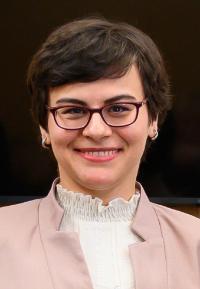
Dr Azam Hamidinekoo
Associate Director at AstraZeneca
Dr Azam Hamidinekoo is an Associate Director at AstraZeneca, specializing in image and data analysis. With a PhD in Computer Science from Aberystwyth University, she has over a decade of expertise in data science, particularly applied to medical images. Following a postdoctoral fellowship at the Institute of Cancer Research (ICR), she has focused on developing novel computer vision solutions in digital histopathology within AstraZeneca. As part of the Clinical Pathology and Safety Sciences team, Dr. Hamidinekoo collaborates closely with diverse experts to analyse images, optimize processes, and enhance project efficiencies through advanced computational tools. These efforts support informed decision-making in drug safety, efficacy, and toxicity assessments.
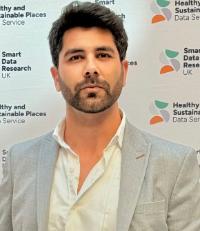
Dr Faraz Malik Awan
Senior EV Data Scientist at Zenobē
Dr. Faraz Malik Awan is a Senior EV Data Scientist at Zenobē, where he uses advanced machine learning and data science skills to improve the performance and efficiency of electric vehicle fleets.
At Zenobē, a leader in the UK’s energy transition and EV fleet electrification, Faraz contributes to projects that sit at the intersection of data science, transport decarbonisation, and energy systems innovation. He works closely with fleet operators, engineers, and data platform teams to transform raw telematics data into actionable insights that support sustainable transport, improved operational performance, and smarter use of energy infrastructure.
Previously, Faraz worked at the Urban Big Data Centre, University of Glasgow, applying data science to mobility and transport research. His projects ranged from travel behaviour modelling to geolocation analytics, with a strong focus on open-source software development.
His current professional interests lie in energy analytics, flexibility, and digital innovation in the transport sector, helping to accelerate the shift towards a net-zero future.
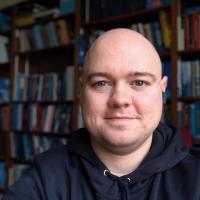
Dr Paul Wright
Senior Machine Learning Scientist at the University of Exeter
Paul Wright is a Research Software Engineer at the University of Exeter. He applies software engineering and machine learning to tackle scientific challenges, collaborating with researchers, government, and industry to deliver reproducible and operational ML solutions. His academic research focuses on Heliophysics and space weather forecasting, developing end-to-end machine learning and data processing pipelines that enhance the reliability and readiness of AI for space science applications.
Previously, Paul was a Research Data Engineer at the Dublin Institute for Advanced Studies, a Machine Learning Engineer in industry, a Postdoctoral Fellow at Stanford University, and a Core Mentor at the NASA Frontier Development Lab, where his team’s work was showcased by Google Cloud and presented at NeurIPS. He holds a PhD in Physics from the University of Glasgow, where he investigated the coronal heating problem.
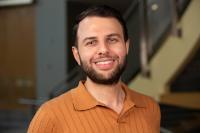
Dr Phillip H. Alvarez
Head of Ventures and Products at xFoundry
Dr Phillip H. Alvarez is Head of Ventures and Products at xFoundry, where he leads strategic partnerships and AI-driven innovation programs connecting government agencies, Fortune 500 companies, and research institutions. With a Ph.D. in Biophysics from the University of Maryland, Dr. Alvarez brings deep expertise in applying artificial intelligence to scientific discovery across diverse domains including space systems, healthcare, advanced manufacturing, and energy.
His work spans the full AI development lifecycle, from research to deployment, including enterprise AI knowledge management platforms utilizing fine-tuned LLMs and GraphRAG, edge AI solutions for safety and healthcare, and autonomous systems for disaster monitoring. Dr. Alvarez has led research funded by the NIH, NSF, and US Air Force Office of Scientific Research, and maintains active collaborations with NASA, national laboratories, and leading technology companies. He combines technical depth in machine learning with proven expertise in translating cutting-edge AI research into practical, scalable applications across interdisciplinary teams.
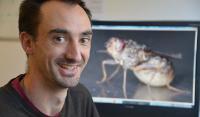
Dr Roger Santer
Senior Lecturer in Zoology at Aberystwyth University
Dr Roger Santer is Senior Lecturer in Zoology in the Department of Life Sciences, Aberystwyth University. His research aims to understand the neural mechanisms of behaviour in insects, and to exploit those mechanisms to create better ways of controlling insect pests and disease vectors. He has used AI to hypothesise links between sensory receptor signals and behavioural responses in a range of insects, providing insights that can improve pest control.
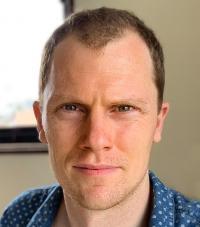
Dr Sam Jones
Lecturer in Developmental Psychology at Bangor University
Sam completed his PhD and postdoctoral work at Lancaster University and is now a lecturer in developmental psychology at Bangor University. His work involves using computational modelling to understand the origins of individual differences in neurocognitive development.
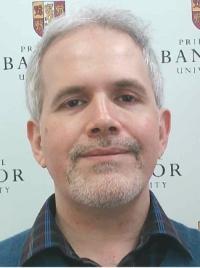
Dr Tirso Gonzalez Alam
Cognitive Neuroscience at Bangor University
Tirso is a Lecturer in Cognitive Neuroscience at Bangor University. His research aims to understand the large-scale network organization of the cerebral cortex and how patterns of hemispheric differences within this hierarchy give rise to cognitive systems. He is particularly interested in how we comprehend complex aspects of meaning. He approaches this object of study through naturalistic phenomena such as humour, irony, and sarcasm. To investigate this, his work uses a combination of fMRI, naturalistic tasks, connectivity analysis, and machine learning models.
Tirso originally trained as a clinical neuropsychologist at the National Autonomous University of Mexico, where his work with stroke and epilepsy patients sparked his interest in the lateralisation of cognitive functions. He received his PhD in Cognitive Neuroscience and Neuroimaging from the University of York, where he worked with Professors Beth Jefferies and Jonny Smallwood. He is also a passionate advocate for open science, rigorous and reproducible pipelines and data sharing.
Organising Committee
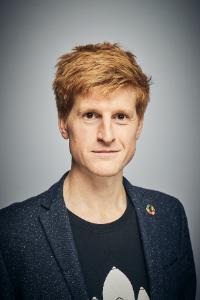 Dr Charlie Harrison is a research software engineer for AIBIO-UK, based at Aberystwyth University. His PhD is in computational biology and bioinformatics. He has worked extensively in the commercial and charity sectors, as a consultant and as the Technical Lead on AI for Impact in the mobile industry.
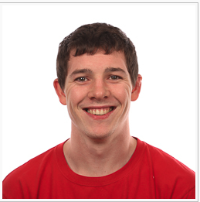 Cory Thomas has worked as a Research Software Engineer (RSE) for the past three years and is a post-viva PhD student specializing in computer vision for breast cancer research. He has also contributed to projects involving large language models for historical archives, as well as medical applications such as cleft palate analysis. In addition, Cory has two years of industry experience as an AI developer.
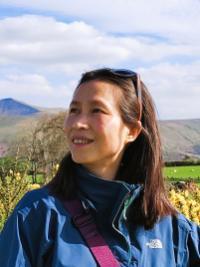 Dr Chuan Lu is a Senior Lecturer in Bioinformatics at Aberystwyth University, UK, and received a PhD in Electrical Engineering from KU Leuven, Belgium. Her research focuses on AI for biology and medicine, including predictive modeling, graph-based methods, and integrative analysis to support biomedical research and clinical practice. She has led projects on personal health knowledge graphs, clinical data analysis, biomarker discovery, and open-source biobank systems, and also applies machine learning to plant phenotyping, advancing genetic discovery and crop breeding.
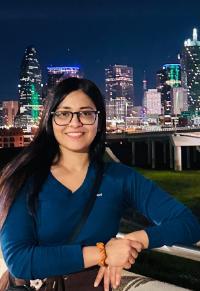 Harshita Gandhi is a Postdoctoral Fellow in the Department of Physics at Aberystwyth University. Her research focuses on studying our local star, the Sun, with an emphasis on understanding the physical mechanisms that trigger solar eruptions and improving their forecasting at Earth using Machine Learning. She took part in the first AI Summer School 2023 as an attendee and found it both valuable and motivating. During the school, she began a collaboration with Cory Thomas that later resulted in a peer-reviewed publication as part of her PhD work, showing how the school can spark impactful research partnerships.
 James Strong is a Research Software Engineer at Aberystwyth University. His role involves delivering AI-driven solutions across interdisciplinary research projects. His research background is in bio-inspired artificial intelligence, with a focus on how biological systems can inform innovative approaches to navigation and problem-solving.
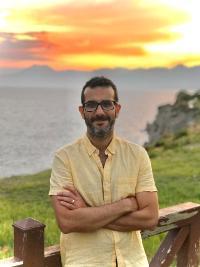 Dr Otar Akanyeti has BSc in Electronic Engineering (Hacettepe University) and MSc in Embedded Systems and Robotics (University of Essex). His PhD focused on robot learning by demonstration under the supervision of Prof Ulrich Nehmzow at University of Essex. He investigated formal ways of developing controllers for mobile robots using machine learning and system identification methods. After his PhD, he joined Dr Paolo Fiorini’s research group at the University of Verona to work in the FILOSE EU-FP7 project, which interfaced biology and engineering to develop a bio-inspired fish robot with an artificial lateral line. His growing interest in the biological aspects of movement and sensing led him to join Dr James C. Liao’s laboratory at Whitney Institute for Marine Biology in University of Florida. There, he investigated the biomechanical, hydrodynamic and neural mechanisms underlying fish locomotion in steady and turbulent flows for efficient movement and energy capture and the organisation of the lateral line system from a distributed sensing perspective. He joined the Department of Computer Science at Aberystwyth University as a Lecturer in 2017 and became a Senior Lecturer in 2022. In Aberystwyth, he expanded his research portfolio to cognitive robotics and neuroscience (map and cue-based navigation) and human health (chronic disease management using technology and artificial intelligence).
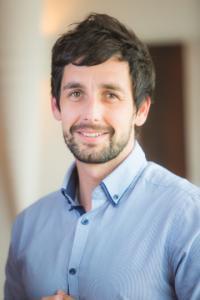 Dr Wayne Aubrey is a Lecturer in Software Engineering and a bioinformatician with experience in developing AI-driven data analysis pipelines. His research spans genome annotation, metagenomics and computational biology. He was a key contributor to the groundbreaking Robot Scientist project - the first machine to autonomously discover new scientific knowledge, which was named one of Time Magazine’s top 10 scientific discoveries of 2009. Wayne is passionate about interdisciplinary research and enjoys working at the interface between wet-laboratory experiments and computational biology.
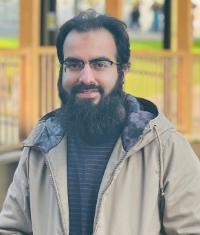 Dr Yasir Saleem is a Lecturer in Computer Science. His research interests include intelligent transportation systems, artificial intelligence, Internet of Things, smart cities and wireless networks. He is a Senior Member of IEEE. He has 1 patent and over 35 publications in leading journals and international conferences. He is actively involved in Technical Program Committee (TPC) of several international conferences and is a regular reviewer of various top journals.
Apply
Testimonials
Previous Events
Now entering its 5th iteration, the Aberystwyth AI BootCamp builds on a growing programme of hands-on, collaborative learning. Our previous events have brought together researchers, students, and professionals from across many disciplines to explore how artificial intelligence can drive their research.
From group coding sessions to one-to-one mentoring sessions, each year has fostered a welcoming and creative environment where ideas are shared, skills are developed, and connections are made. The photos below capture a few moments from past editions; a glimpse into the energy and community that define the Aberystwyth AI BootCamp experience.
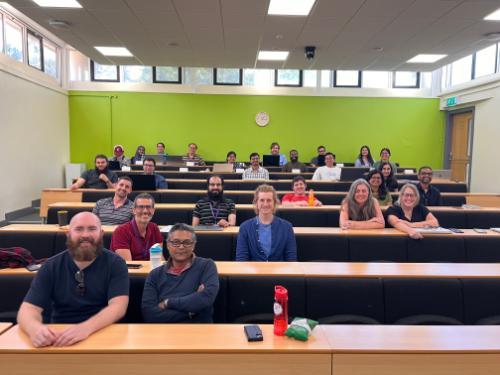
The 2025 Cohort.
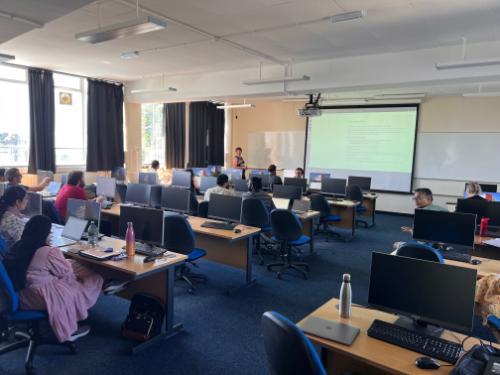
Group interactive coding session.
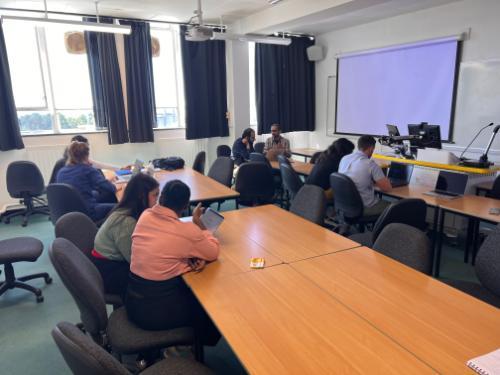
One-to-one mentoring sessions.
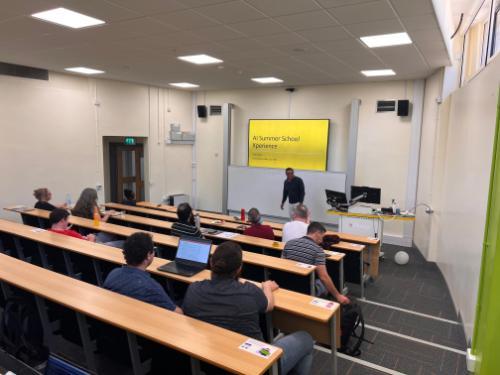
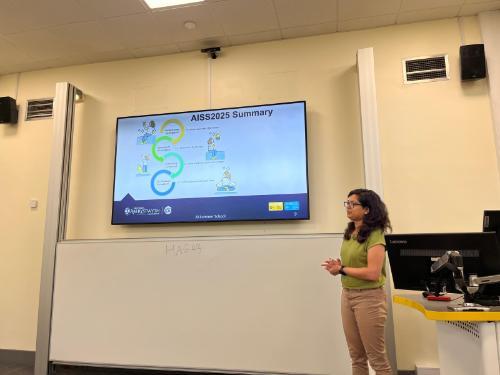
Attendee's delivering progress presentations