
Plant trait discovery could boost soil carbon storage
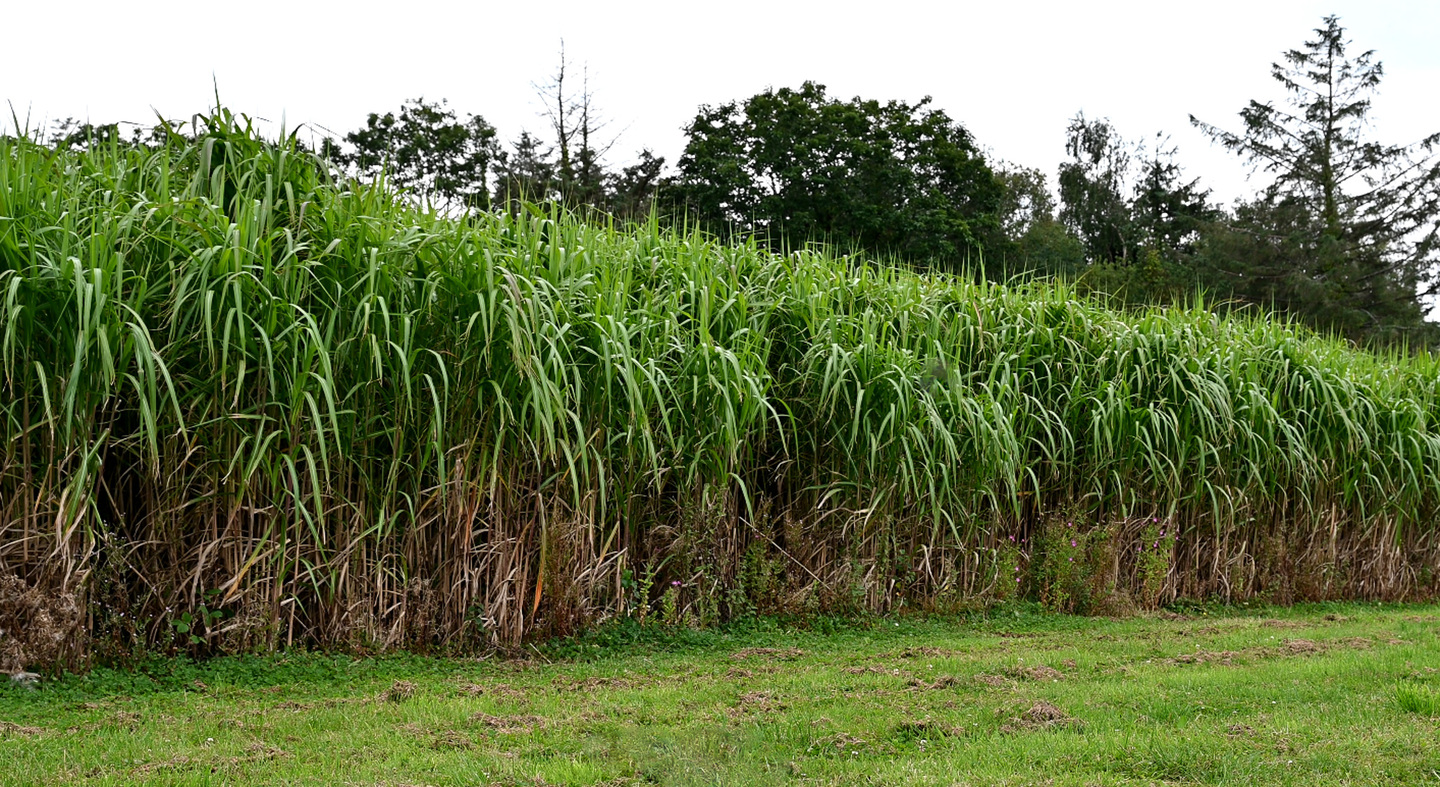
Miscanthus at Aberystwyth University
16 February 2026
Scientists at Aberystwyth University have discovered specific traits in Miscanthus that could help lock more carbon into the soil, helping to tackle climate change.
Miscanthus is a plant with many straw-like stems that grows up to four metres high per year. It is harvested in spring and grows back to produce a crop each year.
It can grow well on land less suitable for food crops and the harvested crop is typically used for bioenergy for heat and power. It also has a wider variety of other uses, including for green manufacturing and chemicals production, as a construction material and for animal bedding in livestock farming.
The crop can also store carbon underground, helping to reduce greenhouse gas emissions.
The new research, published in the journal Frontiers in Plant Science, identifies which plant features are most important for boosting soil carbon storage, helping farmers grow climate-smart crops while maintaining high yields.
By analysing the chemical makeup of the plant’s leaves, roots and underground stems, the Aberystwyth University scientists identified traits linked to soil carbon storage.
The study examined 11 Miscanthus varieties and found that rhizomes - the crop’s woody underground stems - move carbon deeper into the soil, where it can remain stable. Roots with lower levels of a natural plant chemical, lignin, store more carbon near the soil surface.
The findings suggest that the most effective Miscanthus varieties for tackling climate change are those with large underground growth and roots with lower lignin levels.
Dr Paul Robson, from the Institute of Biological, Environmental and Rural Sciences at Aberystwyth University, who led the study, said:
“This is an important breakthrough in our research - helping us understand which characteristics make Miscanthus most effective at storing carbon in the soil. Varieties store carbon differently, and understanding these relationships helps guide breeding strategies that deliver climate and agricultural benefits together.”
“The UK needs to reduce CO2 emissions in order to mitigate climate change, and we also need to develop our economy to take advantage of green technologies as opposed to relying on fossil fuels. We hope that this research will give even greater impetus to that shift to a greener society.”
Dr Amanda Holder, Postdoctoral Research Associate at Aberystwyth University, said:
“Breeding programmes for Miscanthus are still at an early stage. These results provide practical guidance on which traits are most likely to support soil carbon storage, helping ensure that future varieties deliver climate benefits alongside high yields. The study shows that it’s possible to enhance soil carbon storage without compromising productivity, supporting the case for Miscanthus as a versatile, low-carbon crop.”
The work aligns with IBERS’ strategic focus on resilient crops and was supported by the Biotechnology and Biological Sciences Research Council (BBSRC) through its Resilient Crops programme.
Share


