
IBERS seaweed expert features in new video project exploring the future of food
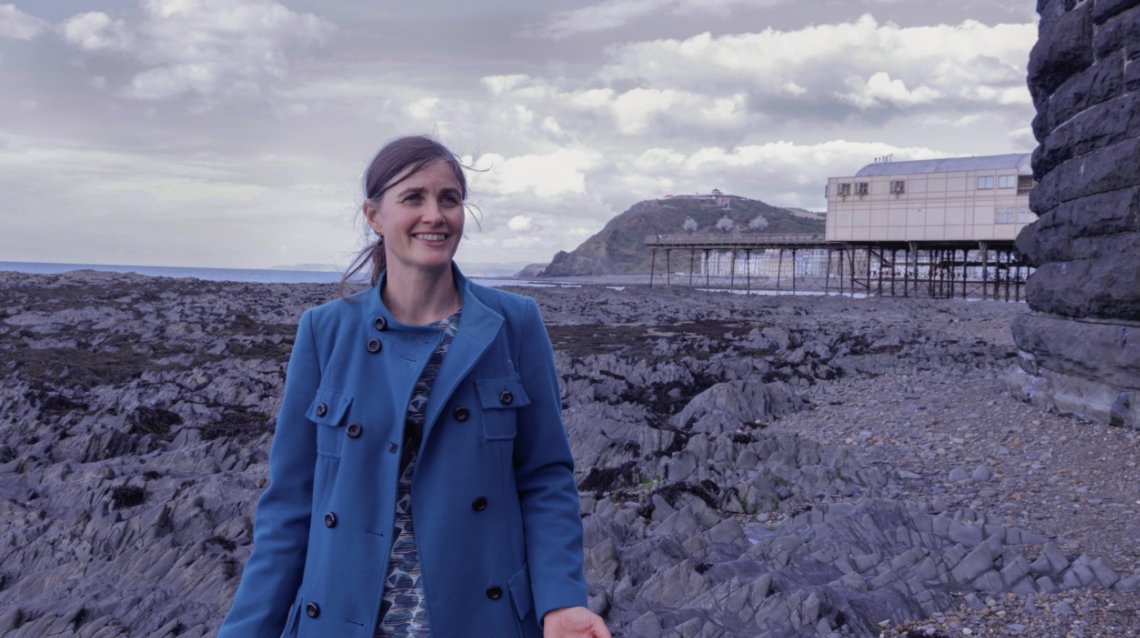
Dr Jessica Adams
16 November 2026
More people could benefit from including seaweed in their everyday diets, according to a leading algal expert at IBERS.
Dr Jessica Adams, a Senior Research Fellow at IBERS (the Institute of Biological, Environmental and Rural Sciences) at Aberystwyth University, is featured in a new video project highlighting how UK research and innovation are benefitting health and nutrition on a global scale.
The Campaign for Science and Engineering (CaSE)and YouTube creators Sorted Food have used research projects from all parts of the UK to inspire a series of delicious dishes and thought-provoking discussions on how science is helping to improve lives and livelihoods.
The video producers have chosen four themes to help them tell the stories behind key global crops: the forgotten crop (grass pea), the misunderstood crop (hemp), the overlooked crop (seaweed) and and the crop on borrowed time (coffee). Dr Adams appears as part of the sequence on seaweed, which explores the potential of this often-overlooked crop to foster healthier and more sustainable diets.
Dr Adams has been involved in researching seaweeds and other algae for almost 20 years, investigating their potential for food, health and biobased products. She is also President of the British Phycological Society (2026-28), the UK's leading organisation for researchers and professionals working on algae and seaweeds.
Speaking about her work, Dr Adams said:
"If we can eat more seaweeds in foods as a basic ingredient, we'll benefit from all of their nutritional advantages. Seaweeds are rich in vitamins and minerals, high in fibre, low in fat, and contain a good balance of essential amino acids in their protein. Laverbread has been a part of Wales’s culinary tradition and we’re all familiar with the use of seaweed in Japanese food - but we should all be eating more seaweed in our daily diets because it's good for us on so many levels.
"As demand for nutritious food continues to grow, seaweed could also help support food security by providing a sustainable source of nutrients that can be cultivated without needing agricultural land, freshwater or fertilisers."
As well as IBERS, the newly-launched project also features contributions from researchers at the Scottish Association for Marine Science, the John Innes Centre, the Rowett Institute at the University of Aberdeen, and the University of Oxford. Both IBERS and the John Innes Centre are strategically funded by the UKRI’s Biotechnology and Biosciences Research Council (BBSRC).
Alicia Greated, Executive Director of the Campaign for Science and Engineering (CaSE), said:
"The impact of the five research teams featured in the video is truly inspiring. But we know that this is just the tip of the iceberg when it comes to UK R&D. CaSE members and others across the sector have a wealth of stories to tell; we hope this work provides inspiration and ideas for others."
The collaboration combines CaSE’s strong links across the R&D sector, Sorted Food’s engaging and visually impactful style, and the expertise of research collaborations across the UK. It has been funded by a grant from the Gates Foundation and is part of CaSE’s work to provide evidence and tools to support the R&D sector engaging public audiences.
The full video can be viewed on YouTube: https://www.youtube.com/watch?v=CPFtTPbwNz8
Share


