
The research behind your breakfast oats
Did you know that when you tuck into a bowl of porridge, it’s highly likely the oats came from a variety bred at the Institute of Biological, Environmental and Rural Sciences (IBERS) at Aberystwyth University?
For more than a century, scientists and plant breeders at Aberystwyth have been improving oats, developing varieties that now account for over 95% of the UK's winter oat crop.
Their research has unlocked the genetic and biological understanding needed to breed oats that yield more, are disease resistant and deliver the quality demanded by food manufacturers and consumers.
These innovations benefit farmers, support more sustainable crop production and help meet growing demand for one of the world's healthiest cereals.
The impact has been substantial, with UK oat production doubling over the past 25 years, driven in part by the adoption of improved varieties developed through research at Aberystwyth.
The health benefits of oats
One of the main reasons behind the increase in the demand for oats is their demonstrated health benefits and versatility when used in meals, drinks and snacks.
Consumed as a whole grain, oats are an excellent source of protein and fibre and are naturally gluten free. They are also a valuable source of essential minerals, including manganese, phosphorus, magnesium, iron and zinc.
Beta-glucan is a key dietary fibre in oat grains and has proven cholesterol-lowering and coronary health properties.
Oats are also unusual among cereal crops in having a relatively high oil content, containing beneficial unsaturated fatty acids that contribute to both nutritional quality and flavour.
Oats are rich in other bioactive compounds too including the avenanthramides, polyphenols unique to oats with antioxidant and anti-inflammatory properties.
Emerging research suggests that oat consumption may also support immune function and promote a healthy gut microbiome. Combined with increasing consumer interest in plant-based foods, oats offer a nutritious, sustainable and versatile source of dietary energy, protein and health-promoting compounds.
Environmental benefits
Beyond their nutritional value, oats as a crop deliver wider environmental benefits. As a break crop, they help improve crop rotations, reducing disease pressure, supporting soil health and increasing biodiversity in UK agriculture.
For oats to play a larger role in sustainable farming systems, they must also provide farmers with competitive financial returns. IBERS researchers and breeders have therefore developed improved varieties that combine high yields with greater resilience.
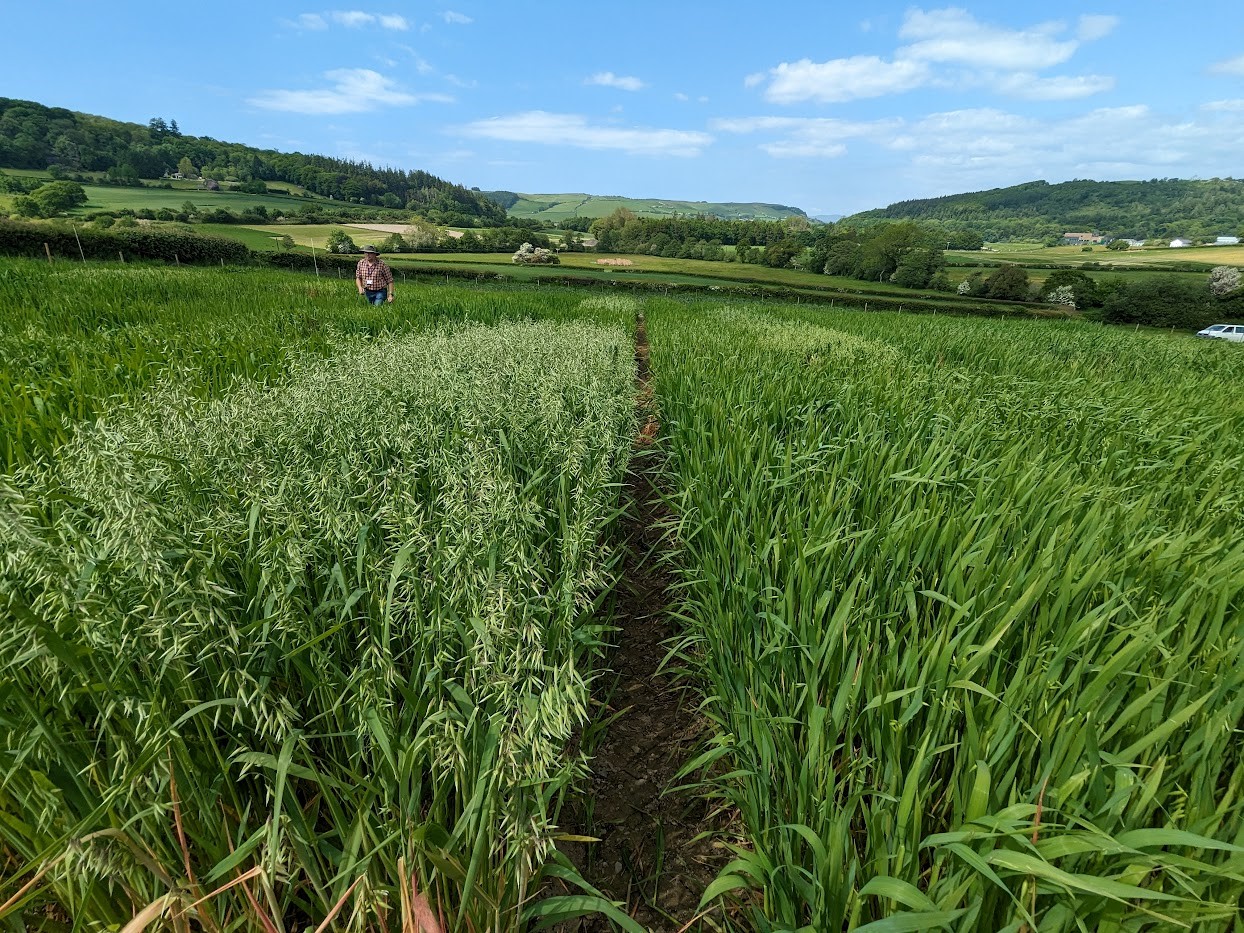
Modern oat varieties are shorter and less prone to lodging during wet or windy weather, while also using nutrients more efficiently and offering improved disease resistance. Together, these traits make oats a more productive, profitable and environmentally sustainable crop for UK agriculture.
Oat varieties
New oat varieties are continually needed to meet the increasing demand for healthy food and maintain crop diversity.
The AHDB recommended lists for 2026-27 include five winter oat varieties and one spring oat variety bred at IBERS, with others – such as Maunsell – in the pipeline.
These varieties are marketed by the Institute’s long-term commercial partners Senova, ensuring they reach growers across the UK and beyond.
Among the breeding programme’s greatest successes is Mascani, the UK’s most widely grown winter oat variety.
Developed at IBERS and commercialised through Senova, Mascani became the benchmark against which many other oat varieties are measured because of its exceptional grain quality, reliability and milling performance.
In recognition of its outstanding contribution to UK agriculture, Mascani was awarded the prestigious NIAB Variety Cup in 2025 and praised as an “exceptional variety” of “unmatched quality and reliability”.
The success of Mascani has provided a platform for continued innovation at IBERS.
More recent varieties such as Cromwell are building on this legacy by combining the grain quality demanded by millers with higher yields and strong agronomic performance in the field.
Added to the AHDB Recommended List in 2022, Cromwell demonstrates how ongoing breeding research at Aberystwyth continues to deliver benefits for farmers, processors and consumers alike while broadening the range of varieties available to growers.
Rannoch – which combines high yields, excellent grain quality and superb disease resistance - was added to the AHDB Recommended List of winter oats for 2026-27.
Another new variety, Maunsell, is in its fourth trial year in 2026 and is showing very promising results in terms of yield, crown rust resistance and kernel content as well as having earlier maturity.
Responding to future climate challenges
Ongoing work to increase the speed and precision of the oat breeding cycle is an integral part of IBERS’ research programme, along with breeding varieties with enhanced grain quality and tolerance to drought, heat and water logging, which, over the longer term, could be beneficial for UK food security in a time of climate change.
A major research breakthrough came through IBERS’ involvement in the international PanOat consortium, which in 2025 produced the most comprehensive catalogue of oat genetic diversity ever assembled and created the first ever oat pangenome and pan-transcriptome.
Dr Catherine Howarth, Head of the Oats and Pulse Breeding Programme at IBERS, said:
“Mapping the oat pangenome significantly expands the resources available to researchers at IBERS and elsewhere, helping to inform targeted breeding strategies and develop climate-resistant oat varieties with improved yield stability and health benefits under changing environmental conditions.
“As a breeding team, our aim at IBERS is not simply to develop one successful variety, but to deliver a continuous pipeline of improved oat varieties that respond to the changing needs of farmers, millers, consumers and the environment.
“By combining long-term breeding expertise with the latest advances in genomics, we're helping to develop crops that are productive, resilient and equipped to address the key challenges of food security, climate change and dietary health.”
So when you next tuck into a flapjack, oat bar or bowl of porridge, spare a thought for the IBERS researchers working hard to shape the future of this remarkable crop.
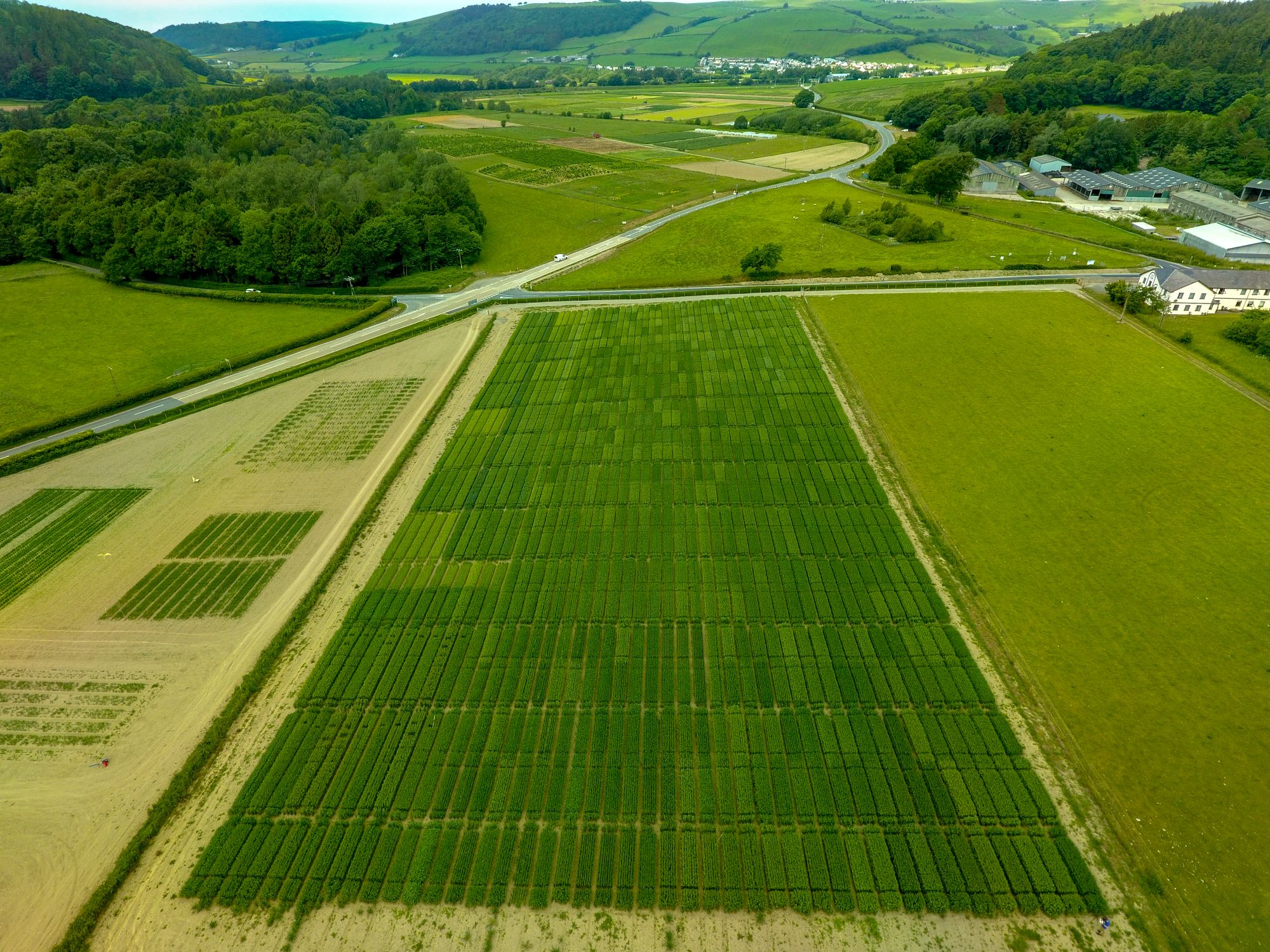
Part of Aberystwyth University, IBERS is one of eight research institutes strategically funded by UKRI’s Biotechnology and Biological Sciences Research Council (BBSRC) to provide the UK with a national capability in grassland and plant breeding science, supporting strategic sustainability goals and net zero targets.
Further Information

Get in touch
As a University, we’re always keen to share our knowledge and expertise more widely for the benefit of society. If you’d like to find out more or explore how you can collaborate with our researchers, get in touch with our dedicated team of staff in the Department of Research, Business and Innovation. We’d love to hear from you. Just drop an e-mail to: