
Understand the natural world through art and science
Environmental change is increasingly communicated through approaches that combine scientific data with visual and sensory forms of representation.
Dr Julian Ruddock, from the School of Art at Aberystwyth University, brings together art and science to explore how environmental knowledge is communicated and understood. Through collaborations with scientists, his work develops new ways of engaging audiences with ecological change and environmental challenges through art.
Bridging art and science
Dr Ruddock’s practice aims to work across artistic and scientific disciplines. Science provides analytical, data-driven insight into the natural world, and art offers alternative ways of interpretating and communicating its meaning and urgency to audiences.
Working with scientists, including geomorphologists and ecologists, he develops projects through fieldwork, shared observation and dialogue. These collaborations generate new perspectives on landscapes and ecological systems under pressure.
Seabirds’ nocturnal lives
Dr Ruddock is currently working with the Oxford University Navigation Group (OxNav), whose research explores how animals navigate across vast distances.
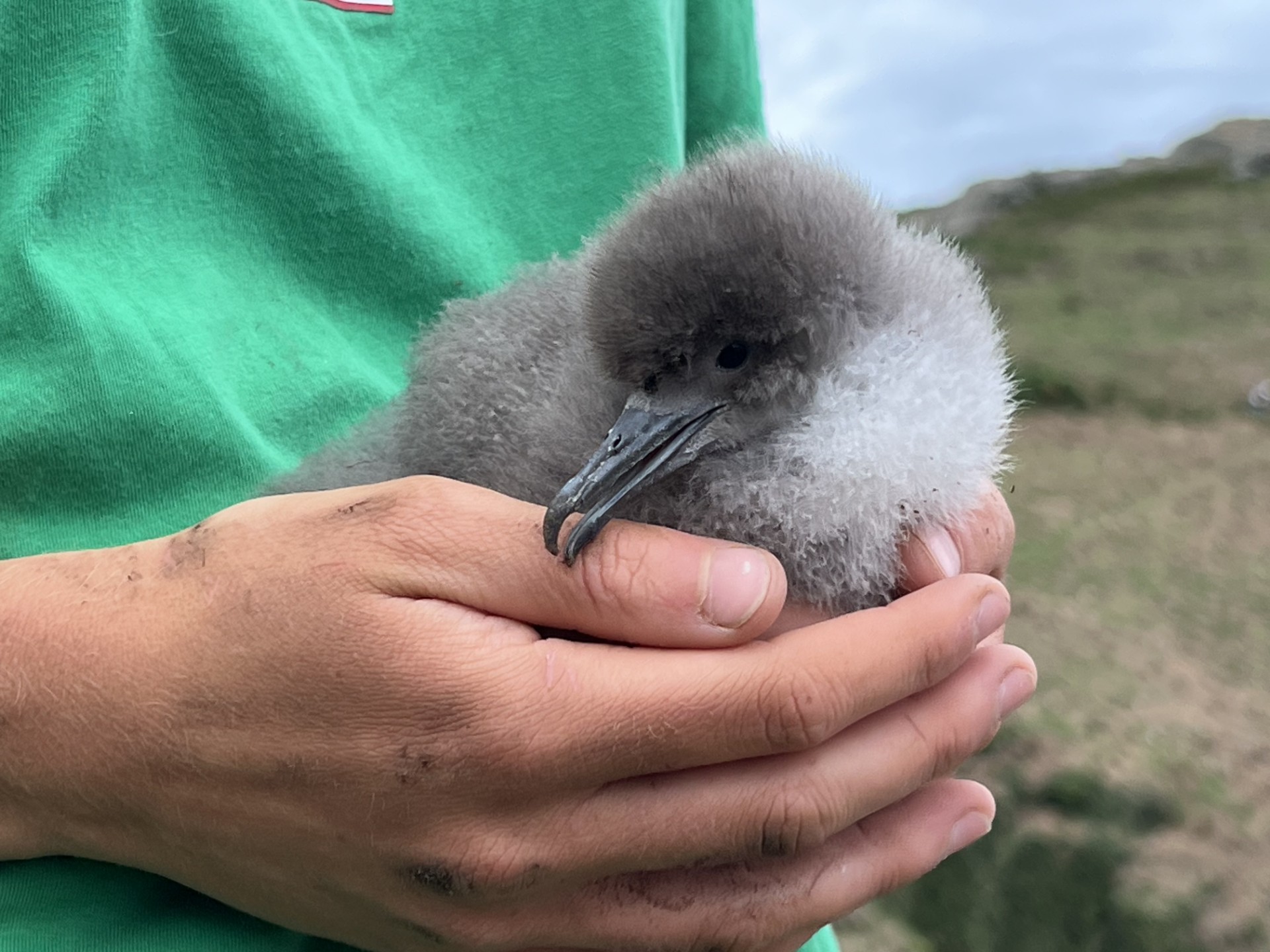
The nocturnal island lives of Manx shearwaters, breeding off the west coast of Britain, are the subject of the cross-disciplinary collaboration.
These remarkable seabirds breed on offshore islands, with Skomer Island in Pembrokeshire National Park being the single largest colony of shearwaters in the world. Shearwaters migrate thousands of miles to South America every year, returning to their island burrows each spring to raise their chicks.
Dr Ruddock has travelled to various islands on the western fringe of Britain and Ireland including Skomer, Skokholm and Ynys Enlli in Wales, as well as The Great Blasket in Ireland to research the shearwaters and the islands they inhabit.
The team use tiny geolocators to record the time of sunrise and day length to provide positions, which in turn reveal the birds’ migration routes.
His research draws on this data as well as using sound recordings, interviews with scientists and direct observation from fieldwork to help tell the stories of these birds and the ecologies of the islands through art.
As well as their migration and navigation skills, Manx shearwaters are known for their eerie nighttime calls used to identify their mates and the location of their burrows in the dark. He is working with OxNav to capture sound recordings of the birds on Skomer Island with the aim of improving appreciation and awareness of these incredible birds, which few people experience because of their nocturnal behaviour. While day visitors to the island see the familiar sight of puffins, not many have the chance to see the island’s life after sunset when an estimated 350,000 pairs of shearwaters return to their burrows under the cover of darkness.
As part of the project, Dr Ruddock is also researching the work of the important nature writer, R.M. Lockley (1903-2000) who conducted pioneering work on Manx shearwaters on another Pembrokeshire island, Skokholm, in the 1930s. Lockley wrote significant books about Welsh wildlife including ‘Letters from Skokholm’ (1947), which records daily life on the remote Welsh island.
Dr Ruddock’s research will be developed into artworks combining film, sound, installation, drawings and paintings, with plans for exhibitions in venues such as Oriel Y Parc in St Davids in May 2027.
Human evolution in Ethiopia
As artist-in-residence on the Hominin Sites and Paleolakes Drilling Project, Dr Ruddock worked alongside scientists studying early human evolution through deep lakebed cores spanning hundreds of thousands of years.
His work translated geological and environmental data into visual forms, offering new ways of interpreting deep time landscapes and the climatic context of human evolution.

Coastal change and heritage
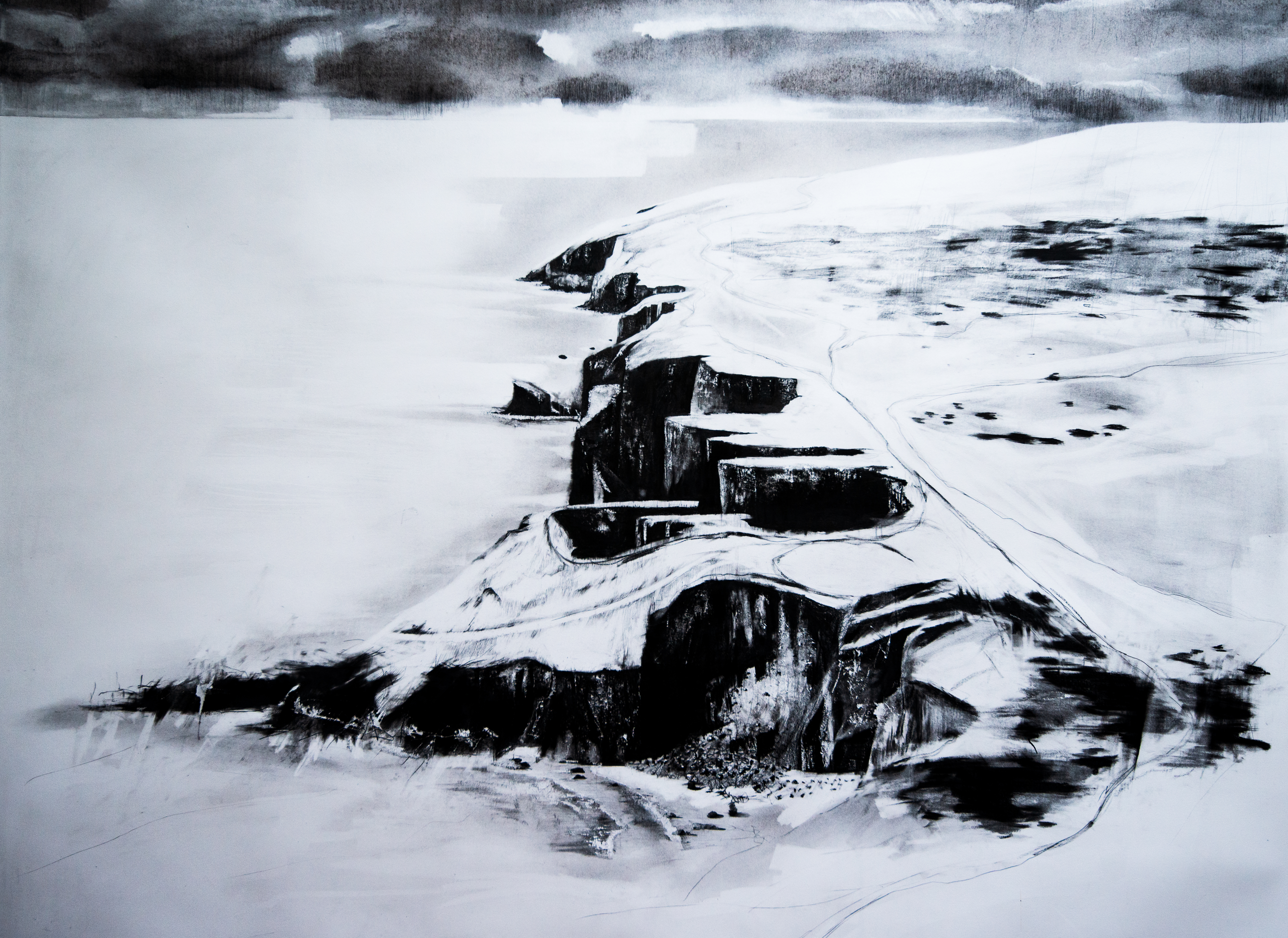
In the CHERISH (Climate, Heritage and Environments of Reefs, Islands and Headlands) project, a cross-border collaboration involving partners in Wales and Ireland, Dr Ruddock responded to the work of archaeologists at the Royal Commission on the Ancient and Historical Monuments of Wales (RCAHMW) and earth scientists at Aberystwyth University who explored how climate change is reshaping coastal heritage.
The science project provided a baseline record of vulnerable archaeological sites across the coasts of Wales and Ireland, addressing the growing impact of rising sea levels, increased storm events and coastal erosion.
His artistic responses complemented scientific mapping, helping to document environmental change and communicate its significance.
Landscape, technology and imaging
Dr Ruddock works in a range of media including painting, drawing, photography and film and his work for the CHERISH project incorporated aerial photography and scientific imaging techniques such as LiDAR and thermal imaging to reveal patterns, structure and changes within landscapes.
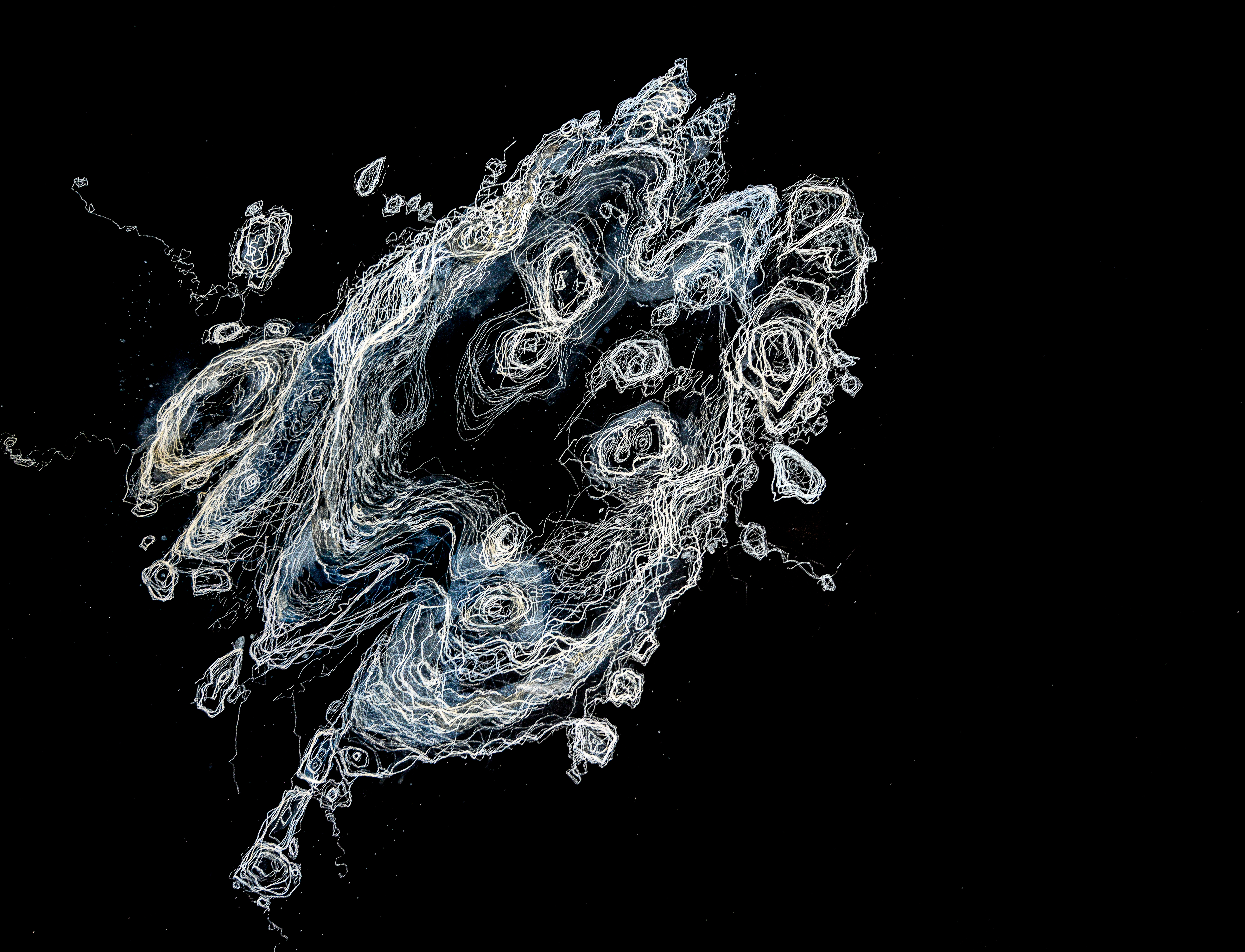
He’s interested in the images produced by new technologies that are extending human faculties and making visible the invisible, revealing how landscapes are shaped by climate, erosion and ecological change, and how environments shift and evolve over time.
Changing how knowledge is shared
Through exhibitions in galleries and public spaces, including venues such as the Senedd, Dr Ruddock’s work reaches audiences beyond academia. It communicates issues such as biodiversity loss, climate change and human impact on ecosystems.
His work aims to engage audiences and encourage reflection on our relationship with the natural environment.
Further Information

Get in touch
As a University, we’re always keen to share our knowledge and expertise more widely for the benefit of society. If you’d like to find out more or explore how you can collaborate with our researchers, get in touch with our dedicated team of staff in the Department of Research, Business and Innovation. We’d love to hear from you. Just drop an e-mail to: