
Dr Otar Akanyeti
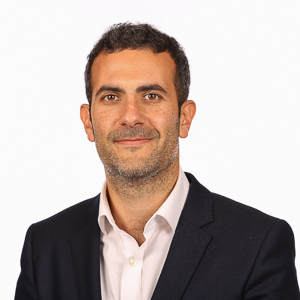
Senior Lecturer
Contact Details
- Email: ota1@aber.ac.uk
- Office:C51 Llandinam Building
- Phone: +44 (0) 1970 622537
- Google Scholar: https://scholar.google.co.uk/citations?user=Q_RpSAIAAAAJ
- Personal Website: https://stroke.aber.ac.uk/
- Research Portal Profile (https://research.aber.ac.uk/en/persons/b7953bc9-8284-481f-bdac-b156d2f1ce67)
I did my BSc in Electronic Engineering and MSc in Embedded Systems and Robotics. My PhD work focused on robot learning by demonstration under the supervision of Prof Ulrich Nehmzow at University of Essex. I investigated formal ways of developing controllers for mobile robots using machine learning and system identification methods. After my PhD, I joined Dr Paolo Fiorini’s research group in Verona, Italy to work in an EU-FP7 project, which interfaced biology and engineering to develop a bio-inspired fish robot with an artificial lateral line. My growing interest in the biological aspects of movement and sensing led me to join Dr James C. Liao’s laboratory at Whitney Institute for Marine Biology in University of Florida. There, I investigated the underlying principles of fish locomotion in steady and turbulent flows for efficient movement and energy capture and the organisation of the lateral line system from a distributed sensing perspective. In 2017, I took up a Lectureship in the Department of Computer Science at Aberystwyth University. In Aberystwyth, I have expanded my research portfolio to human health, mainly focusing on artificial intelligence and chronic disease management. With Dr Federico Villagra from Institute of Biology, Environmental and Rural Sciences, we have founded the Aberystwyth Stroke Research Group.
My research program has two main strands: bio-inspired robotics and health informatics.
Bio-inspired robotics: I draw from the fields of engineering, physics, computer science and biology to design new sensors and actuators that can improve the sensing capability, propulsive efficiency, and maneuverability of underwater robots. I also create new data processing and control systems that can enhance autonomy. In addition, I employ a combination of interdisciplinary approaches to study biomechanical, hydrodynamic, and neural mechanisms of how fishes interact with their environments. I am interested in biomimetic fish robots, real-time hydrodynamic imaging using novel arrays of flow/pressure sensors inspired from the lateral line system of fishes and flow-relative control. In recent years, I have also become interested in biological collective intelligence and its applications to data mining and swarm robotics.
Health Informatics: I work closely with clinicians, biologists, neuroimaging experts and clinical exercise scientists to improve stroke care pathways using wearable devices, robotics and artificial intelligence. I aspire to develop new technologies that can be used in community and clinical settings. We also tackle fundamental research questions in artificial intelligence (integrating data from multiple resources to improve diagnostic and predictive tools), neuroscience (how brain injury impacts motor and cognitive aspects of human locomotion), neurorehabilitation (neural, physiological and biomechanical mechanisms of recovery), health outcomes (short and long-term benefits of healthcare interventions) and preventive medicine (discovering new biomarkers or designing novel technology-led healthcare interventions).
In: Bioinspiration & Biomimetics, Vol. 21, No. 2, 026001, 19.02.2026.
Research output: Contribution to journal › Article › peer-review
In: Computers and Electronics in Agriculture, Vol. 248, 111789, 01.07.2026.
Research output: Contribution to journal › Article › peer-review
In: BMC neurology, Vol. 26, No. 1, 465, 31.12.2026.
Research output: Contribution to journal › Article › peer-review
In: Electronics (Switzerland), Vol. 14, No. 23, 4650, 26.11.2025.
Research output: Contribution to journal › Article › peer-review
In: International Journal of Stroke, Vol. 20, No. S2, EV352 / #2524, 24.10.2025.
Research output: Contribution to journal › Conference and Meeting Contributions