
Scientists reveal Antarctic warming best and worst-case scenarios
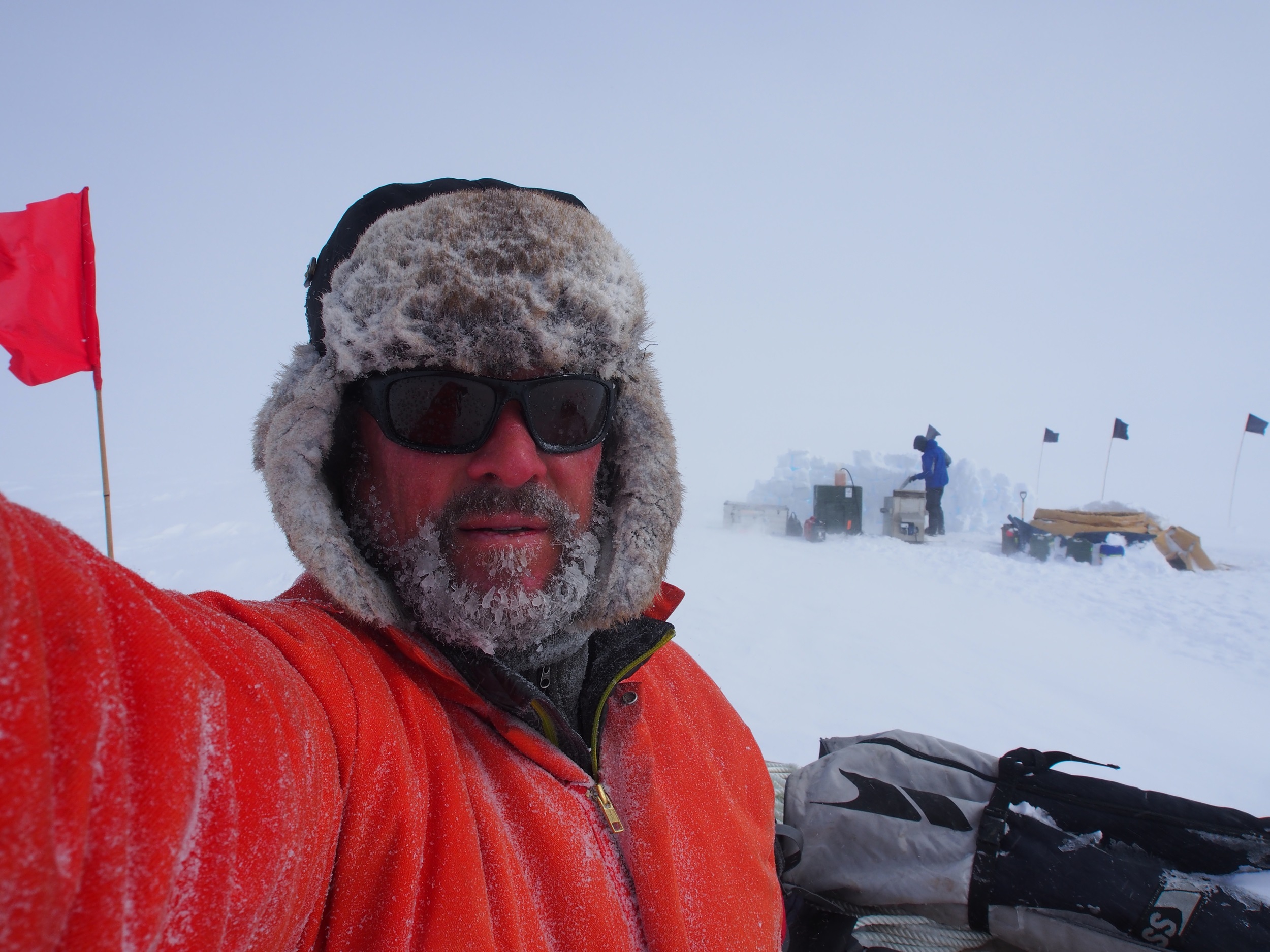
Professor Bryn Hubbard, Aberystwyth University
26 February 2026
New international research shows that the choices we make in the next decade will determine Antarctica’s fate for centuries.
Published in Frontiers in Environmental Science, the study highlights both the scale of the threat posed by continued global warming and the significant benefits of rapid climate action.
Antarctica’s pale expanses of ice keep water locked up and reflect heat from the planet — but the climate crisis is putting these safeguards at increasing risk. Antarctica is warming fast, with potentially disastrous consequences.
Now a team of scientists, including glaciologists from Aberystwyth University, have modelled the best and worst-case impacts of climate change on Antarctica. The study demonstrates just how high the stakes are, but also how much harm can still be prevented.
The scientists focused on the Antarctic Peninsula, a centre for research, tourism, and fishing which is both very well-studied and very vulnerable to environmental changes caused by humans.
They used scenarios which estimate future emissions to model outcomes for the Antarctic Peninsula. Under higher emissions scenarios, the Southern Ocean will get hotter faster, and warmer ocean waters will erode ice on land and at sea. The higher temperatures get, the more likely ice shelves are to collapse, driving further sea-level rise.
Under the highest emissions scenario, sea ice coverage could fall by 20%, devastating species that rely on it—such as krill, an important prey for whales and penguins—and amplifying ocean warming worldwide. Higher ocean warming would also stress ecosystems and contribute to extreme weather.
Professor Bryn Hubbard, co-author and Director of the Centre for Glaciology at Aberystwyth University, said:
“The fate of Antarctica will affect us all—it is a large area, hosting a massive volume of ice that is fundamental to the future of our planet. This study makes clear that the Antarctic Peninsula is approaching—or perhaps now at—a tipping point. The difference between a low‑ and high‑emissions future is the difference between a Peninsula that remains ice-covered and fringed by protective shelves and one transformed beyond human recognition. The next decade will be decisive, and the science leaves no doubt that rapid, collective action can still prevent the most damaging outcomes.
“This research reinforces what decades of glaciological work have already shown: much of Antarctica is responding directly and rapidly to the choices humanity makes. The evidence is unequivocal—we can still limit the worst impacts, but only by acting decisively and without delay. Reducing emissions, supporting long‑term monitoring, and investing in climate‑resilient policies are not optional; they are essential if we are to preserve the Antarctic environment for future generations. What we choose to do now will shape the state of this continent, and our planet, for centuries.”
Although it’s difficult to predict how these environmental changes would combine to affect animals, the scientists expect that under very high emissions scenarios, many species will move south to escape higher temperatures. Warm-blooded predators may cope with temperature changes, but if their prey can’t, they will starve.
Lead author of the report—and former Aberystwyth University glaciologist—Professor Bethan Davies from Newcastle University said:
“The Antarctic Peninsula is a special place. Its future depends on the choices that we make today. Under a low emissions future, we can avoid the most important and detrimental impacts. However, under a higher emissions scenario, we risk the loss of sea ice, ice shelves, glaciers, and iconic species such as penguins.
“Though Antarctica is far away, changes here will impact the rest of the world through changes in sea level, oceanic and atmospheric connections and circulation changes. Changes in the Antarctic do not stay in the Antarctic.”
AU6326