
Safer journeys for girls aim for new guidance
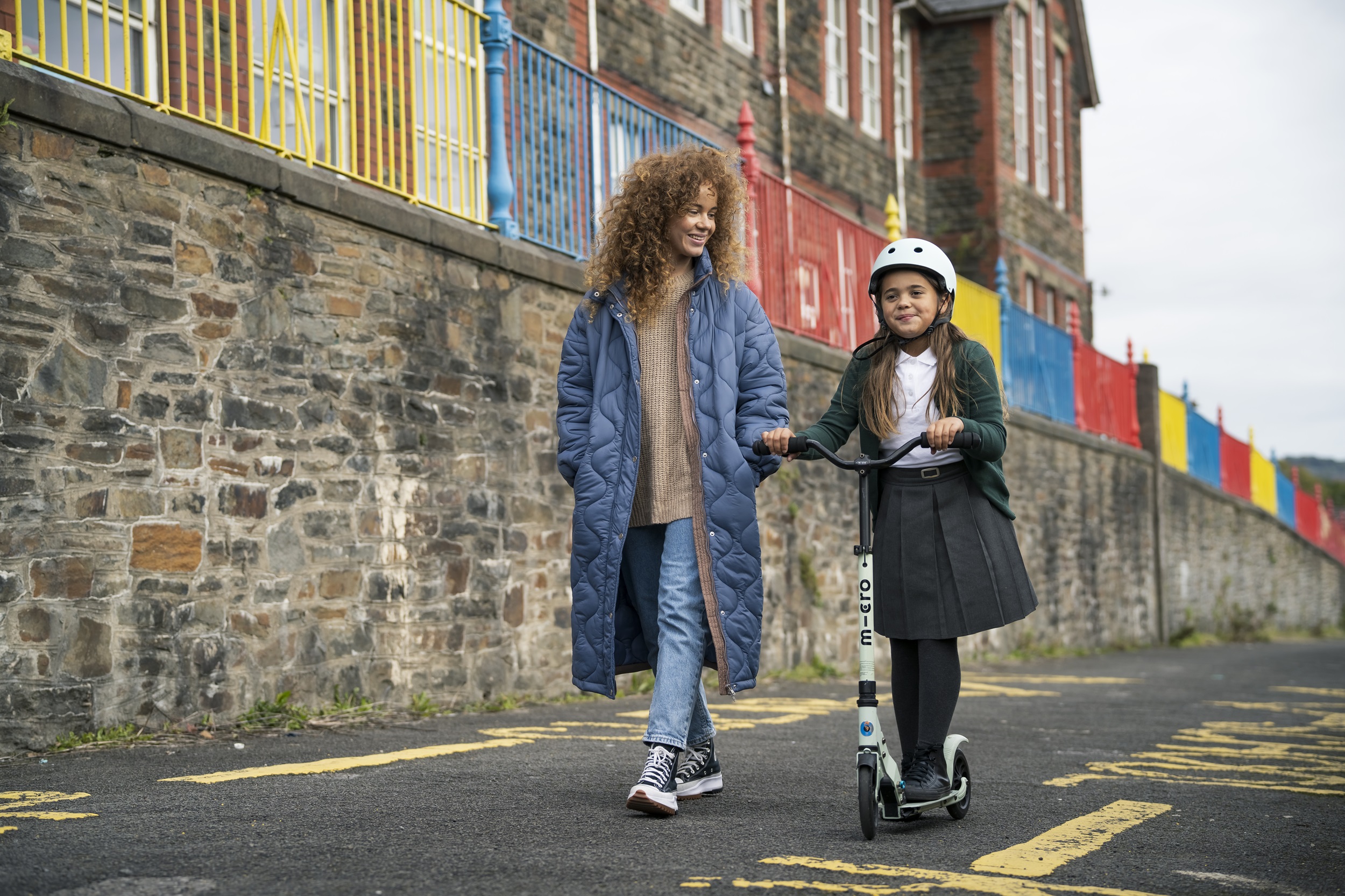
Credit: Transport for Wales
02 April 2026
Welsh local authorities will have new guidance to help make walking, wheeling and cycling safer and more accessible for women and girls, thanks to work led by an Aberystwyth University academic.
Published this week by Transport for Wales, the new resource brings together research insights, proven campaign approaches and practical steps that councils can use to increase active travel among women and girls.
The ‘Improving Everyday Journeys for Women and Girls’ guide highlights how the needs and experiences of women and girls can be better met by transport planning, design and delivery.
It forms part of a wider collaboration between Transport for Wales, the Welsh Government and Welsh universities to change travel patterns.
The booklet’s author, Dr Lucy Baker from Aberystwyth University, has become a leading voice in improving the safety and everyday travel experiences of women and girls.
Her research focuses on lived experiences, barriers to safe mobility and practical interventions for transport operators and policymakers.
Dr Baker, from the Department of Geography and Earth Sciences at Aberystwyth University, said:
“Decades of research shows that women have a different experience undertaking journeys than men. They are more likely to experience harassment and safety concerns in public spaces, adjusting their journeys to compensate for this. Women often make more care‑related trips, and in many cases find that existing transport systems don’t always reflect these travel patterns or fully support them. By addressing these inequalities directly—through safer infrastructure, inclusive design and meaningful engagement—this guide supports authorities to create environments where women and girls not only feel safe, but confident and welcome to travel actively.”
“It also recognises that women’s mobility needs change during their lives and are shaped by intersecting factors such as race, disability, age and caring responsibilities. The approaches outlined here—from gender-responsive budgeting to participatory design and improved wayfinding—offer practical tools to ensure investment genuinely works for diverse groups of women and girls. By embedding these principles, local authorities can help transform everyday journeys and support healthier, more equitable communities across Wales.”
A Transport for Wales spokesperson added:
“Transport for Wales is committed to creating a transport system that works for everyone, and this guidance is an important step toward making walking, wheeling and cycling safer and more accessible for women and girls. By working closely with local authorities, Welsh Government and our university partners, we’re helping to ensure that the challenges faced by women and girls in their everyday journeys are understood and addressed through practical, evidence-based action. Our active travel toolkit offers local authorities the tools to create routes, places and policies that support confident, independent and enjoyable active travel.”
Dr Lucy Baker’s work extends beyond research into collaboration with transport bodies, demonstrating how academic expertise can directly shape real-world practice.
She authored the influential 2024 report ‘Safer Journeys for Women and Girls’, published by the Transport and Health Integrated Research Network (THINK), which highlighted the scale of gender-based violence experienced by women and girls using public transport.
Through THINK’s Gender+ Bus project, she worked with Transport for Wales on research workshops exploring women’s experiences of safety on public transport, providing essential insights to guide new safety interventions.
She has contributed to panel discussions at events organised by bus and coach industry-led Confederation of Passenger Transport and by the Department for Transport considering how to improve women’s safety.
She has also partnered with Welsh Women’s Aid and Stagecoach South Wales to deliver frontline training for bus drivers, helping staff recognise harassment, identify signs of gender-based violence, respond safely and appropriately to incidents, and create safer environments for passengers.
AU7826