
Mapping the future of UK agricultural research
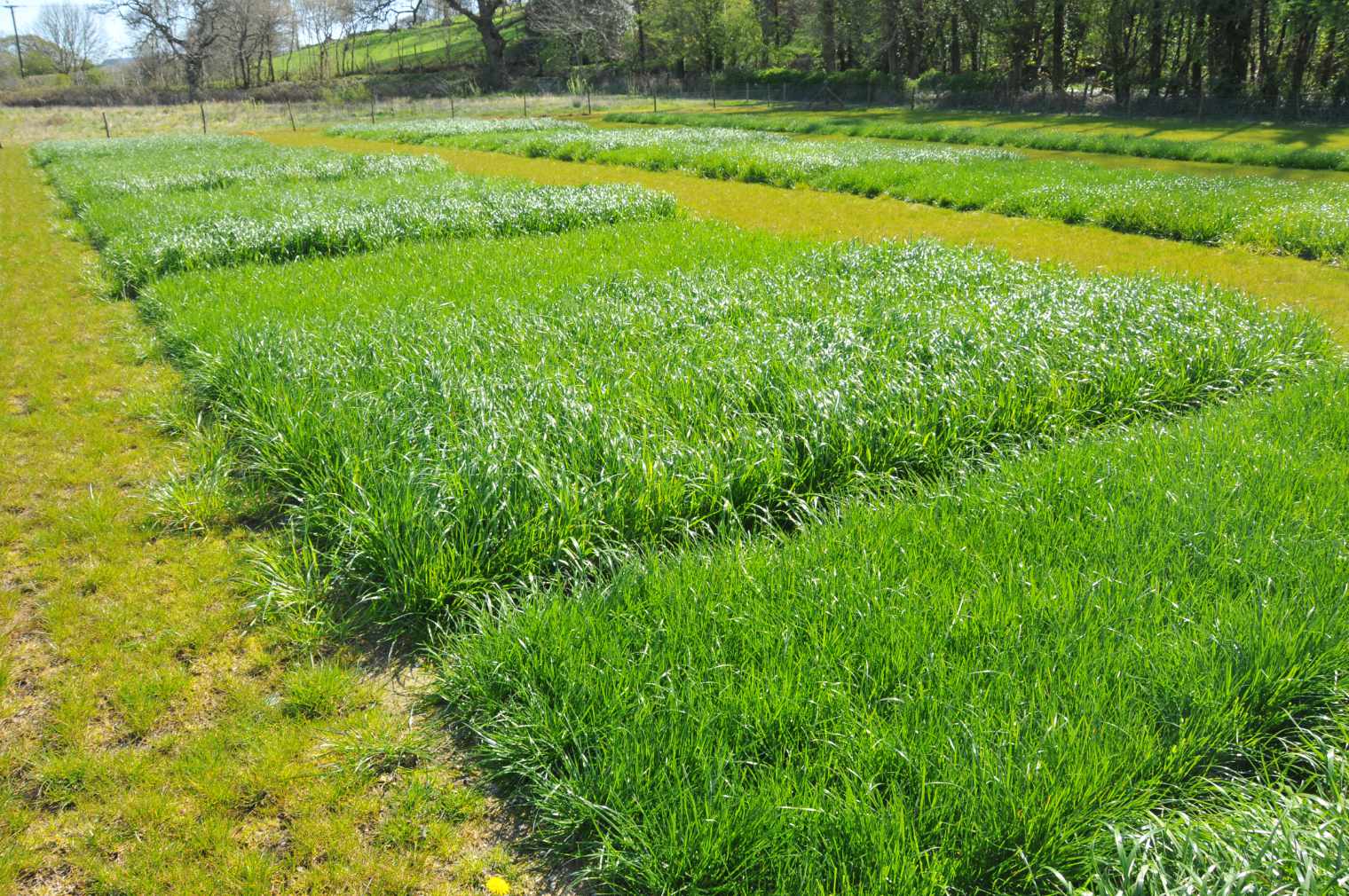
Experimental forage crops growing on land at Gogerddan, Aberystwyth.
21 October 2026
Research on improved crop varieties at the Institute of Biological, Environmental and Rural Sciences (IBERS) at Aberystwyth University has been highlighted in a major new report as a leading example of how long-term public investment in agricultural science can deliver practical benefits and help futureproof farming.
The State of Agricultural Research & Innovation 2026 (SARI) - produced by the Centre for Agricultural Research Impact (Ag.Impact) and launched on 20 October 2026 - is the most comprehensive map of public funding for agricultural research ever compiled. It sets out how the UK can strengthen farm profitability, food security and resilience while preparing agriculture for the challenges of decades ahead.
The first in a planned annual series, the report analyses £1.2 billion of public funding for agricultural research between 2022 and 2026 and compares investment with the priorities of more than 600 survey respondents, including more than 300 farmers, alongside interviews and workshops.
It finds strong agreement across farmers, researchers and other stakeholders for research to address real farming challenges, have practical applications and involve farmers and growers from the outset. For most farmers surveyed, profitable farming is the top priority.
The report identifies opportunities to strengthen the link between research investment and these needs, while developing the long-term evidence and solutions agriculture will need as it faces growing pressure to produce food, restore nature and adapt to climate change and extreme weather.
Professor Tom MacMillan, Chief Executive of Ag.Impact, said:
“Research must help farming respond to today’s pressures and prepare for the challenges ahead. Farmers and researchers are telling us they want work to answer real questions, grounded in what happens on farms and producing evidence they can use.
This report gives us a clearer picture of where funding is going and how this compares with what people say is needed. There are strong foundations to build on, and we can see where changes could make research more beneficial to farming, anticipate future needs and deliver greater public value.”
The findings emphasise the UK’s strengths in foundational science and the applied research capabilities retained by specialist institutes and agricultural universities. They also recognise funders and research organisations are already developing new ways to involve farmers and improve impact.
Forage breeding at Aberystwyth is highlighted as an example of how sustained research can help futureproof agriculture. Researchers and industry partners have worked on developing improved varieties of grasses and legumes for decades, with new varieties taking 15–20 years to progress from early-stage research to commercial deployment on farms.
Professor Iain Donnison, Head of IBERS and a member of the SARI Steering Group, said:
"The inclusion of IBERS as a case study reflects the importance of long-term investment in agricultural research and innovation which are so essential to our food security and environmental sustainability. Developing improved crop varieties is a process that often spans decades, requiring scientific excellence, sustained investment and strong partnerships across the sector.
At IBERS, our national capability in crop science and plant breeding enables us to take discoveries from the research pipeline through to commercial application. Working closely with industry partners such as Germinal, Germinal Horizon and Senova helps ensure that research delivers tangible benefits for farmers while contributing to the future sustainability, productivity and resilience of UK agriculture.”
Defra's ADOPT programme of funding, delivered by Innovate UK through the Farming Innovation Programme, is highlighted as a major step forward. It enables groups of farmers to test their own ideas on farm, with research support and results shared to benefit others.
But the report also finds interdisciplinary and cross-cutting projects account for only around 7% of the funding analysed. It identifies scope for greater coordination across funders, research organisations and the UK's four nations, with farmers and other stakeholders actively involved in shaping priorities.
It recommends building on existing progress through more accessible farmer-centred research programmes, regular foresight into emerging challenges and reliable long-term funding pathways. Strategic investment in research infrastructure is also needed, including farm networks, skills and data-sharing, alongside specialist facilities and long-term experiments.
Professor MacMillan added:
"ADOPT shows the sector can rise to the challenge of putting farmers at the centre of research. Alongside this practical work, we need sustained investment in programmes preparing for the future, where decisions made today will shape the options available to farmers decades from now.
Better coordination helps organisations share plans, avoid unnecessary duplication and make more of the expertise and resources we already have. We want this evidence to be a useful tool for funders as they decide what to support next.
This project has brought together organisations right across the sector. We are grateful to everyone involved; on the steering group, the survey respondents, workshop attendees, interviewees and everyone who advised the project, reviewed draft findings or shared data. I would also like to thank our funders who made this work possible; the Agricultural Universities Council, Elizabeth Creak Charitable Trust, Innovation Research Caucus, and the University of Reading."
Ag.Impact will update the analysis annually and work with research organisations and funders to strengthen the impact and public value of agricultural research.
The report and an interactive dashboard are available at www.ag-impact.org/sari.
Share


