Institute Strategic Programme Grant (ISPG) - Resilient Crops
Why Oats for Healthy Food?
The impacts of food on human health are an increasingly important area of research. The health benefits from oats have been approved due to grain composition and include satiety effects, reduction in blood cholesterol and improvements in gastrointestinal tract performance.
The UK produces ~750kt of oats annually and the value of the European oat snack market alone is predicted to rise above $6 Bn over the next five years.
Genomic Tools and Genetic Resources
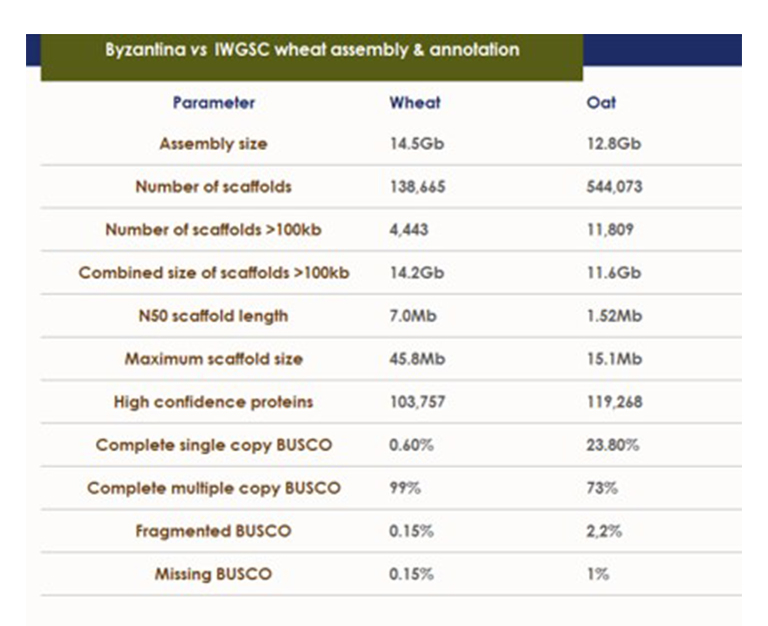
Our research uses genetic and genomic resources to understand the origin of today's oat crop, and attempts to identify lost genetic variation that may be recovered and used to improve modern varieties. A century ago, oats were the largest crop by area in much of Europe and North America, and very large collections of cultivars and wild relatives were made across the world. We are assembling the genome sequence of red oat, Avena byzantina, in collaboration with Dr Martin Mascher (IPK, Gatersleben) and using this as a reference to understand the significance of genotypic diversity in material from historic and recent collections.
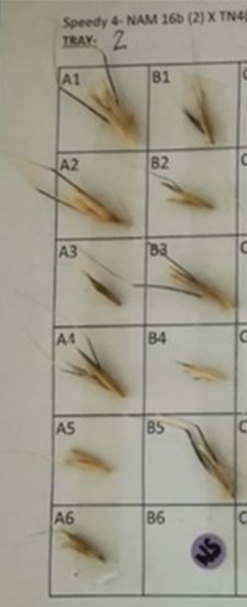
Approach: Oats have a reputation as a 'healthy' crop, based on beneficial dietary effects (satiety, cholesterol lowering, gluten-free) and on relatively low input and intervention requirements in the field. Some of these properties may reflect oats' late domestication, having apparently spread from Turkey to Central Europe as a weed of cereal fields and only then having been deliberately cultivated as a crop in its own right. By avoiding human selection for yield and food value, oats may have carried a greater genetic diversity and resilience through to the present day than cereals cultivated from the outset. We are working with Dr Edyta Paczos-Greda (U. Lublin) to understand how, where and when oats were domesticated.
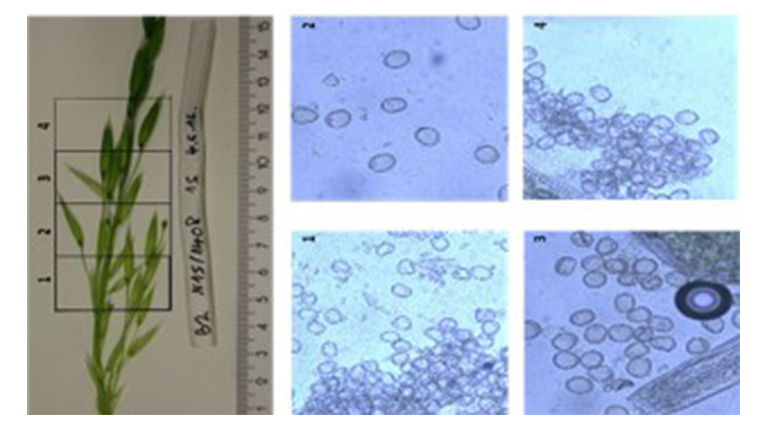
Potential impact: Oats lag behind other cereals in the development of efficient tissue culture methods. With support from Senova and Saaten Union, and in collaboration with Sue Dalton we have been improving doubled haploid (DH) production and transformation protocols. We are testing the use of the lines that show best DH response as parents for introgression of traits from wild material.
Key research insights and findings: Assembling diploid and hexaploid Avena reference genomes allows us to catalogue gene content and organisation. Gene sequences can then be used to design baits to capture specific fractions of interest from diverse lines. Following on from an initial global exome capture based on our diploid genome zipper (Dr Nick Tinker, AAFC, Ottawa), we are developing new designs based on the byzantina reference. A particular area of interest is RenSeq, the targetting of pathogen resistance genes (with Dr Matt Moscou, TSL, Norwich).
GxE Interaction on Grain Quality and Yield
Oats are an alternative cereal for arable rotations increasing crop diversity and require fewer inputs than other cereals so can grow on more marginal land, expanding cropping options for arable production and for mixed farming systems. Oat grains exhibit quality characteristics beneficial to human health including the soluble fibre β-glucan. Oat grain yield and quality display high levels of phenotypic plasticity with a large interaction between genotype and environment (G x E). Understanding how plant architecture, partitioning and phenology impact on this is key to developing environmental resilience, optimising ideotypes and reducing the yield gap.
The objective of this theme is to investigate the effect of genotype and environment on traits contributing to grain quality and yield in oats.
Approach: Our approach is to use detailed phenotyping at a range of scales from controlled environments (including specific stresses and nutrient treatments) to multi-locational field trials to enable physiological dissection and gene discovery for target traits.
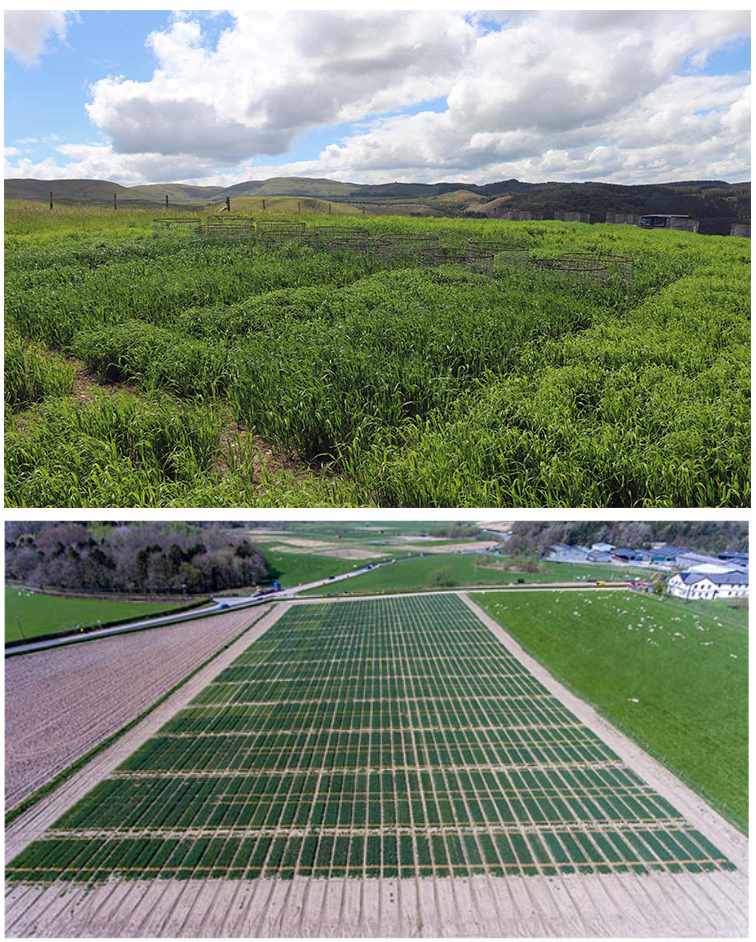
The outcome will be the development of tools and understanding to enable enhanced grain quality and yield in different environments.
Potential impact: This will create impact by developing knowledge and tools that will be used to design future crops adapted to a range of climate change scenarios and end-uses in collaboration with commercial partners (e.g. Senova, oat millers and feed manufacturers).
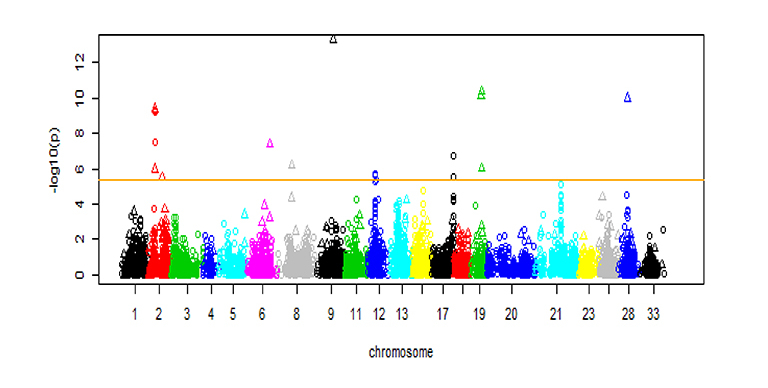
Key research insights and findings: By taking a Genotype By Sequencing approach, the marker density of the oat consensus map has been increased by the addition of more than 70,000 loci in an international collaboration with researchers in US and Canada (Bekele et al., 2018). A combined genome-wide association study of heading date from multiple locations identified a number of quantitative trait loci (QTL) as well as genomic regions containing signatures of selection. Through detailed phenotyping of near-isogenic lines (QTL-NILs) where contrasting haplotypes for specific major QTL have been fixed in a common oat genetic background, we have now verified QTL previously identified and revealed their interaction in traits such as height, flowering time, yield components and grain quality. These QTL-NILs have enabled the dissection of the role of both vernalisation and photoperiod in the control of flowering time and in seedling root system architecture.
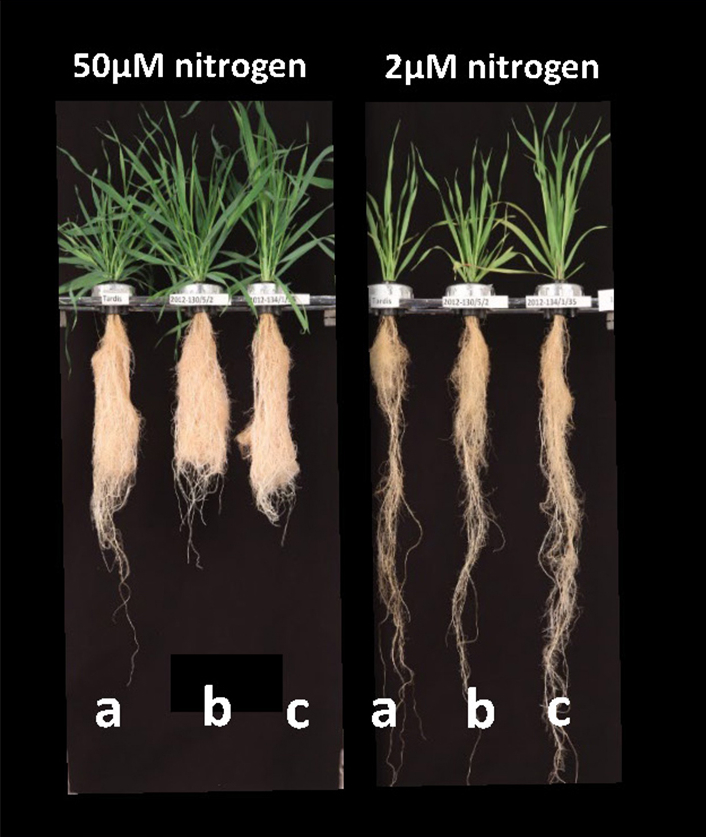
These lines along with other genetically characterised populations that we have developed are being used in the CSP to further characterise shoot and root architectures, from seedling to grain maturity under different conditions (well-watered, flooded, drought, nitrogen depletion) in the National Plant Phenomics Centre (NPPC) and results related to those from multi-locational field trials in a number of sites in the UK, Ireland and North America. Field trial sites have been expanded to include the CSP altitudinal gradient. Initial results from G x E analysis of one such population has revealed the plasticity of a range of agronomic traits (Howarth et al., submitted) and experiments in phenomics under a range of stress and nutrient conditions are in progress. This has identified key developmental stages sensitive to environmental perturbation. The trade-offs between tiller/panicle number, grain number per panicle and grain size will be further dissected and novel alleles characterised that can be used to precisely manipulate these developmental processes.
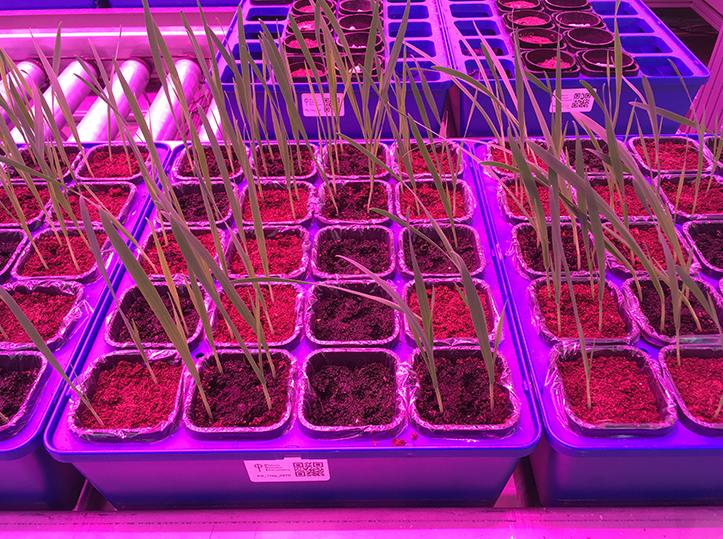
We have recently developed deep learning and other methods to accurately measure flowering time remotely and quantify many other traits in real time including root development, tillering, panicle and grain architecture. To quantify the effects on grain quality we have developed micro computed tomography screening to model changes in cereal grain and floral morphology. We will extend existing knowledge on the effect of G x E, grain maturity and processing on β-glucan content to understanding of effects on the molecular structure of β –glucan and also on the content of other grain constituents. Grain metabolite profiling has revealed the interaction of genotype and nitrogen supplementation.