
Institute Strategic Programme Grant (ISPG) - Resilient Crops
Why New Technologies?
The environment and the priorities of stakeholders are rapidly changing. We need to develop new sources of variation in important traits and efficient ways of selecting for traits to deliver better crops to meet the changing needs.
Our new technologies allow us to reduce the time required to complete cycles of breeding and make the time from laboratory discovery to application shorter.
Biotechnology and Meiotic Recombination
The objective is to develop and apply methodologies to generate novel genetic and phenotypic variation in forage grasses and clovers. We focus here on seed-shedding and control of meiotic recombination; characteristics that underpin breeding and commercial resilience in these forage crops.
Approach: To develop and apply biotechnologies such as tissue culture, transient and stable transformation, gene editing and protoplast isolation in forage crops that are highly recalcitrant to these techniques.
Potential impact: To contribute to the development of a robust biotechnology pipeline including the ability to gene edit forage crops to benefit research, and ultimately produce superior crop varieties.
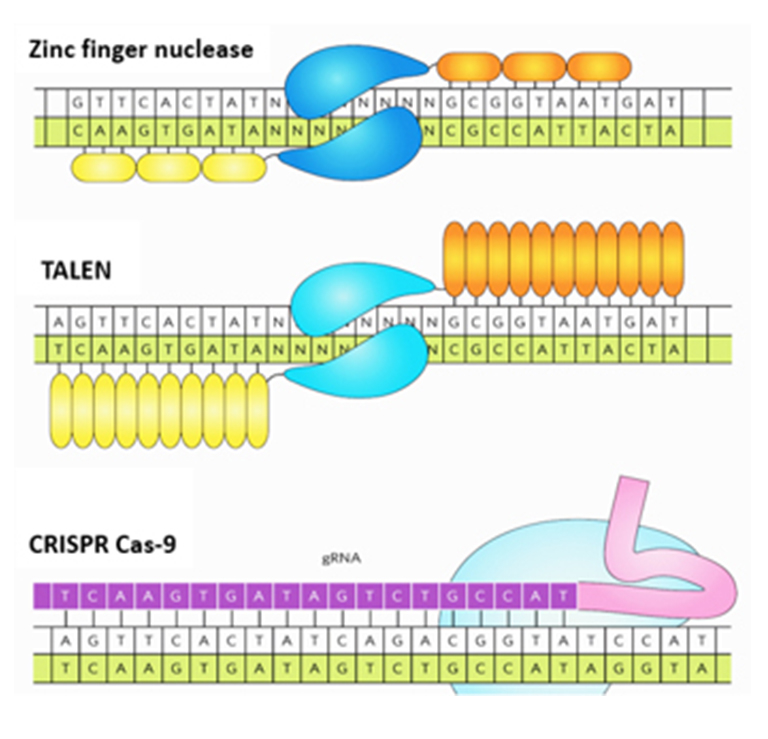
Three most commonly used gene editing systems. All have a DNA scanning domain and an associated nuclease capable of making single or double stranded breaks. Jones (2015) Nature Plants 1: 14011
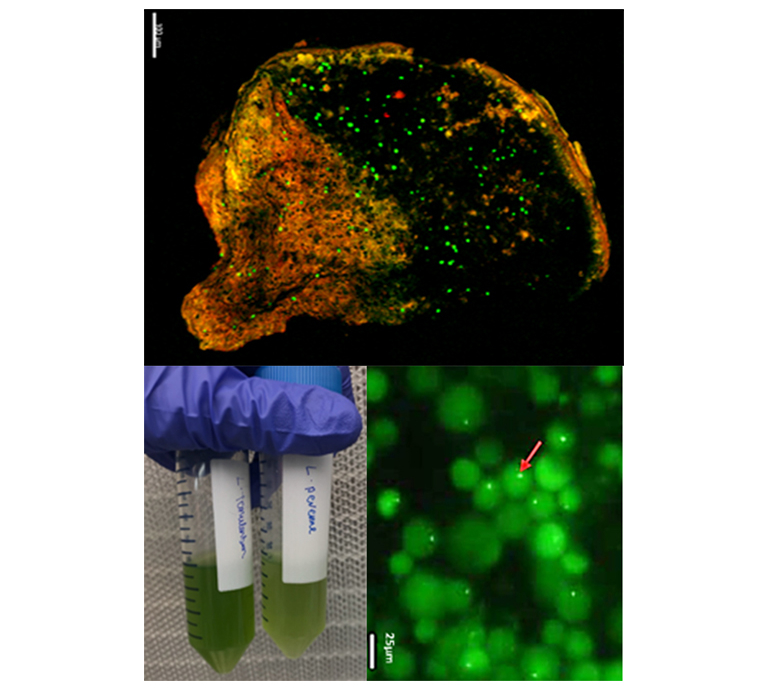
Key research insights and findings: Genetics and genomics knowledge in forage crops is continuing to expand however it cannot be fully exploited because these crops lack some of the in-vitro cellular and molecular technologies necessary to underpin reverse genetics. The generation of stable transformants is a time consuming process and is currently the principal bottleneck in the development of an efficient genome-editing pipeline. To serve as a high-throughput gRNA screen for editing we have developed novel methods for isolation and transformation of Lolium protoplasts (Davis et al 2019 in press) and for transient transformation of Lolium and Brachypodium zygotic embryos.
Although robust stable transformation protocols are challenging in grass species, they are needed for many reverse genetic applications. We have established a pipeline for Brachypodium transformation (a model grass species) and re-establishing one for Lolium perenne.
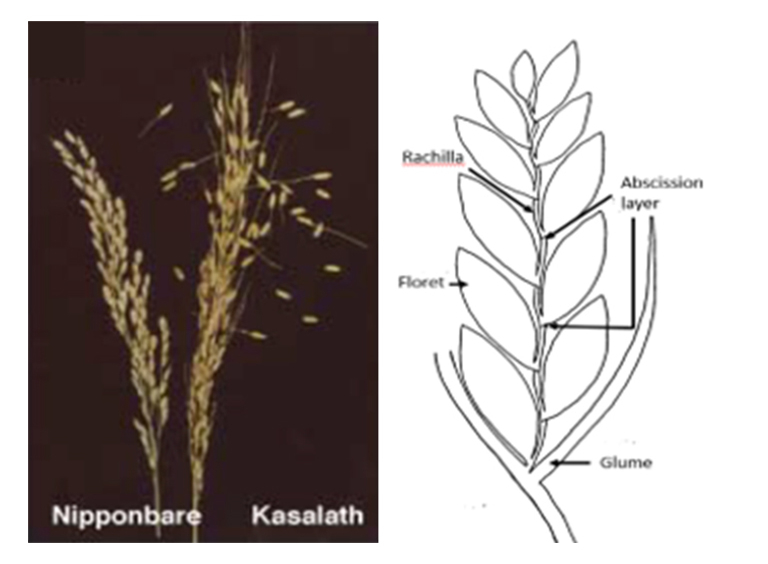
Brachypodium is an model grass ideal for investigating so called ‘domestication genes’ we have identified the orthologues of the rice qSH1 gene in Brachypodium and Lolium perenne with the aim of editing functional knockouts with lower levels of seed shattering.
Because tissue culture and transformation of forage species are more challenging than for many crops, we are investigating novel methods of DNA delivery including a novel cell membrane penetrating peptide CUPID (Cellular Permeability factor in Dictyostelium). We have demonstrated that, at relatively low concentrations (1, 5 or 10 µM), CUPID-GFP can permeate cell membranes in a non-toxic and time-dependent manner. We are working on conjugating nucleic acids to CUPID with the aim of developing novel gene-delivery systems.
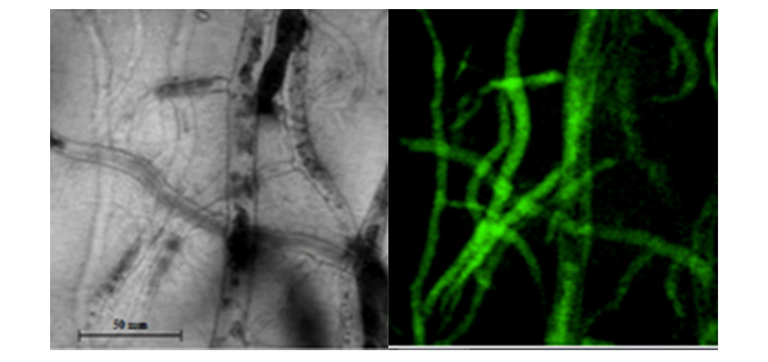
One of the other targets for genome editing will be key genes that underpin meiotic recombination. Genetic recombination is largely confined to the ends of the chromosomes of Lolium, a characteristic shared with other members of the Triticeae. This localisation consigns many genes to recombination backwaters, which effectively limits the genotypic and phenotypic variation available for selection by breeders. Genes that have been shown to modulate the recombination landscape, such as RECQ4 and HEI10, will be targeted, along with an exploration of factors that shown to alter patterns of recombination.
Genomic Prediction in Grasses and Legumes
Our research will improve the predictive ability of genomic selection (trait prediction from molecular marker genotypes) in forage grasses and legumes, oats and energy grasses with the aim of increasing the speed and efficiency of our breeding programmes for these crops.
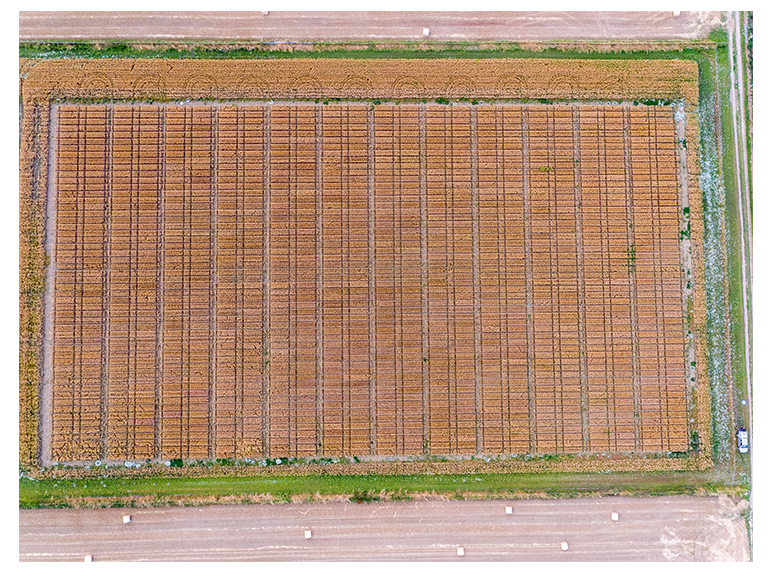
Approach: We are building on and increasing the size of the training populations used for genomic selection to improve prediction accuracy. This will allow us to reduce the length of the breeding cycles and enable a more efficient identification of the best parents for hybrid production and polycross breeding scenarios. The breeding programmes for each of the crops will provide the source of appropriate and growing training populations, and the development of prediction models. Although the different reproductive biology of the crops mean that the strategies for genomic prediction vary between them, the objectives are common. Besides the use of genomic prediction in variety production, outcomes from other CSP themes will provide novel target traits, and identification of potential QTL via GWAS analyses.
Potential impact: Improving the predictive ability of genomic selection and demonstrating its utility in our crops will allow the development of legume, oat and forage and energy grass germplasm that can be used for variety generation including of ideotypes and provide research populations. Thus, our work will increase the precision of the breeding programmes, deliver a faster breeding cycle and identify optimal genotypes for future selection and hybridisation. The knowledge and tools resulting from the research will be used to develop future forage, Miscanthus and oat crops adapted to a range of climate change scenarios and end-uses.
In oats, inter-generational and intra-generational genomic prediction models have been conducted using historical phenotype and genotype data. These are being expanded using both association mapping panels and current spring oat breeding programme populations that are currently being both phenotyped and genotyped. This will result in the development of multi-trait prediction models for key traits underpinning yield and grain quality and ultimately optimal parental identification for future hybridisation.
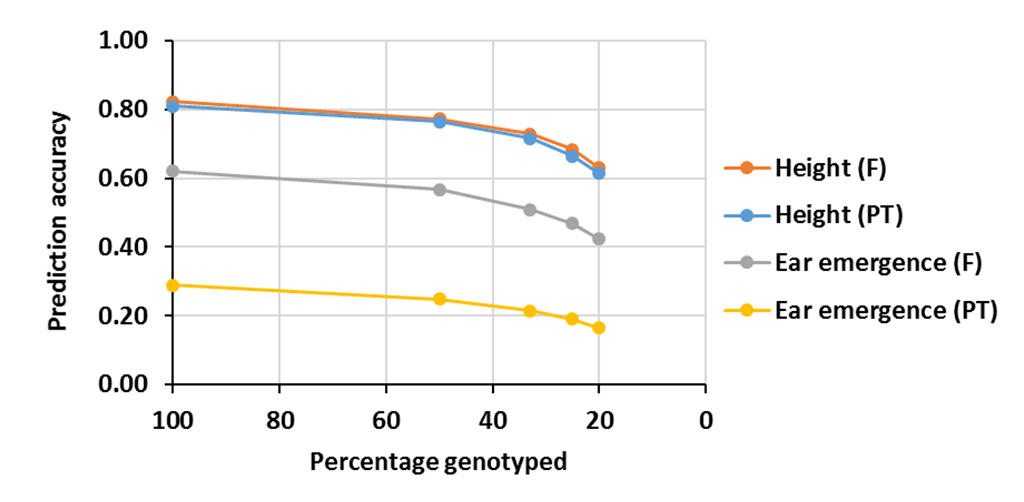
Comparison of changes in RR-BLUP prediction accuracy from the F2 to F7 generation in ‘Buffalo’ x ‘Tardis’ recombinant inbred lines for height and ear emergence in the field (F) and polytunnel (PT) based on varying proportions of genotyped F2 individuals. (Mellars et al., submitted)
In diploid perennial ryegrass, an outbreeding species, the breeding programme is based on population development through recurrent selection. We use phenotypic and genotypic data to predict the mean and variance of progeny derived from poly-crosses used in the breeding programme for selecting plants for the population improvement cycle, and in predicting the optimal parents in variety production. For example, the predicted performance of agronomic traits of a putative high lipid ryegrass variety was compared with other varieties using genomic breeding values of progeny from its four parents (Skøt et al. 2018; Grassland Science in Europe 23: 342-344). This tells us whether the novel variety was developed without predicted detrimental effects on agronomic performance. The work generates prediction models with improved accuracy including marker subsets which can be used to improve prediction of persistency and the performance of populations in response to biotic and abiotic stresses. We have increased the size of the training population to 830 genotypes, which has improved prediction ability to around 0.8 in the case of quality traits, and 0.5 for biomass yield. This is sufficient accuracy to allow us to use GS in the population improvement cycle. The genetic marker technology will change from
Four potential perennial ryegrass varieties have been made based on genomic breeding value which are undergoing phase 1 testing. More varieties of perennial ryegrass are in production on the basis of genomic breeding value, and we will propose a model for predicting progeny performance from parental crosses in the breeding programme. New oat varieties which combine favourable allele combinations are also in first year replicated field trials.