
IBERS and DLS Researchers Contribute to LUNZ Grasslands Meeting at FarmED
17 February 2026
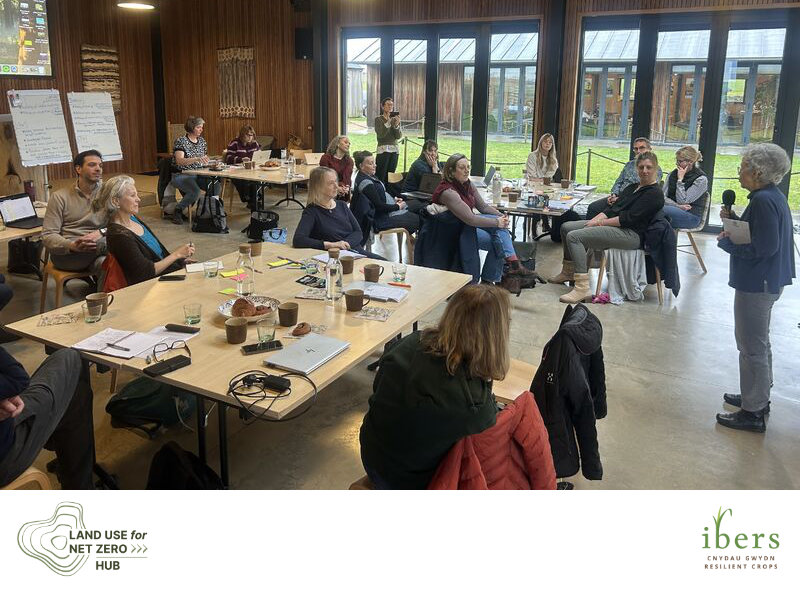
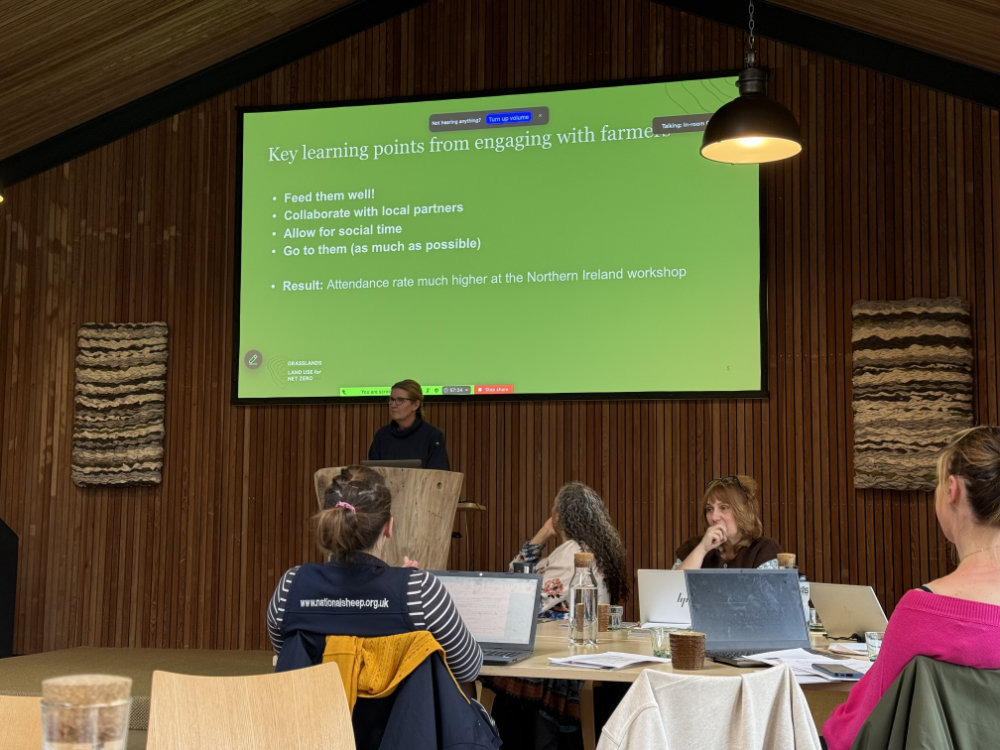
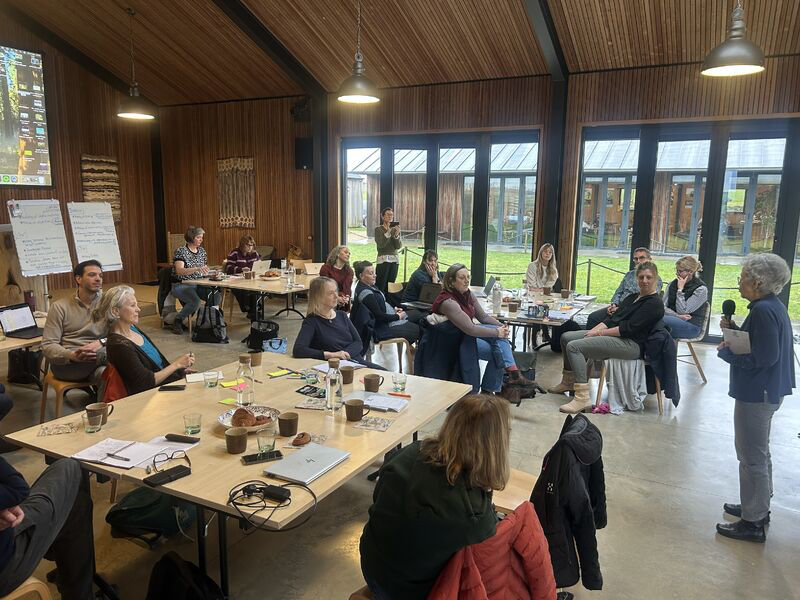
Researchers from IBERS and the Department of Life Sciences (DLS) joined colleagues from across the UK for the Land Use for Net Zero (LUNZ) Grasslands team meeting, held at FarmED on 22–23 January 2026.
Representing IBERS and DLS, Simon Moakes, Pip Nicholas‑Davies, and Mari Davies shared recent progress across several work packages within the LUNZ Grasslands project. The two‑day meeting brought together partners working to understand how grassland systems can support nature, people, and net‑zero ambitions across the UK.
IBERS & DLS Contributions
The team presented updates from three key work packages:
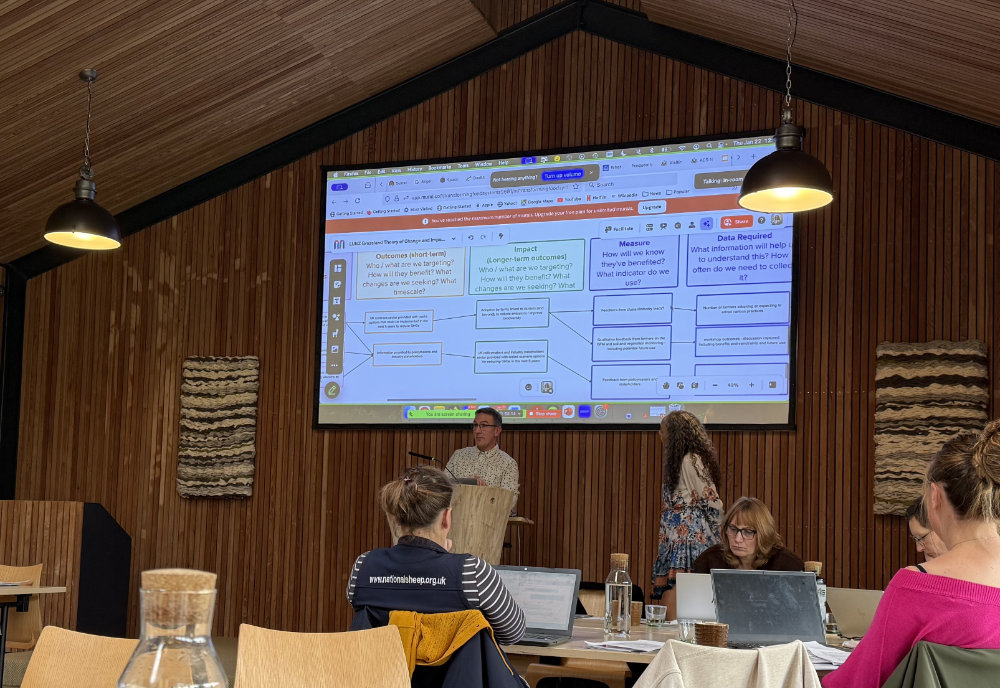
WP1 – Grassland Land Use Pathways (DLS) – Pip Nicholas‑Davies and Eleri Phillips
This work package is designing future UK grassland land‑use pathways with a diverse range of stakeholders. The aim is to identify the barriers, enablers, and policy actions needed to support sustainable, acceptable, and accessible net‑zero transitions.
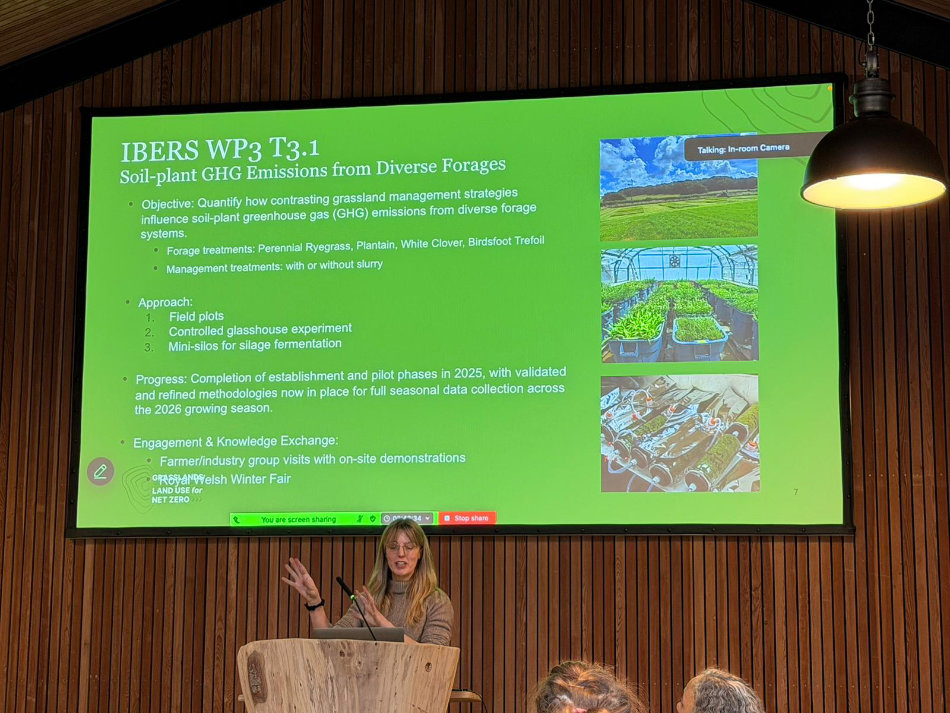
WP3 – Greenhouse Gas Emissions Across Forage Systems (IBERS) – Christina Marley and Mari Davies
This research is quantifying how different grassland management strategies affect soil–plant greenhouse gas emissions across a range of contrasting forage systems.
WP4 – Farm‑Level Life Cycle Assessment (IBERS) – Simon Moakes and Mari Davies
WP4 is applying farm-level life cycle assessments across representative UK grassland farms to investigate trade‑offs, net‑zero pathways, and the effects of innovations on emissions and soil carbon.
Collaboration Towards Net Zero
The meeting provided an important opportunity for researchers across the LUNZ consortium to share knowledge, align approaches, and plan next steps for the Grasslands project. IBERS and DLS continue to play a central role in developing evidence‑based insights that will shape more sustainable and resilient grassland systems.
LUNZ Grasslands is co-funded by UK Research and Innovation (UKRI), DEFRA (on behalf of England and Wales), the Department for Energy Security and Net Zero, the Department for Science, Innovation and Technology, the Welsh Government, the Northern Ireland Executive, and the Scottish Government.
 |  |
|---|---|
 |  |
Share


